
There is a Vauxhall Astra in the car park of the Flitwick Leisure Centre with an ABS fault that a mobile mechanic worked on three days ago. He replaced the front right wheel speed sensor based on the fault code, charged the owner sixty-five pounds for the part, and left. The light came back on before the owner had driven home.
I do not say this to pick at another tradesman's work. I say it because it is the version of this story I am dealing with more often as the mobile mechanic market grows. The industry expanded by fifteen percent last year, and that growth has brought a lot of new operators onto British driveways. Some of them have the equipment and training to diagnose ABS faults properly, and some of them do not.
The difference matters more with ABS than with almost any other system on a modern car. Wheel speed sensors, ring gears, hydraulic modulators, control unit wiring, and ground paths can all produce the same surface fault code. A code reader tells you what the system logged. It does not tell you whether the component named caused the failure or whether something else caused that component to behave as if it had.
When I connected to the Astra, the live data showed the front right sensor producing a clean, consistent signal. The fault code was still pointing at that corner, but the signal itself was stable on the screen. The replacement sensor was working.
I followed the sensor wiring back toward the ABS module and found the problem about thirty centimetres from the sensor itself. The wiring loom had chafed against the suspension arm over time and the outer insulation had worn through to bare copper. In wet conditions, that exposed copper was creating an intermittent earth fault that the system was interpreting as a sensor failure.
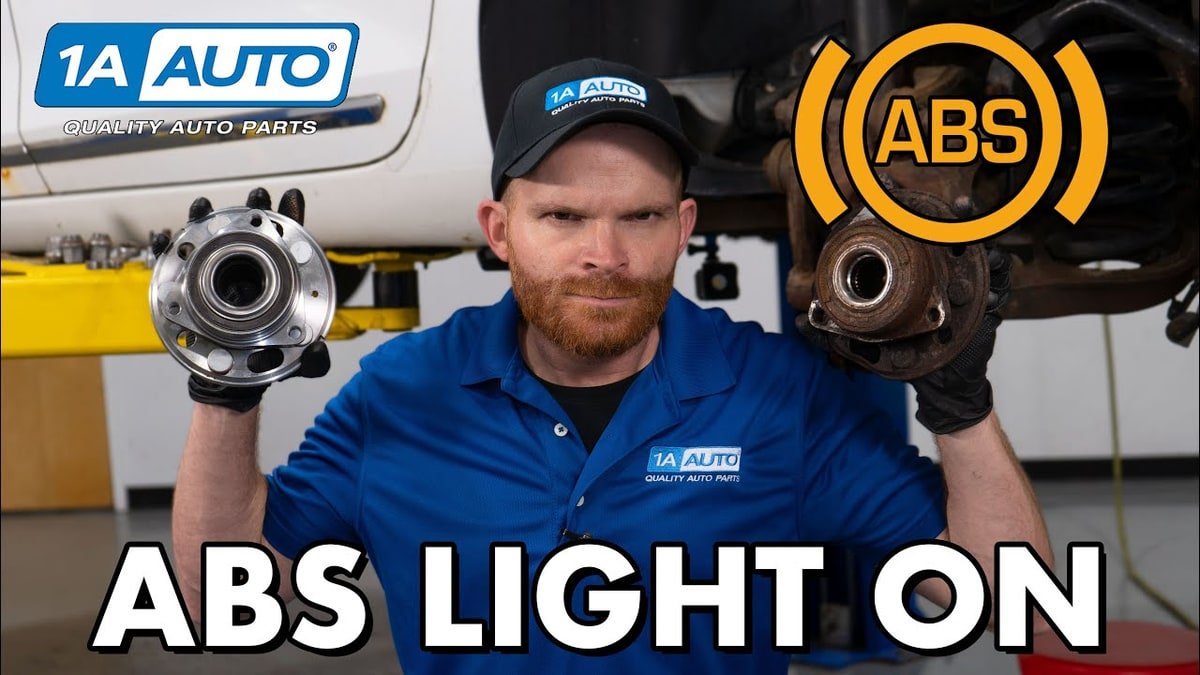
The first mechanic replaced the right component for the wrong reason. The fault code named the sensor because that is where the system detected the problem, not because the sensor was at fault. A code reader cannot show you a live waveform from a sensor under load, or flag an insulation fault on a moving loom. That is where the diagnosis actually happens, and it is why the kit you carry matters as much as the training you have.
The fifteen percent growth in the mobile mechanic sector reflects something real: people want their car fixed on their driveway, not left at a garage for three days. That is a legitimate preference and the industry serves it well across a wide range of work. Brake pad changes, oil services, battery replacements, and clutch assessments translate well to the roadside with the right preparation.
ABS diagnostics is not in that category, or rather, it depends entirely on what the mobile mechanic has brought with them. The gap between a professional-grade scan tool that pulls live module data and a forty-pound Bluetooth dongle is considerable on this kind of fault. I have seen both described as diagnostic equipment on invoices belonging to customers who spent money and got nothing resolved.
Before booking a mobile mechanic for an ABS fault, ask one specific question: what diagnostic equipment do they carry. If the answer is a brand name available from a consumer electronics retailer, that tells you something useful. Professional kit for ABS live data runs to several hundred pounds and looks nothing like a phone dongle. The people who have invested in it know what it can show them, and that is apparent from how they talk about the fault before they have even started.
I am not arguing that mobile mechanics cannot fix ABS faults, because many of them can and do. I am saying that the equipment determines whether the diagnosis is genuine or whether it is a well-intentioned conclusion built on incomplete information. The industry growing by fifteen percent is good news if that growth includes the kit and training the work actually requires.
The Astra left that car park with the chafed wiring repaired, sealed, and rerouted away from the suspension arm. The fault has not returned, which is what you want to be able to say three weeks after any ABS repair. Closing the van up in that car park, what I kept thinking was that the mobile mechanic who came out three days earlier probably had exactly the right intentions. He did not have the kit to find what the code was not saying.

Jimmy O’Riley is a UK-based mobile mechanic and automotive diagnostic specialist operating out of Bedfordshire, England. He founded O’Rileys Autos in 2011 with a focus on bringing professional vehicle repairs directly to customers at their homes and workplaces.
With over a decade of hands-on experience, Jimmy specializes in ABS diagnostics, brake system repairs, diesel emissions faults, and DPF cleaning. He is recognized across the UK and Ireland as one of the leading specialists in vehicle braking and emissions systems, earning the title “The DPF King” from his growing online audience.
Jimmy documents real-world automotive repairs through his YouTube channel, which has accumulated over 97,000 subscribers and nearly 2,000 published repair videos. His content covers ABS fault diagnosis, wheel speed sensor testing, brake module replacement, and roadside repair procedures across a wide range of vehicle makes and models.
He is active on YouTube, Instagram, and Facebook under O’Rileys Autos.