
A Gearbox Jack Adaptor Converts a Standard or Transmission Jack to Support Gearbox Removal, with Most Models Rated to 500kg
A gearbox jack adaptor is a fitting that attaches to a jack to hold a gearbox securely during removal or installation. It either converts a standard floor jack into a transmission jack, or adds adjustable support to an existing transmission jack. Most gearbox jack adaptors carry a 500kg (1,100 lb) capacity and cost between £30 and £175, depending on type.
What Is a Gearbox Jack Adaptor?
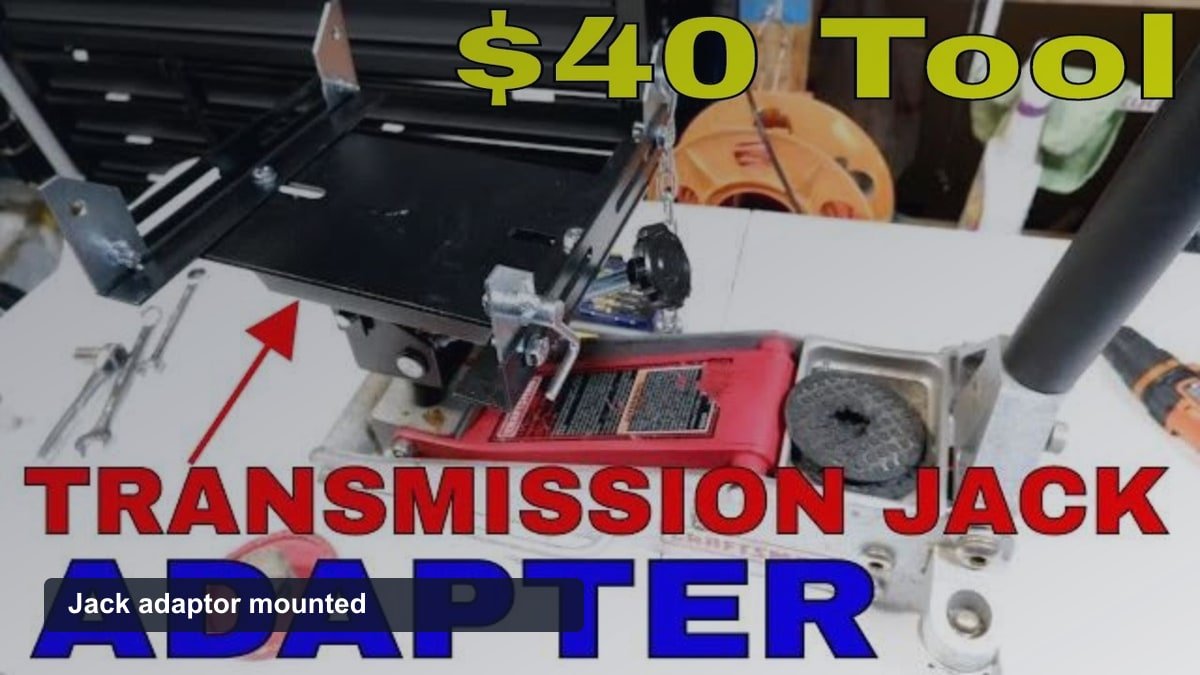
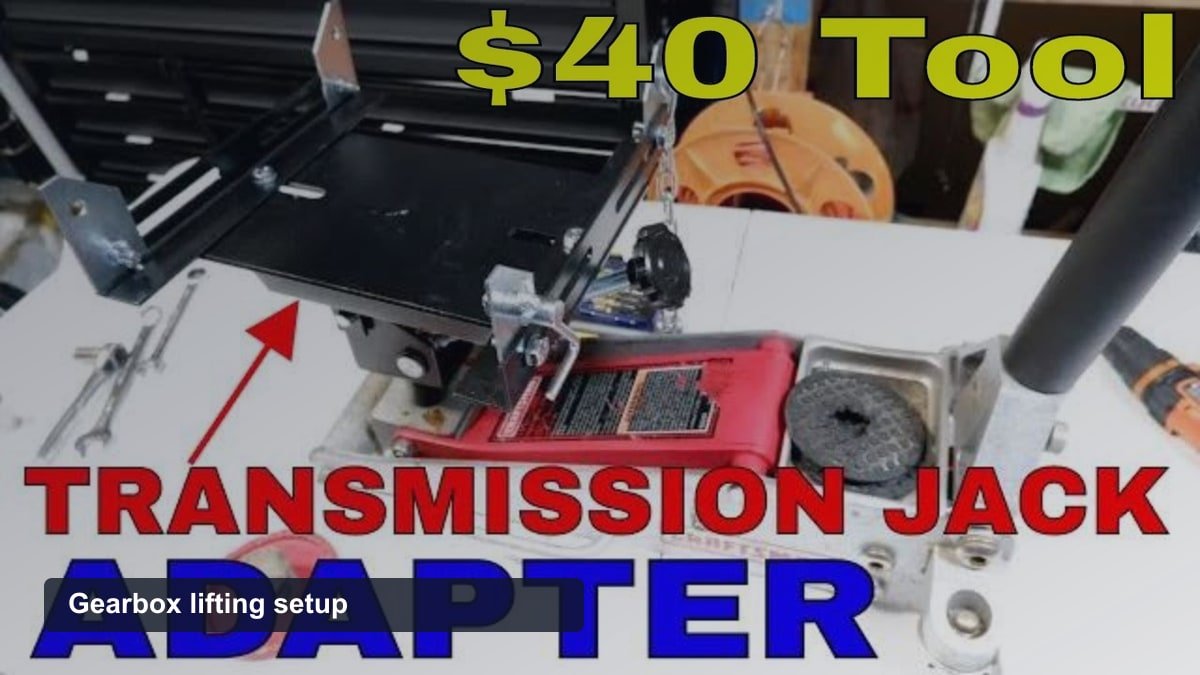
A gearbox jack adaptor is a cradle, tray, or plate that replaces a jack’s standard saddle to grip and support a gearbox during vehicle repair. Once fitted, it gives the jack a stable, raised-edge surface, so the gearbox stays in place while it slides on or off the engine dowel pins. Without a correctly matched adaptor, a transmission jack can fail to grip the gearbox properly, which raises the risk of instability, stripped bolt threads, or a cracked housing. Common examples include universal floor jack conversion adaptors and dedicated adjustable supports made by brands such as Sealey, Draper, and VEVOR.
What Are the Main Types of Gearbox Jack Adaptor?
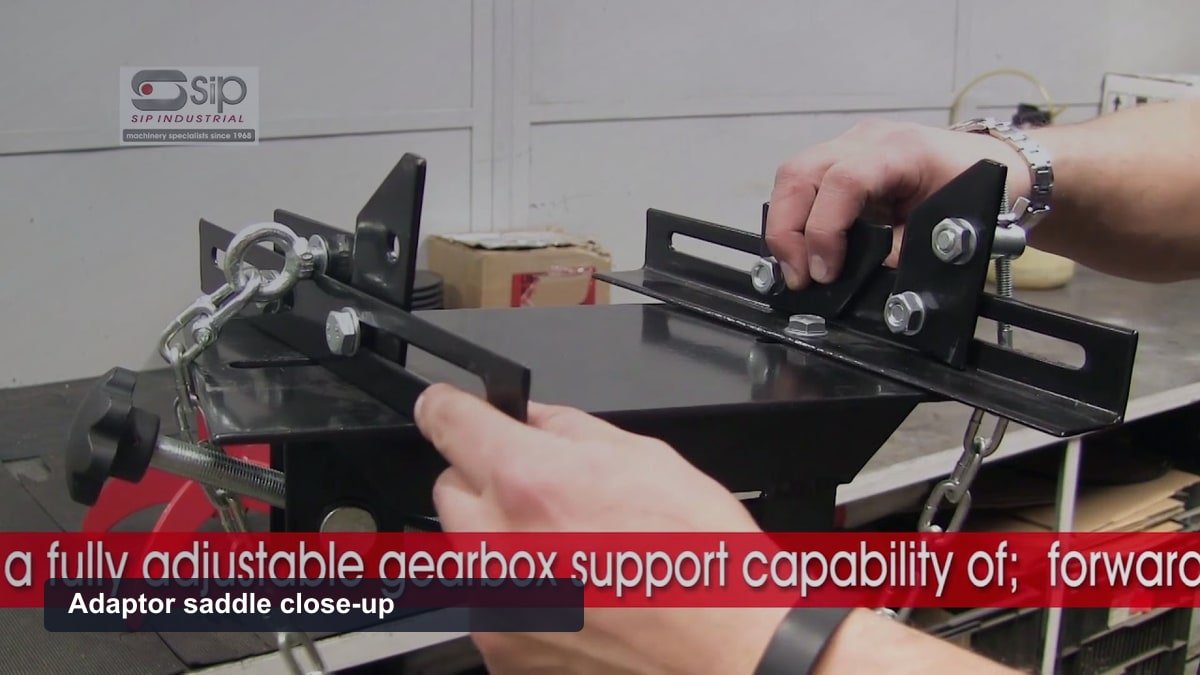
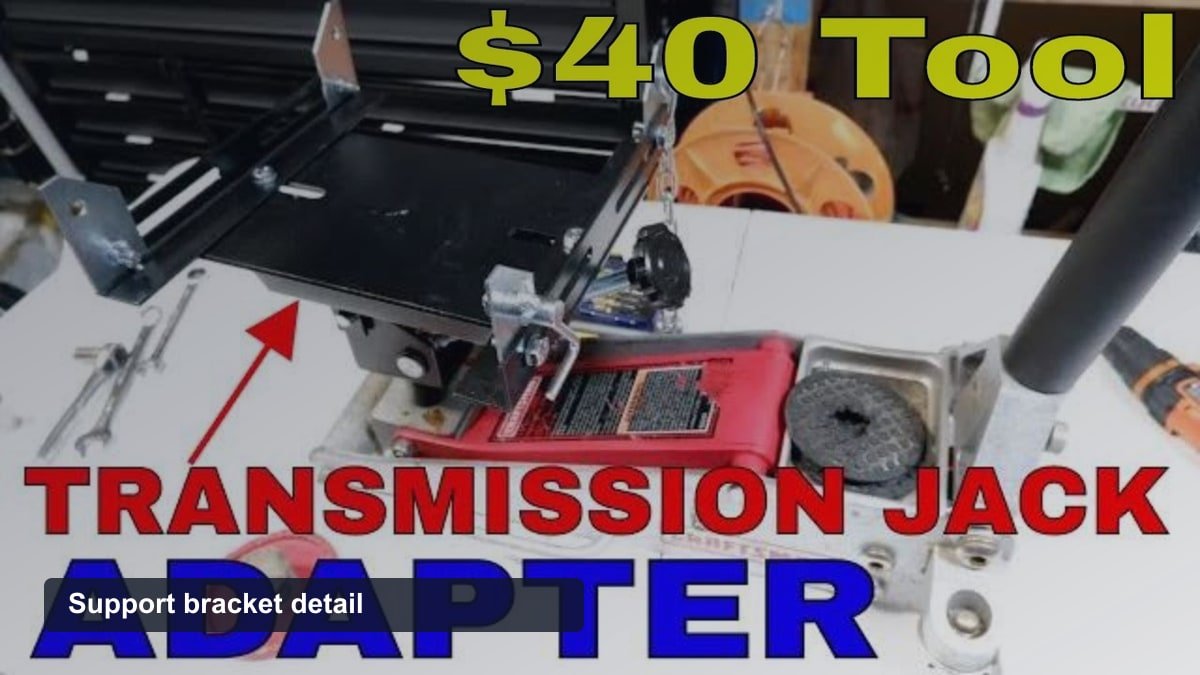
Gearbox jack adaptors fall into 2 main types: conversion adaptors and adjustable supports. Conversion adaptors replace the saddle on a standard hydraulic floor jack, turning it into a makeshift transmission jack. Adjustable supports attach to an existing transmission jack and add forward, backward, and side-to-side tilt for precise alignment. Conversion adaptors suit occasional DIY use. Adjustable supports suit workshops that already own a dedicated transmission jack.
How Does a Gearbox Jack Adaptor Work?
A gearbox jack adaptor works by replacing the jack’s saddle pin with a wider cradle or tray, then securing the gearbox to that surface. Most adaptors fit saddle shafts of about 30mm (1.2 in) and include 2 safety chains, each roughly 600mm (23.6 in) long, to strap the gearbox down. Higher-end models allow 360° rotation and up to 30° of tilt in each direction, which lets the operator angle the gearbox to match the input shaft before sliding it into the bellhousing.
What Load Capacity Should a Gearbox Jack Adaptor Have?
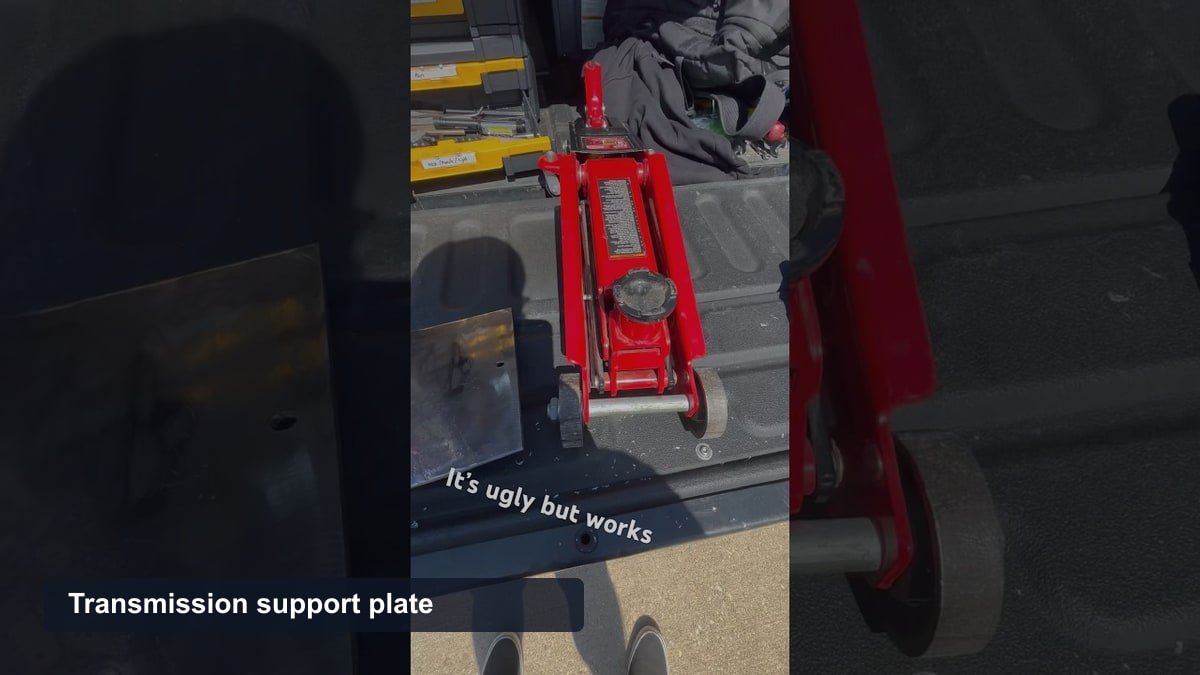
A gearbox jack adaptor should carry a load capacity that matches or exceeds the weight of the heaviest gearbox in the workshop, and most standard models are rated to 500kg (1,100 lbs). When an adaptor is fitted to a separate jack, the safe combined capacity drops to the lower of the 2 individual ratings, not the higher one. A 2-tonne jack fitted with a 500kg adaptor carries a 500kg limit, not a 2-tonne limit. Heavier commercial gearboxes need an adaptor and jack combination rated well above 500kg.
How Much Does a Gearbox Jack Adaptor Cost?
A gearbox jack adaptor typically costs £30 to £175, depending on type and build quality. Basic cradle adaptors that convert a standard trolley jack start at around £30. Fully adjustable gearbox supports built for dedicated transmission jacks, such as the Sealey ADT3, cost closer to £145 to £175. Price generally tracks capacity, tilt range, and build material rather than brand alone.
What Should You Check Before Buying a Gearbox Jack Adaptor?
Check 3 things before buying a gearbox jack adaptor: saddle compatibility, load capacity, and build material. Saddle shafts vary in diameter across jack brands, so an adaptor sized for one jack may not fit another without modification. A removable saddle with a fixed pivot bar underneath it can also block certain adaptors from seating correctly, even when the pin size matches.
Most adaptors use heavy-gauge steel and weigh around 8kg (18 lbs) on their own, which adds to the total load the jack has to lift. A rust-resistant coating extends the adaptor’s working life in a workshop environment where hydraulic fluid and moisture are common.
How Do You Use a Gearbox Jack Adaptor Safely?
Follow 5 steps to use a gearbox jack adaptor safely:
- Check that the adaptor’s saddle size matches the jack’s saddle pin before fitting it.
- Confirm the combined capacity of the jack and adaptor, and treat the lower rating as the limit.
- Secure the gearbox to the adaptor using the supplied safety chains before lifting.
- Support the vehicle on axle stands before working underneath it.
- Adjust the tilt to align the gearbox with the bellhousing before sliding it into place.
For technical background, see Sealey transmission jack supports.
A jack and adaptor combination lowers and positions a gearbox, but it does not hold the vehicle itself. Axle stands remain necessary to support the car independently while the gearbox is removed or refitted.
What Else Can a Gearbox Jack Adaptor Be Used For?
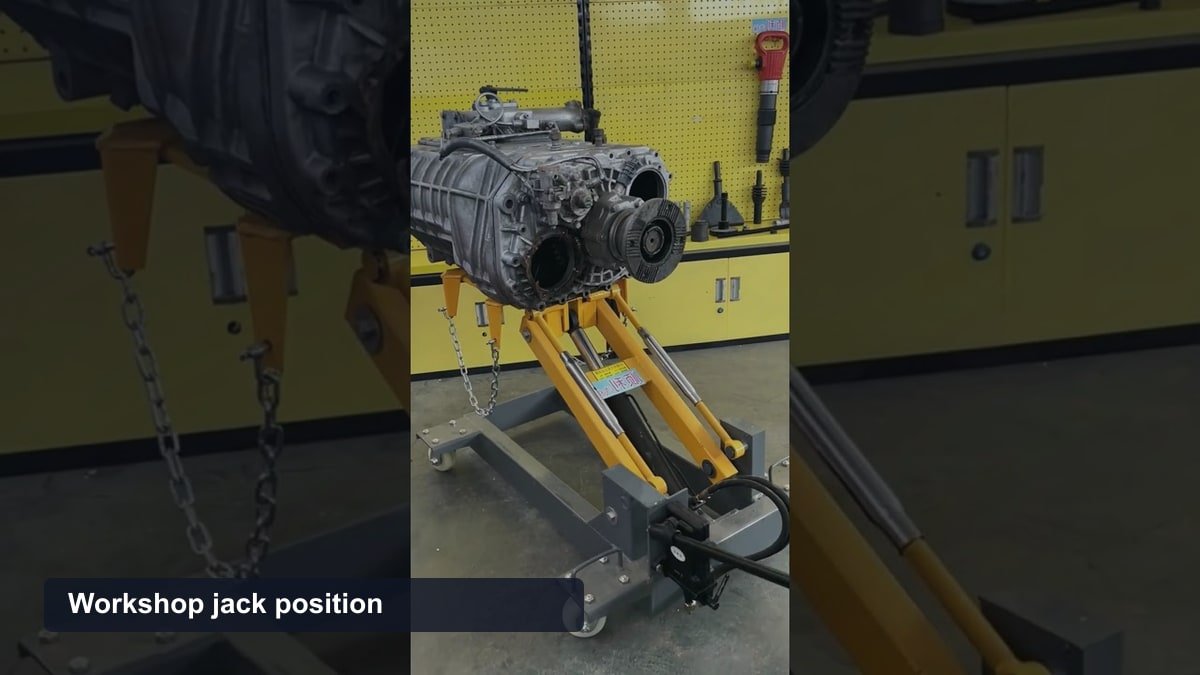
A gearbox jack adaptor is not limited to gearbox removal. The same style of adjustable support can hold engine assemblies, rear axles, fuel tanks, and exhaust systems during removal and refitting. Workshops often use one adaptor across several tasks, including subframe servicing and differential work, which improves the return on a single piece of equipment.
Do You Need a Gearbox Jack Adaptor or a Full Transmission Jack?
A gearbox jack adaptor suits drivers and small workshops that remove a gearbox occasionally, since it avoids the cost of a second, dedicated jack. A full transmission jack suits workshops that handle frequent clutch and gearbox jobs, since it offers greater lifting height, a wider wheelbase, and a higher rated capacity as standard. [internal link: transmission jack buying guide]
Which Gearbox Jack Adaptor Should You Choose?
Drivers doing occasional DIY gearbox removal typically choose a basic conversion adaptor for an existing floor jack. Workshops doing regular gearbox work typically choose an adjustable support built for a dedicated transmission jack, since it offers finer tilt control and a higher safe capacity. In both cases, the adaptor’s load rating, not the jack’s, sets the safe working limit.

Jimmy O’Riley is a UK-based mobile mechanic and automotive diagnostic specialist operating out of Bedfordshire, England. He founded O’Rileys Autos in 2011 with a focus on bringing professional vehicle repairs directly to customers at their homes and workplaces.
With over a decade of hands-on experience, Jimmy specializes in ABS diagnostics, brake system repairs, diesel emissions faults, and DPF cleaning. He is recognized across the UK and Ireland as one of the leading specialists in vehicle braking and emissions systems, earning the title “The DPF King” from his growing online audience.
Jimmy documents real-world automotive repairs through his YouTube channel, which has accumulated over 97,000 subscribers and nearly 2,000 published repair videos. His content covers ABS fault diagnosis, wheel speed sensor testing, brake module replacement, and roadside repair procedures across a wide range of vehicle makes and models.
He is active on YouTube, Instagram, and Facebook under O’Rileys Autos.