
The A6 south of Bedford had been rough all winter, and the owner of this Vauxhall Astra knew exactly which pothole did it. She described it precisely: the lurch, the bang, the ABS light appearing three seconds later like a delayed reaction from the car's electronics. I had the code pulled before she finished talking.
C0035. Left front wheel speed sensor circuit, low input. That code covers four possible causes: the sensor itself, the wiring, the connector, or the tone ring. The code does not tell you which one it is.
That is where a lot of people get taken for money. Someone reads the code, swaps the sensor, collects payment, hands the car back. Sometimes that resolves it. Often it does not, and the light comes back on within a week carrying the same code.
I started at the connector. Left front, tucked behind the brake disc, the locking tab bonded to the body by fourteen years of Bedfordshire road salt. It fought me coming apart, which is normal on any car that has done serious mileage in the UK. UK road conditions produce connector corrosion at a pace that most of mainland Europe does not have to contend with.
For official safety context, see this reference.
When I got it open, the picture changed. The terminal pins were black and corroded through, with oxidation heavy enough to create measurable resistance across the circuit. That much resistance drops voltage below the threshold the module uses to confirm a valid sensor signal. The code was pointing at a symptom, not a cause.
I put the sensor on live data anyway, spinning the wheel by hand and watching the waveform on screen. It was clean. The sensor was reading exactly as it should whenever the circuit had enough contact to pass a signal. The fault was in the connector, not in the sensor that generated the code.
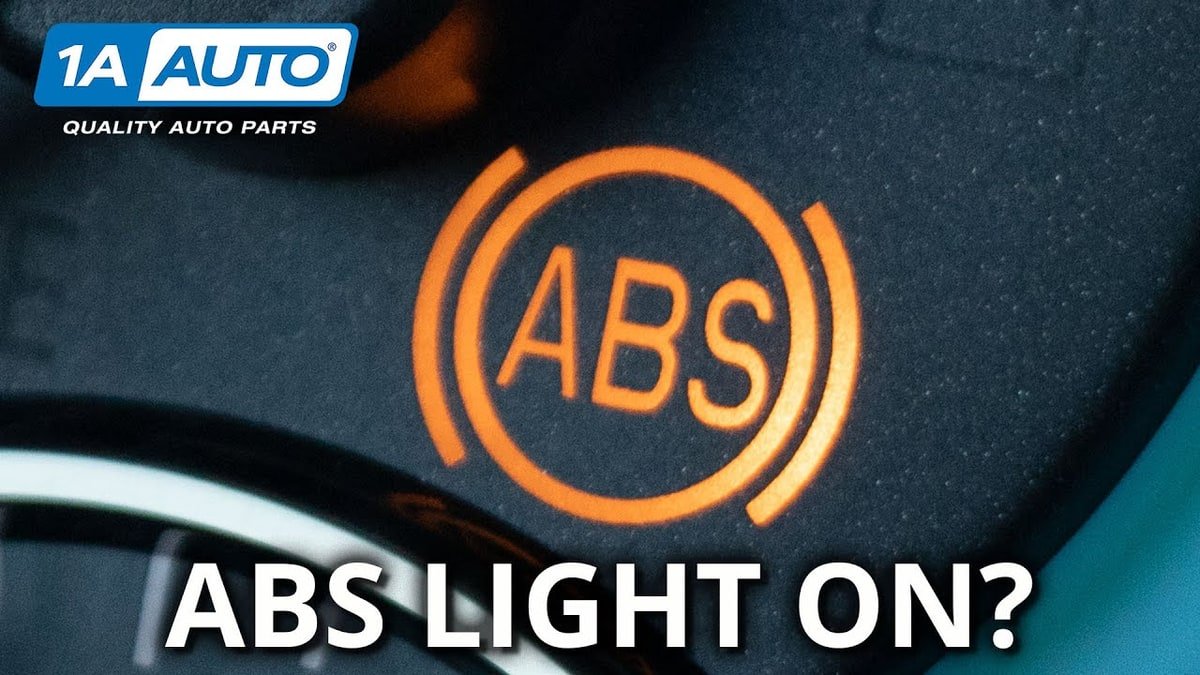
Cleaned the terminals, applied electrical contact grease, and reconnected the harness properly. Cleared the code and took it for a run on the A6, which at that point felt appropriately symbolic. The light stayed off. No parts were replaced.
That is not how it always ends. I have had the exact same code on the same model where the sensor had physically fractured from the pothole impact itself. You only find that by removing the sensor and looking at it. And I have had it where the tone ring had picked up debris causing intermittent signal drop with no connector fault present at all.
Here is what the pothole actually reveals. The impact sends load through the hub, the bearing, the sensor mount, and the wiring harness in a way that ordinary driving never does. Everything that was borderline is now past the threshold. The road did not break something healthy; it finished something that was already failing.
I hear it often on the channel: people who drove on an ABS light for six months before the pothole forced the issue. I understand why it happens. The car still stops. Workshop quotes for ABS diagnosis can be alarming, and daily life does not pause for an amber light that is not immediately obvious in its consequences.
The problem with running on an ABS fault is that the system stops reporting. Once the light is on, there is no feedback on whether the fault is stable or worsening. You lose the early warning the system was designed to provide. You do not get it back until the light goes off.
The consumer OBD readers give you a code number, and the code number is the beginning of the conversation, not the end. Live data from a proper interface shows what the module is actually seeing: sensor voltage, signal frequency, fault conditions that lasted less than a second before being logged. A code is a starting point. It is not a diagnosis.
That connector on the A6 car had been degrading long before the pothole. It would have failed on its own eventually, on a speed bump or a kerb strike or nothing at all. The pothole moved that forward to a cold Tuesday morning rather than to whatever moment would have come next. Fourteen years of this work teaches you that the ABS light is rarely about the thing that triggered it, and almost always about the thing that was waiting underneath.

Jimmy O’Riley is a UK-based mobile mechanic and automotive diagnostic specialist operating out of Bedfordshire, England. He founded O’Rileys Autos in 2011 with a focus on bringing professional vehicle repairs directly to customers at their homes and workplaces.
With over a decade of hands-on experience, Jimmy specializes in ABS diagnostics, brake system repairs, diesel emissions faults, and DPF cleaning. He is recognized across the UK and Ireland as one of the leading specialists in vehicle braking and emissions systems, earning the title “The DPF King” from his growing online audience.
Jimmy documents real-world automotive repairs through his YouTube channel, which has accumulated over 97,000 subscribers and nearly 2,000 published repair videos. His content covers ABS fault diagnosis, wheel speed sensor testing, brake module replacement, and roadside repair procedures across a wide range of vehicle makes and models.
He is active on YouTube, Instagram, and Facebook under O’Rileys Autos.