
The Ford Focus estate was on a driveway in Flitwick, ABS light on, traction control light on. A printed quote from a main dealer was on the kitchen worktop, positioned so I could see it without being told to look. The owner had been told his ABS module had failed, two wheel speed sensors had gone, and the brake fluid was overdue. The figure was nine hundred and eighty pounds.
I have seen this quote, in different numbers, more times in the last two years than in the previous ten. UK brake and safety system repair costs have risen by around fifty percent since 2019, according to independent parts and labour surveys. That figure does not surprise me. I watch it happen from the outside of cars across Bedfordshire every single week.
Part of it is parts prices and that is real. A wheel speed sensor that cost around thirty pounds five years ago now costs between fifty-five and seventy on most common British cars. ABS pump assemblies, brake callipers, electronic parking brake actuators, the hardware has gone up across the board. But parts pricing alone does not get you to fifty percent.
The bigger driver is ADAS, advanced driver assistance systems fitted to most cars built since 2018. Forward collision warning, lane departure, adaptive cruise control, those systems share data networks and hardware with the ABS and braking architecture. They are not separate systems that happen to coexist. They communicate constantly, which means work on one affects the other in ways that added nothing to a repair bill five years ago.
On certain vehicles, replacing front brake discs now triggers a radar recalibration requirement because the forward-facing module sits close enough to the front end that access disturbs its alignment. That calibration can add two hundred pounds or more to what was a brake job. It is not invented work. It is a real requirement on specific vehicles and it was not on anyone's radar, no pun intended, when those cars were designed.
Back to the Focus. I connected my scanner and the screen showed three codes, C0035 and C0040, both wheel speed sensor circuit faults, and a U0073, which is a CAN bus communication fault. That combination looks, on a scan tool screen, exactly like a failing ABS module. It is not necessarily either of those things.
A U-code on an ABS scan does not mean the module has failed. It means the module stopped receiving clean communication from somewhere on the network. I went to live data and three sensors were reading cleanly. The right front was dropping in and out, not a failed sensor, an intermittent one.
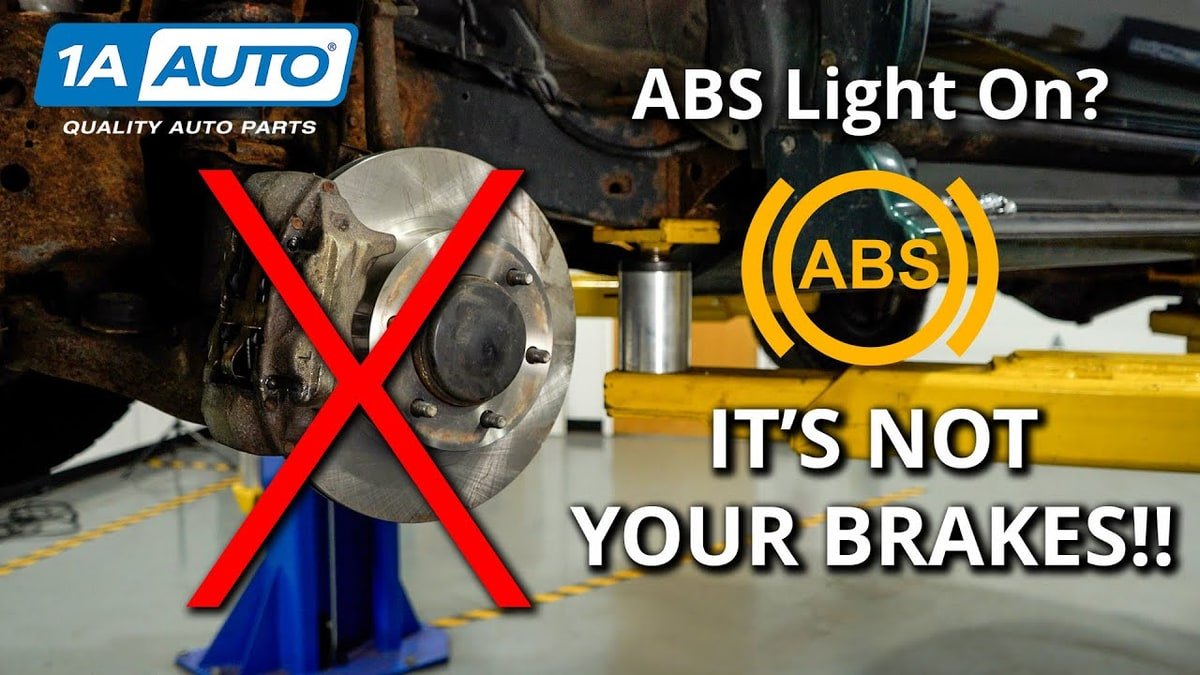
An intermittent signal and a dead sensor produce the same fault code. In live data they look nothing alike. That difference is the entire reason to use equipment that reads live data rather than equipment that reads codes and stops there.
I went to the right front corner. The connector had been disturbed, locking tab partially disengaged, probably at the last tyre change, never refitted properly. You could see the gap in the housing where the clip should have been seated. The contact was breaking under vibration every time the wheel moved.
I reseated the connector, secured the loom, and cleared the codes. Parts cost: nothing. Time on site: fifty minutes. The nine-hundred-and-eighty-pound quote had been built on a scan result and a parts list with no physical investigation between the two.
I am not going to say every large ABS quote is like this one. I have done genuine module replacements this year where live data confirmed internal failure beyond any doubt, and those jobs cost what they cost. But the number of quotes I see that go directly from a scan to a four-figure total has risen sharply. That is not explained by parts prices alone.
Some of it is workshop time pressure. Some of it is diagnostic software that auto-generates repair estimates from fault codes, which sounds efficient and is actively dangerous. A fault code is not a diagnosis. It is a starting position.
I understand why people sit on ABS warning lights when money is tight. The car still stops. The pedal still feels the same. What has actually changed is inside a system that most drivers have no way of reading, and that disconnect is where the problem grows.
What I drove away from Flitwick thinking about was that diagnostic charge. He had paid for a diagnosis and received a scan and a list. The gap between scanning a car and actually diagnosing it, that is where most of that fifty percent increase lives, and it is the part that nobody puts on the invoice.

Jimmy O’Riley is a UK-based mobile mechanic and automotive diagnostic specialist operating out of Bedfordshire, England. He founded O’Rileys Autos in 2011 with a focus on bringing professional vehicle repairs directly to customers at their homes and workplaces.
With over a decade of hands-on experience, Jimmy specializes in ABS diagnostics, brake system repairs, diesel emissions faults, and DPF cleaning. He is recognized across the UK and Ireland as one of the leading specialists in vehicle braking and emissions systems, earning the title “The DPF King” from his growing online audience.
Jimmy documents real-world automotive repairs through his YouTube channel, which has accumulated over 97,000 subscribers and nearly 2,000 published repair videos. His content covers ABS fault diagnosis, wheel speed sensor testing, brake module replacement, and roadside repair procedures across a wide range of vehicle makes and models.
He is active on YouTube, Instagram, and Facebook under O’Rileys Autos.