
There is a 2015 Ford Focus on the road outside a house in Flitwick, and its owner has two quotes on her phone. One is from the Ford dealer in Dunstable for 1,100 pounds. The other is from an independent garage in Houghton Regis for 680 pounds. Both are for an ABS control module replacement.
I understand why she went to both. The dealer quote felt like too much money, and finding a cheaper version of the same job is a rational response to a four-figure estimate. What neither quote told her was whether the module actually needed replacing. That distinction is going to matter in about twenty minutes.
The fault code on this car was C1155: right rear wheel speed sensor input circuit failure. When I see a module replacement quote attached to that code, the first thing I want is live data, not a parts list. I have seen C1155 treated as evidence of module failure more times than I can explain without losing patience. The module is logging the fault, which does not mean the module is the fault.
I connect my interface and pull the live data while the engine runs. Three sensors are producing clean signal, and the right rear is producing nothing. No variation, no flicker, no noise of any kind. That is not what a struggling module looks like on the screen.
For official safety context, see this reference.
That is what a dead sensor input looks like.
The tone ring on the right rear hub was the problem. Two teeth had been bent by a pothole impact, almost certainly on the A507, and the reluctor pattern the sensor reads from was broken. The sensor itself tested clean on resistance across the terminals. The fault was in what the sensor was trying to read, which is a completely different repair from what either quote was describing.
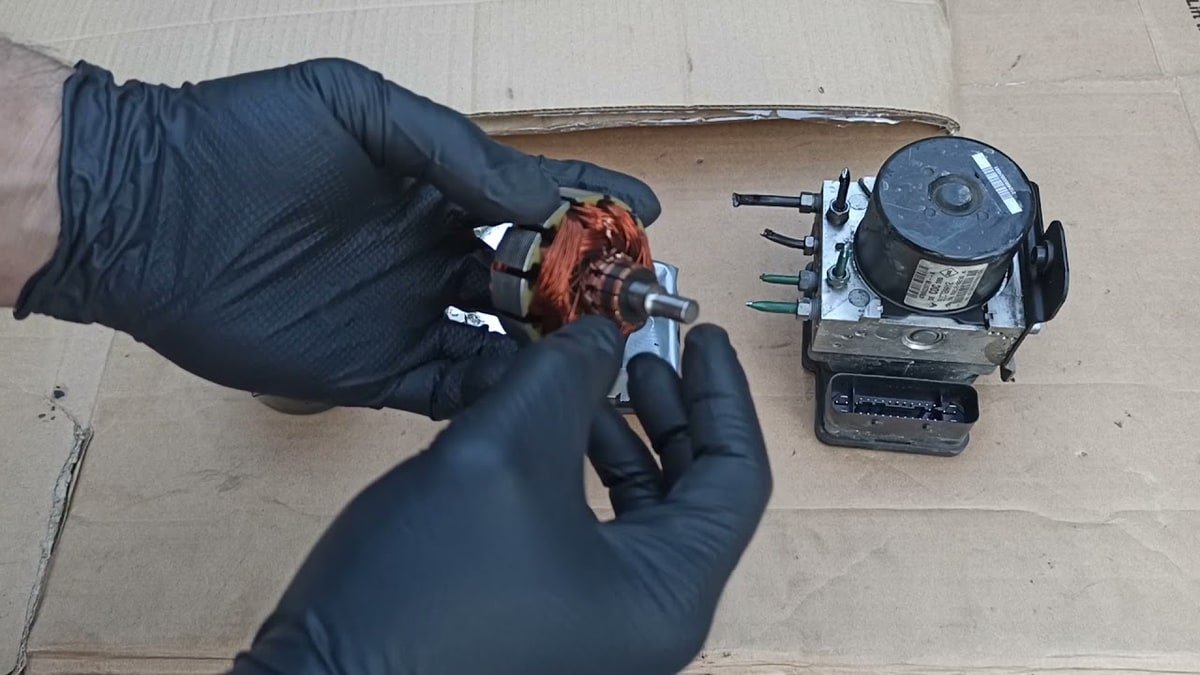
The wiring conduit on that corner had also split and let moisture reach the connector. I know that type of corrosion by feel before I even look at it. The connector resists the unplug in a specific way that tells you the pin housing has been sitting in damp for some time. On a car that has spent its whole life on Bedfordshire and Hertfordshire roads, that conduit split could have been there since the second winter.
I want to be precise about what both garages had done. They read a fault code, identified the module as the component that processes sensor inputs, and quoted to replace it. That is not negligent. It is what happens when you are working from code alone, without the equipment to watch live data across all four sensors in real time.
A code pointing at the module tells you the module noticed something wrong. It does not tell you what caused the problem that the module noticed. Those are two different pieces of information, and the diagnostic equipment you have access to determines which one you are actually getting.
I replaced the tone ring, sealed the conduit, cleaned and regreased the connector, cleared the code, and road-tested while watching the live feed on all four corners. Every sensor returned clean. The module, the original Ford unit that has been on this car since 2015, returned a clear health check on every parameter. Parts cost was 47 pounds.
The independent quote was cheaper than the dealer. It was also for a part that did not need to be touched.
Neither garage was acting in bad faith. Whether the quote comes in dollars or pounds, the number for an ABS module is large enough to make a cheaper alternative look like the obvious move. What the comparison between those two prices could not show was that the diagnostic premise underneath both of them was identical. Both quotes described the same job, and the job was wrong.
What I have noticed over eleven years of this is that module replacement quotes cluster around specific cars at specific mileages, and they are rarely random. The Focus MK3 between sixty and eighty thousand miles is one of those cars right now, and the right rear tone ring is a recurring reason why. My last ABS video on that generation had over three hundred comments, most from people who had received exactly this quote. A fair number had already had the module replaced before they watched it: same code, same car, same hub, same road through the same stretch of Bedfordshire.

Jimmy O’Riley is a UK-based mobile mechanic and automotive diagnostic specialist operating out of Bedfordshire, England. He founded O’Rileys Autos in 2011 with a focus on bringing professional vehicle repairs directly to customers at their homes and workplaces.
With over a decade of hands-on experience, Jimmy specializes in ABS diagnostics, brake system repairs, diesel emissions faults, and DPF cleaning. He is recognized across the UK and Ireland as one of the leading specialists in vehicle braking and emissions systems, earning the title “The DPF King” from his growing online audience.
Jimmy documents real-world automotive repairs through his YouTube channel, which has accumulated over 97,000 subscribers and nearly 2,000 published repair videos. His content covers ABS fault diagnosis, wheel speed sensor testing, brake module replacement, and roadside repair procedures across a wide range of vehicle makes and models.
He is active on YouTube, Instagram, and Facebook under O’Rileys Autos.