
The car was a 2019 Audi A6 on a driveway in Biggleswade. The ABS light had been on since before the owner paid a garage to replace the ABS pump two months earlier. The pump had not fixed it. The light came back within a fortnight, and the garage had stopped answering her calls.
That pump cost her just over 800 pounds fitted. What the garage used to diagnose the original fault was a code pointing at hydraulic pressure irregularity in the ABS system. A code like that, on a car like this, is not a destination.
She had not questioned the diagnosis when the garage gave it to her, and I understand why. When a garage tells you the ABS pump has failed and shows you a fault code on screen, there is no obvious reason to ask for a second opinion. Most people have no reference point for how incomplete that picture might be.
The 2019 A6 runs two control modules on its braking architecture. There is the ABS module handling wheel speed data and the separate ESC module coordinating stability inputs. They communicate over a CAN bus line that a basic scanner does not reach. If those two modules fall out of sync, the ABS module generates hydraulic fault codes even when the hydraulic hardware is working correctly.
For official safety context, see this reference.
Modern ABS systems on upper-mid and premium vehicles now incorporate inputs from up to 28 sensors. That count includes wheel speed sensors, steering angle sensors, yaw rate sensors, lateral acceleration sensors, brake pressure sensors, and wheel torque monitors on cars with active chassis systems. The number matters because each one is a potential fault source sitting somewhere in a wiring architecture that UK roads work on constantly.
A professional scan tool pulls live data from every one of those sensor inputs in real time. What most garages are working with is a code reader that accesses the primary OBD port, reads the ABS module's stored faults, and stops there. That is a very different picture from watching all 28 inputs live while the car is running.
When I put my kit on the A6 and pulled live data from both modules simultaneously, the picture changed immediately. The CAN bus line between the ABS module and the ESC module was dropping out intermittently at speeds above 45 miles per hour. The ABS module was generating hydraulic pressure codes because it was losing contact with the ESC module and defaulting to a fault state. The pump that had been replaced was working correctly the entire time.
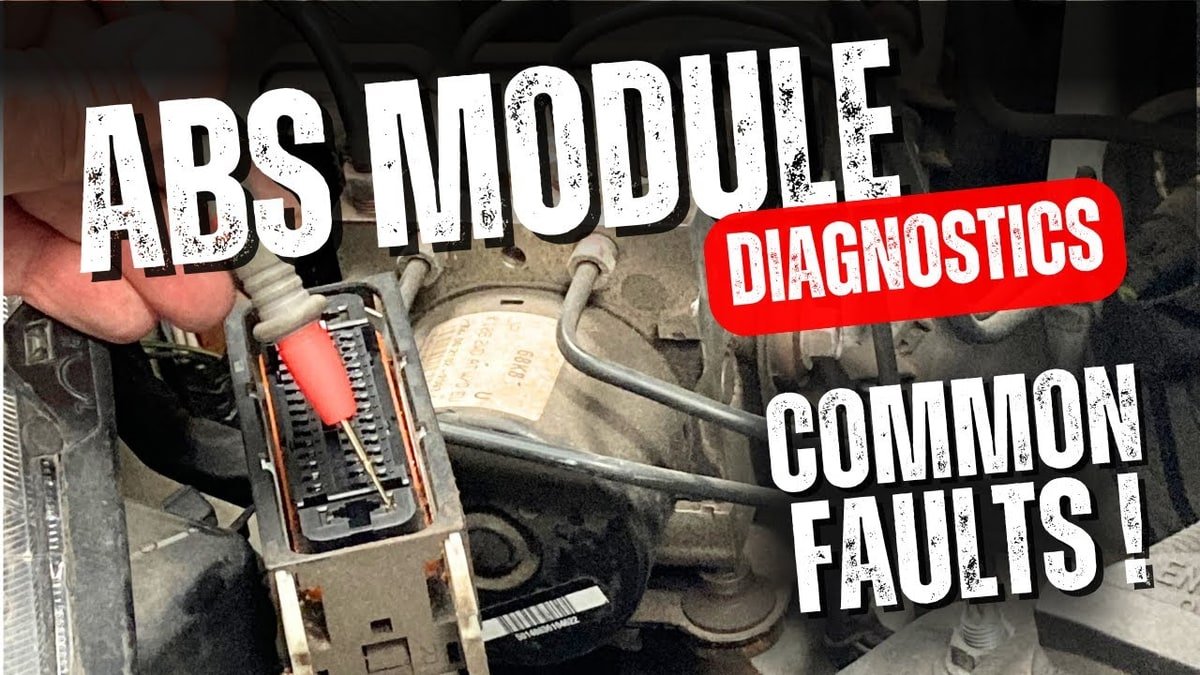
The actual fault was a corroded connector on the CAN bus harness, in the section passing through the offside rear wheel arch. The terminal pins had the white powdery corrosion that any connector accumulates after sitting in British road water long enough. That section of harness sits close to the inner arch liner on A6s of this generation. Water pools there rather than draining, and the corrosion was intermittent enough that a static scan would never have caught it.
I do not think every local garage is cutting corners deliberately. What I think is that the diagnostic tools available for a few hundred pounds cannot access what is needed to properly diagnose a modern multi-module ABS system. The gap between what those tools read and what is actually happening inside the car is where wrong diagnoses live, and it is wider than most people realise.
Eight hundred pounds of parts that did not need replacing.
I have filmed Audi ABS diagnostics on the channel twice now. The comments on both videos filled with people who had been through the same thing on the same model. Different garages, different amounts spent, same outcome. That pattern tells me this is not an isolated mistake on one car on one Bedfordshire driveway.
Proper diagnosis on a modern ABS system means pulling live data from every module at the same time. You watch sensor behaviour under real driving conditions and trace the fault to its source, not to the first component a code suggests.
A fault code is a starting point.
This owner spent 800 pounds on a part that was not causing the fault. The actual fix was a harness repair and a connector clean, which took less time than the pump replacement and cost considerably less. I cannot tell her why the first garage stopped returning her calls. What I can tell her is that a scanner which cannot see both control modules simultaneously should not be diagnosing a car with two of them.

Jimmy O’Riley is a UK-based mobile mechanic and automotive diagnostic specialist operating out of Bedfordshire, England. He founded O’Rileys Autos in 2011 with a focus on bringing professional vehicle repairs directly to customers at their homes and workplaces.
With over a decade of hands-on experience, Jimmy specializes in ABS diagnostics, brake system repairs, diesel emissions faults, and DPF cleaning. He is recognized across the UK and Ireland as one of the leading specialists in vehicle braking and emissions systems, earning the title “The DPF King” from his growing online audience.
Jimmy documents real-world automotive repairs through his YouTube channel, which has accumulated over 97,000 subscribers and nearly 2,000 published repair videos. His content covers ABS fault diagnosis, wheel speed sensor testing, brake module replacement, and roadside repair procedures across a wide range of vehicle makes and models.
He is active on YouTube, Instagram, and Facebook under O’Rileys Autos.