
It was a car park in Kempston on a Tuesday afternoon. The Cybertruck was parked up with a brake fault light on and an unhappy owner standing beside it. The garage that had done the rear pads the previous day had already called me. They were not asking me to come and fix it. They wanted to know what they had done wrong.
I pulled out the scanner before I said anything to either of them. The pads had been changed. The disc face still had fresh brake dust on it, but the EPB fault was there with two other codes sitting behind it. What I needed was not those codes. It was the live data from the rear brake actuators.
The rear-left EPB motor was drawing irregular current at rest. That is the electrical signature of a motor that has been mechanically stressed beyond its design tolerance. The stored code was C1236, which covers EPB motor control issues. It appears the same whether the motor failed on its own, developed a wiring fault, or absorbed load it was holding against when the piston moved.
The housing on the rear-left unit looked intact from outside. That matters because this type of damage does not usually leave a visible mark. What breaks is the internal gear assembly when the motor tries to maintain its position against a piston travelling in the opposite direction. That failure lives entirely inside the unit.
For official safety context, see this reference.
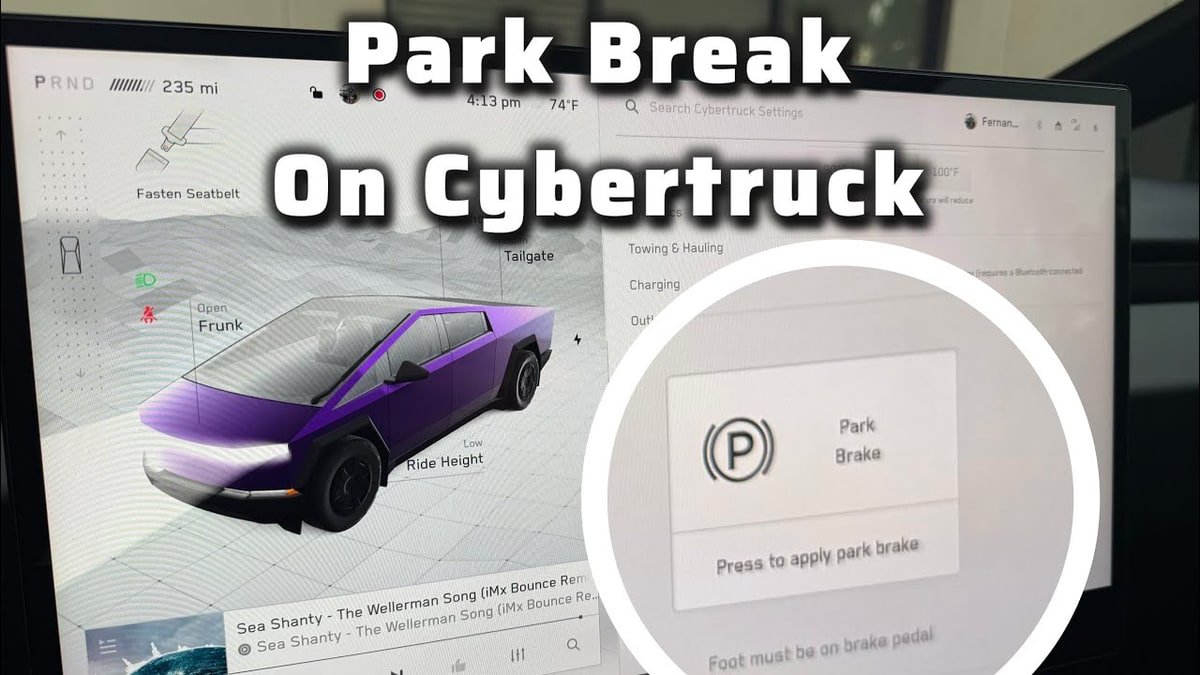
Tesla built the Cybertruck on a brake-by-wire architecture. The rear EPB motors are not accessories bolted onto a standard hydraulic caliper. They are part of how the braking strategy works, and they behave differently under load than anything I see on the Vauxhalls and Fords I work on every week. Before anyone touches the rear brakes on a Cybertruck, the vehicle needs to be placed into Brake Service Mode through the touchscreen controls.
That procedure releases the motors and registers with the system that a service operation is underway. Without it, the motor is actively maintaining its position when the piston begins to travel. It takes the full mechanical load of that movement, and the damage is done in the same instant the piston starts to move.
The mechanic who did this job has been working on EPBs for years and is good at it. He used the correct tool for the caliper type in front of him. Nothing about a Cybertruck from the outside indicates it requires a different starting procedure to every other EPB job he has ever done on a British driveway or workshop floor.
I am not going to suggest Tesla's service documentation is well-positioned for an independent mechanic working through a job he has done hundreds of times before. The procedures exist. Finding them before a job that feels routine is not where the mind goes automatically. That gap is where this failure mode lives.
The codes do not warn you in advance.
I have been seeing this come up in my channel comments from other techs. That tells me this is not one isolated incident on one Tuesday afternoon in Kempston. The pattern across all of them is the same. Experienced mechanic, correct tooling for a conventional EPB, a routine-looking job, and an architecture that does not identify itself as different before the damage is done.
The owner of this Cybertruck came in for a rear brake pad replacement. What she is now facing is an EPB actuator replacement on the rear-left side, plus the diagnostic time to establish exactly what the previous attempt left behind in the motor. The cost difference between those two jobs is significant. I am not making this sound worse than it is, but I am also not going to soften the distance between where this day started and where it ended.
Brake Service Mode is the procedure. It is accessed through the touchscreen, it takes a matter of minutes to invoke, and the Cybertruck's architecture requires it before rear brake work begins. The vehicle does not alert you that this step is missing. It gives you the service result of skipping it without any advance indication that something has gone wrong.
What I keep thinking about on the drive back is the cube tool sitting on the workshop floor next to that Cybertruck. It is the right tool. The mechanic who used it is genuinely skilled at this work. The car is the thing that changed, and it gave no indication on the outside that the procedure needed to start somewhere different this time.
Jimmy O’Riley is a UK-based mobile mechanic and automotive diagnostic specialist operating out of Bedfordshire, England. He founded O’Rileys Autos in 2011 with a focus on bringing professional vehicle repairs directly to customers at their homes and workplaces.
With over a decade of hands-on experience, Jimmy specializes in ABS diagnostics, brake system repairs, diesel emissions faults, and DPF cleaning. He is recognized across the UK and Ireland as one of the leading specialists in vehicle braking and emissions systems, earning the title “The DPF King” from his growing online audience.
Jimmy documents real-world automotive repairs through his YouTube channel, which has accumulated over 97,000 subscribers and nearly 2,000 published repair videos. His content covers ABS fault diagnosis, wheel speed sensor testing, brake module replacement, and roadside repair procedures across a wide range of vehicle makes and models.
He is active on YouTube, Instagram, and Facebook under O’Rileys Autos.