
The Volkswagen ABS module is a combined hydraulic and electronic control unit that regulates brake pressure at each wheel during hard braking. Repairing it involves diagnosing fault codes, repairing or replacing the unit, and coding the module to the vehicle using VCDS or VAG-COM software.
What Is a Volkswagen ABS Module?
Manufacturer support pages provide related owner information in Volkswagen owner support.
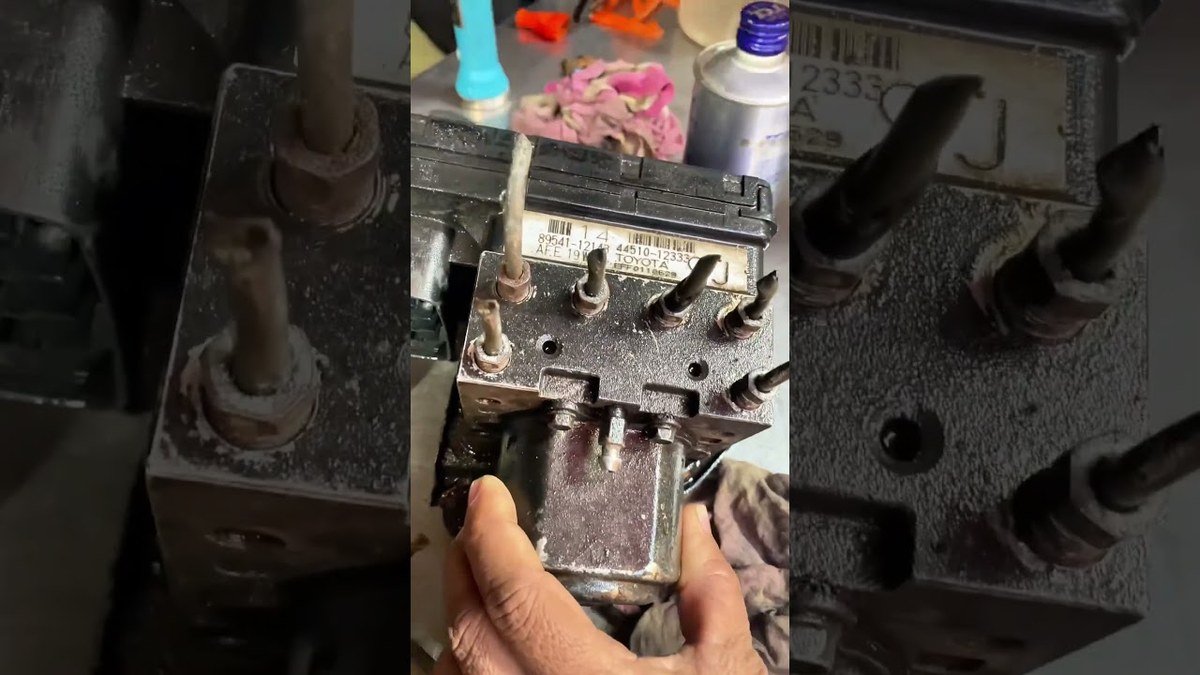
The ABS module in a Volkswagen is a unit consisting of 2 components: the ABS Electronic Control Unit (ECU) and the Hydraulic Control Unit (HCU). The ECU processes wheel speed sensor data. The HCU controls brake pressure through solenoid valves and a hydraulic pump.
Volkswagen models that commonly require ABS module repair include the Golf, Passat, Tiguan, Jetta, and Touareg.
Trailer ABS Blink Codes: How to Read Them and What 8 Common Codes Mean
ABS Sensor Test With Multimeter: 3 Methods and Correct Reading Values
What Are the Signs of a Failing Volkswagen ABS Module?
A failing Volkswagen ABS module produces 5 recognizable symptoms:
- The ABS warning light illuminates on the dashboard.
- The traction control (ESP) warning light turns on simultaneously.
- The brake pedal pulses during normal braking conditions.
- The ABS activates during slow-speed stops where it should not trigger.
- The vehicle fails to respond to ABS activation during emergency braking.
What Warning Lights Indicate ABS Module Failure in a Volkswagen?
3 warning lights indicate ABS module failure in a Volkswagen. These are the ABS light, the ESP (Electronic Stability Programme) light, and the EPC (Electronic Power Control) light. All 3 share data from the ABS module and illuminate when the module fails.
What Are the 5 Most Common Volkswagen ABS Module Faults?
The 5 most common Volkswagen ABS module faults are:
- Internal circuit board failure: Corrosion or solder joint failure on the ECU circuit board interrupts communication between the module and sensors.
- Pump motor failure: The hydraulic pump motor fails to activate, preventing pressure modulation during ABS braking events.
- Solenoid valve failure: A stuck or burnt solenoid valve causes uneven brake pressure at 1 or more wheels.
- Wheel speed sensor input failure: The module stops receiving accurate data from 1 or more of the 4 wheel speed sensors.
- Power supply fault: Voltage drops or ground faults prevent the module from powering on correctly.
What Causes the ABS Module to Fail in Volkswagen Vehicles?
Moisture ingress is the leading cause of ABS module failure in Volkswagen vehicles. Water enters the module housing through deteriorated seals and corrodes the internal circuit board. A study by the Society of Automotive Engineers (SAE) identified moisture contamination as the primary cause of ECU failure in European passenger vehicles.
Additional causes include:
- Voltage spikes from incorrect jump-starting.
- Excessive engine bay heat affecting internal components.
- Physical damage from road debris or impact.
How Do You Diagnose a Volkswagen ABS Module Fault?
Diagnosing a Volkswagen ABS module fault requires a VCDS (VAG-COM Diagnostic System) or an OBD-II scanner with ABS module access. The process involves 4 steps:
- Connect the VCDS cable to the OBD-II port located beneath the dashboard.
- Select the ABS module (Module 03) from the control module list.
- Read all fault codes stored in the module's memory.
- Cross-reference each code with Volkswagen's fault code database to identify the faulty component.
What Fault Codes Are Associated with Volkswagen ABS Module Failure?
The 5 most common Volkswagen ABS fault codes and their descriptions are listed below:
| Fault Code | Description | Likely Cause |
|---|---|---|
| 00283 | ABS wheel speed sensor, front left | Faulty sensor or wiring |
| 00285 | ABS wheel speed sensor, front right | Faulty sensor or wiring |
| 01276 | ABS control module | Internal module fault |
| 00778 | Hydraulic pump motor | Pump motor failure |
| 00290 | ABS solenoid valve | Valve circuit fault |
VCDS is the preferred diagnostic tool for Volkswagen vehicles. Generic OBD-II scanners do not access all ABS module fault codes in VW platforms.
Can a Volkswagen ABS Module Be Repaired Instead of Replaced?
Yes. A Volkswagen ABS module can be repaired instead of replaced in many cases. Module repair involves resoldering damaged circuit board connections, replacing failed capacitors or relays, and removing corrosion from internal contacts.
Specialist ABS module repair services charge between $100 and $250 to repair a Volkswagen ABS module. This is significantly less than the $400 to $1,200 cost of a new OEM module.
Module repair is suitable when the fault is limited to the ECU section. A damaged HCU requires full module replacement.
How Much Does Volkswagen ABS Module Repair Cost?
Volkswagen ABS module repair and replacement costs range from $10 to $1,200 depending on the repair method.
| Repair Method | Parts Cost | Labor or Service Cost | Total Cost |
|---|---|---|---|
| DIY circuit board repair | $10 to $50 | $0 | $10 to $50 |
| Third-party module repair service | $0 (send unit) | $100 to $250 | $100 to $250 |
| Remanufactured aftermarket module | $150 to $350 | $100 to $200 | $250 to $550 |
| New OEM module (Volkswagen dealer) | $400 to $900 | $150 to $300 | $550 to $1,200 |
A remanufactured or used module still requires VCDS coding after installation. Skipping coding produces incorrect system behaviour.
How Do You Replace a Volkswagen ABS Module in 5 Steps?
Replacing a Volkswagen ABS module requires 5 steps:
- Disconnect the negative battery terminal to eliminate electrical risk before beginning work.
- Locate the ABS module in the engine bay, mounted on the brake master cylinder assembly.
- Disconnect the ABS wiring harness connector by pressing the release tab and pulling the connector away from the module.
- Remove the module from the HCU bracket using a T27 or T30 Torx bit, depending on the model year.
- Install the replacement module, reconnect the wiring harness, torque the mounting bolts to 8 Nm, and reconnect the battery.
What Tools Are Required to Replace a Volkswagen ABS Module?
4 tools are required to replace a Volkswagen ABS module. These include a Torx bit set (T27 and T30), a 10 mm socket for the battery terminal, a trim removal tool for panel access, and a VCDS interface for post-installation coding.
Does a New Volkswagen ABS Module Require Coding?
Yes. A new Volkswagen ABS module requires coding using VCDS or dealer-level diagnostic software. The coding process matches the module to the vehicle's VIN, variant configuration, and optional equipment list.
Skipping the coding step causes the module to operate in a default mode. In default mode, 4 features do not function correctly. These are ESP, hill hold control, electronic brake distribution (EBD), and cornering brake control (CBC).
Coding takes approximately 15 to 30 minutes at a Volkswagen dealer or qualified specialist workshop. According to Volkswagen Group technical service bulletins, uncoded ABS modules must not be operated on public roads.

Jimmy O’Riley is a UK-based mobile mechanic and automotive diagnostic specialist operating out of Bedfordshire, England. He founded O’Rileys Autos in 2011 with a focus on bringing professional vehicle repairs directly to customers at their homes and workplaces.
With over a decade of hands-on experience, Jimmy specializes in ABS diagnostics, brake system repairs, diesel emissions faults, and DPF cleaning. He is recognized across the UK and Ireland as one of the leading specialists in vehicle braking and emissions systems, earning the title “The DPF King” from his growing online audience.
Jimmy documents real-world automotive repairs through his YouTube channel, which has accumulated over 97,000 subscribers and nearly 2,000 published repair videos. His content covers ABS fault diagnosis, wheel speed sensor testing, brake module replacement, and roadside repair procedures across a wide range of vehicle makes and models.
He is active on YouTube, Instagram, and Facebook under O’Rileys Autos.