
Trailer ABS blink codes are fault signals transmitted by the yellow ABS warning lamp on a trailer. The lamp blinks in a 2-digit pattern to identify the specific component that has failed. Each pattern represents 1 active fault stored in the ABS controller.
What Are Trailer ABS Blink Codes?
Federal brake-system rules are published in FMCSA brake systems guidance.
Trailer ABS blink codes are diagnostic trouble codes communicated through the yellow ABS indicator lamp mounted on the trailer. The lamp blinks a 2-part sequence: the first series of blinks identifies the system category, and the second series identifies the specific fault type.
This blink code diagnostic method is required under Federal Motor Carrier Safety Administration (FMCSA) regulations for air brake trailers manufactured after March 1, 1998. Examples of trailer ABS blink codes include code 2-1 for a wheel speed sensor fault and code 3-1 for a modulator valve fault.
ABS and Traction Control Light On: 7 Causes and How to Fix It
Volkswagen ABS Module Repair: 5 Common Faults, Costs, and Fix Steps
How Do Trailer ABS Blink Codes Work?
The yellow ABS warning lamp uses a timed blink pattern to communicate each stored fault. The sequence works as follows:
- The lamp blinks the first digit (e.g., 2 blinks).
- A short pause of approximately 1 second separates the 2 digits.
- The lamp blinks the second digit (e.g., 1 blink).
- A long pause of approximately 3 seconds follows before the sequence repeats.
A code of 2-1 means the lamp blinks 2 times, pauses, then blinks 1 time. If more than 1 fault is stored, the controller cycles through all active codes before repeating the sequence from the first.
What Is the Difference Between Active and Stored Trailer ABS Codes?
An active code indicates a fault currently present in the system. A stored code indicates a fault that occurred previously but is no longer active. The ABS controller retains stored codes in memory until cleared by a diagnostic tool or after 3 to 5 consecutive fault-free ignition cycles.
How Do You Read Trailer ABS Blink Codes in 3 Steps?
Reading trailer ABS blink codes requires 3 steps:
- Apply power to the trailer using the tractor's 7-pin connector or a standalone 12-volt power source, without moving the vehicle.
- Count the first series of lamp blinks before the short pause.
- Count the second series of blinks after the short pause. Record both numbers as the fault code (e.g., 2-3).
After the initial power-on self-check, the lamp blinks 1-1 if no faults are present. Any other code sequence indicates an active or stored fault.
What Do the 8 Most Common Trailer ABS Blink Codes Mean?
The 8 most common trailer ABS blink codes are as follows:
| Blink Code | System | Fault Description |
|---|---|---|
| 1-1 | System | No faults detected |
| 2-1 | Wheel speed sensor | No signal from 1 or more sensors |
| 2-2 | Wheel speed sensor | Erratic or intermittent signal |
| 2-3 | Wheel speed sensor | Excessive air gap between sensor and tone ring |
| 3-1 | Modulator valve | Power supply circuit fault |
| 3-2 | Modulator valve | Hold solenoid fault |
| 3-3 | Modulator valve | Release solenoid fault |
| 4-1 | ABS ECU | Internal controller fault |
Note that specific code definitions vary by manufacturer. Always cross-reference with the manufacturer's diagnostic chart.
What Does Code 2-1 Mean on a Trailer ABS System?
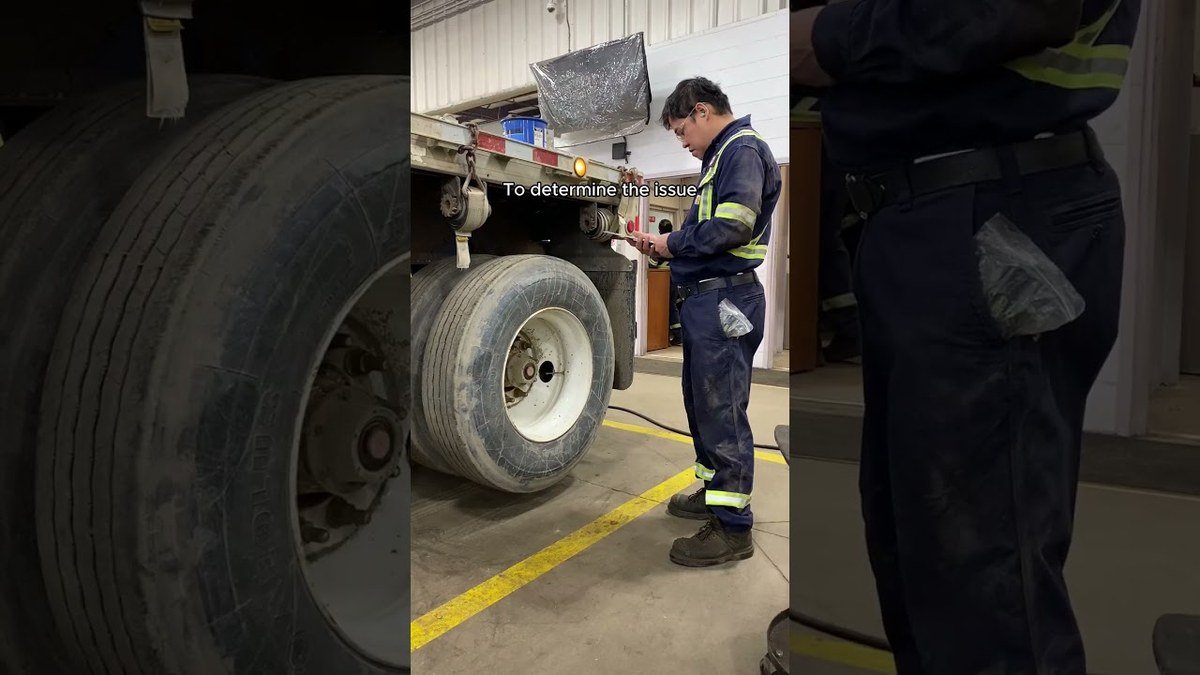
Code 2-1 indicates that 1 or more wheel speed sensors are not transmitting a signal to the ABS controller. Causes include a broken sensor, a damaged tone ring, or a severed wiring harness. Code 2-1 is the most frequently reported trailer ABS fault code in field diagnostics.
What Does Code 3-1 Mean on a Trailer ABS System?
Code 3-1 indicates a fault in the modulator valve's power supply circuit. The modulator valve controls brake pressure during ABS activation. This code points to a short circuit, open circuit, or damaged wiring between the valve and the ABS controller.
Which 4 Trailer ABS Manufacturers Use Blink Codes?
4 major trailer ABS manufacturers use blink codes for fault diagnosis. They include:
- Haldex (now Knorr-Bremse): Uses the EB+ and EB2 controller platforms.
- Meritor WABCO (now ZF WABCO): Uses the 4S/2M and 4S/4M system configurations.
- Bendix: Uses the ABS-6 Advanced and ABS-6 Plus controllers.
- Bosch: Uses the trailer ABS controller for European-specification trailers.
Each manufacturer follows a similar 2-digit blink code structure. However, code definitions differ between brands. Using the wrong manufacturer's chart produces incorrect diagnostic results.
| Manufacturer | Controller Series | Diagnostic Reference |
|---|---|---|
| Haldex (Knorr-Bremse) | EB+, EB2 | EB+ Troubleshooting Guide |
| Meritor WABCO (ZF) | 4S/2M, 4S/4M | WABCO Trailer ABS Manual |
| Bendix | ABS-6, ABS-6 Plus | Bendix Service Data Sheet |
| Bosch | Trailer ABS | Bosch Trailer ABS Manual |
How Do You Fix Faults Identified by Trailer ABS Blink Codes?
Fixing trailer ABS faults depends on the blink code retrieved. There are 5 common repair procedures:
- Code 2-1 or 2-2 (sensor fault): Inspect the sensor, wiring harness, and connector. Replace the damaged sensor. Replacement sensors cost $15 to $60.
- Code 2-3 (excessive air gap): Adjust the sensor-to-tone-ring clearance to between 0.020 and 0.050 inches. Replace a cracked or corroded tone ring if required.
- Code 3-1 to 3-3 (modulator valve fault): Test solenoid resistance with a multimeter. Replace the valve if resistance falls outside the 4 to 8 ohm specification. Modulator valves cost $80 to $200.
- Code 4-1 (ABS ECU fault): Replace the ABS controller. Controllers cost $150 to $500 depending on the manufacturer.
- Wiring fault (any code): Inspect the 7-pin connector and the complete ABS wiring harness for corrosion, damage, or loose terminals.
How Do You Reset Trailer ABS Blink Codes?
Resetting trailer ABS blink codes requires 1 of 2 methods:
- Use a manufacturer-specific diagnostic tool, such as Haldex Info Center or WABCO TOOLBOX, to clear stored fault codes from the controller memory.
- Complete 3 to 5 consecutive ignition cycles without any active faults. The controller clears stored codes automatically after the required number of fault-free cycles.
Active faults cannot be cleared until the underlying malfunction is repaired.
Can a Bad 7-Pin Connector Cause Trailer ABS Blink Codes?
Yes. A corroded or damaged 7-pin connector causes trailer ABS blink codes. Pin 7 on the trailer connector supplies 12-volt power to the ABS controller. A fault at this pin interrupts the power supply and prevents the controller from operating. This triggers power-related fault codes and may cause the ABS warning lamp to remain on continuously.
Inspecting and cleaning the 7-pin connector is a recommended first step in diagnosing any power-related blink code on a trailer ABS system.

Jimmy O’Riley is a UK-based mobile mechanic and automotive diagnostic specialist operating out of Bedfordshire, England. He founded O’Rileys Autos in 2011 with a focus on bringing professional vehicle repairs directly to customers at their homes and workplaces.
With over a decade of hands-on experience, Jimmy specializes in ABS diagnostics, brake system repairs, diesel emissions faults, and DPF cleaning. He is recognized across the UK and Ireland as one of the leading specialists in vehicle braking and emissions systems, earning the title “The DPF King” from his growing online audience.
Jimmy documents real-world automotive repairs through his YouTube channel, which has accumulated over 97,000 subscribers and nearly 2,000 published repair videos. His content covers ABS fault diagnosis, wheel speed sensor testing, brake module replacement, and roadside repair procedures across a wide range of vehicle makes and models.
He is active on YouTube, Instagram, and Facebook under O’Rileys Autos.