
The Ford Focus on the driveway in Sandy had no warning lights showing and an owner who could not explain what felt wrong. She said the braking felt different, not dramatically different, but enough that she had noticed it across three or four journeys. That description alone is enough to make me pull the scanner out before I have even looked at the car.
There were no fault codes stored. In live data, three of the four wheel speed sensors were reading smoothly. The nearside front was producing occasional micro-drops in signal that recovered fast and left nothing in the fault memory. Without live data, that Focus would have looked perfectly healthy.
I have seen that pattern enough times to know what it tends to become. The module's response to that signal was marginally slower than it should be, which only shows up in live data if you know to look for it. The warning light was not on because the system had not yet decided anything was wrong. But the decision was coming.
MIT have published research on an algorithm that uses machine learning to detect degrading ABS module behaviour before any fault code is generated. The idea is that the system monitors its own performance margins in real time and flags a predicted failure window before the warning light arrives. I find that genuinely interesting, which is not something I say about much technology that comes out of research papers.
The warning light is not a diagnostic tool. It is the system's way of telling you that something has already crossed a threshold. What MIT is trying to catch is the degradation between normal function and threshold breach. That is the territory where proper live data diagnosis has always lived, and where cheap Bluetooth diagnostic tools sold to enthusiasts are functionally blind.
Three weeks after that visit to Sandy, the Focus came back. The nearside front sensor had produced a fault code overnight and the ABS light had finally come on. What I had been watching in the live data three weeks earlier was the module losing its ability to process that sensor signal consistently. The car had told the owner nothing about any of this until the system had accumulated enough evidence to commit to a code.
The fault code said sensor.
The module was the problem. I had already seen it in the live data three weeks before the system decided it had enough evidence to log anything. That is the gap the MIT algorithm is trying to close.
My question about this technology is not whether it works. The research suggests it does, and the logic behind catching degrading performance margins before they breach thresholds is sound. My question is who gets access to it. Specifically, whether that access reaches people who work outside of franchise networks.
If this data lives inside a manufacturer's connected platform and feeds only to dealer networks, the driver hears about the failure when a notification tells them to book an appointment. That is a commercial outcome dressed as a safety feature. The information should reach whoever the driver trusts to work on their car. For a lot of people in Bedfordshire, that is not a main dealer.
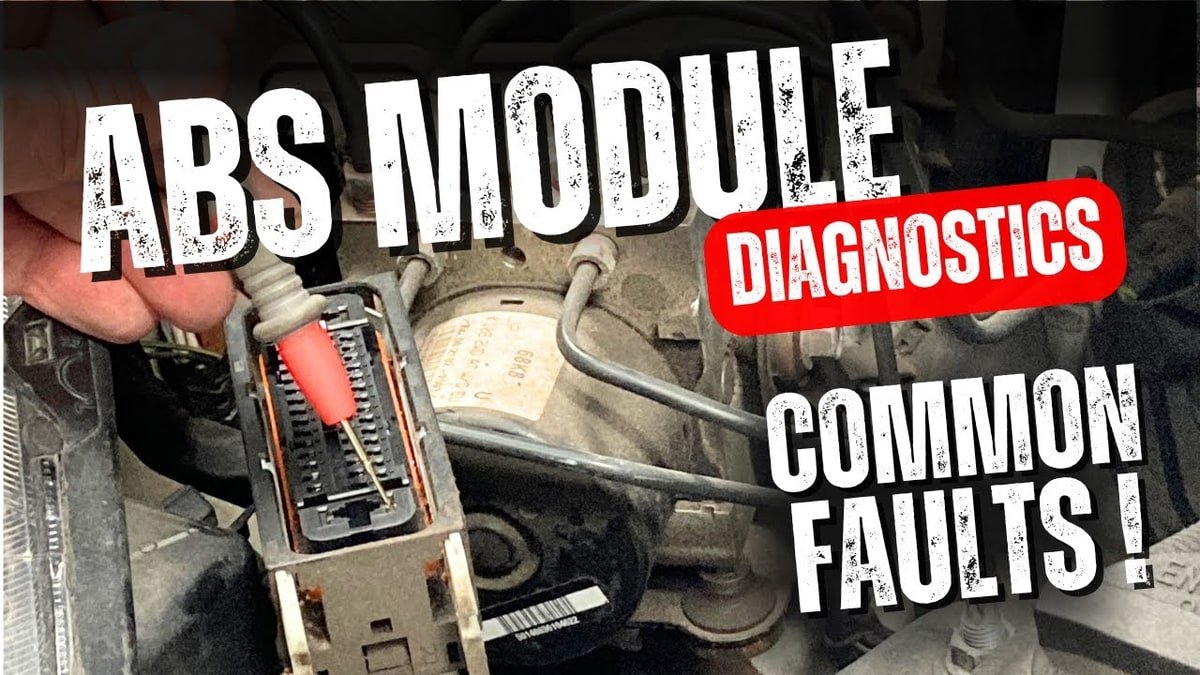
The kind of pre-failure pattern I saw on that Focus in Sandy is something I have described on YouTube. The comments from people who recognised it run into the hundreds. They were not all driving the same make. The degradation pattern is consistent enough across manufacturers that experience and proper equipment gets you most of the way there.
What that Focus needed was a new ABS module, which we fitted on the second visit once I had confirmed through live data that the module was the origin of the fault and not a downstream consequence. I had flagged that possibility to the owner on the first visit, before the warning light had appeared. She was not surprised when the light arrived three weeks later. She already knew what it was going to say.
The MIT algorithm is trying to automate something that good diagnostic practice has always been able to do manually. My concern is not whether the technology works. It is whether the person who works on your car can actually see what it is finding.

Jimmy O’Riley is a UK-based mobile mechanic and automotive diagnostic specialist operating out of Bedfordshire, England. He founded O’Rileys Autos in 2011 with a focus on bringing professional vehicle repairs directly to customers at their homes and workplaces.
With over a decade of hands-on experience, Jimmy specializes in ABS diagnostics, brake system repairs, diesel emissions faults, and DPF cleaning. He is recognized across the UK and Ireland as one of the leading specialists in vehicle braking and emissions systems, earning the title “The DPF King” from his growing online audience.
Jimmy documents real-world automotive repairs through his YouTube channel, which has accumulated over 97,000 subscribers and nearly 2,000 published repair videos. His content covers ABS fault diagnosis, wheel speed sensor testing, brake module replacement, and roadside repair procedures across a wide range of vehicle makes and models.
He is active on YouTube, Instagram, and Facebook under O’Rileys Autos.