
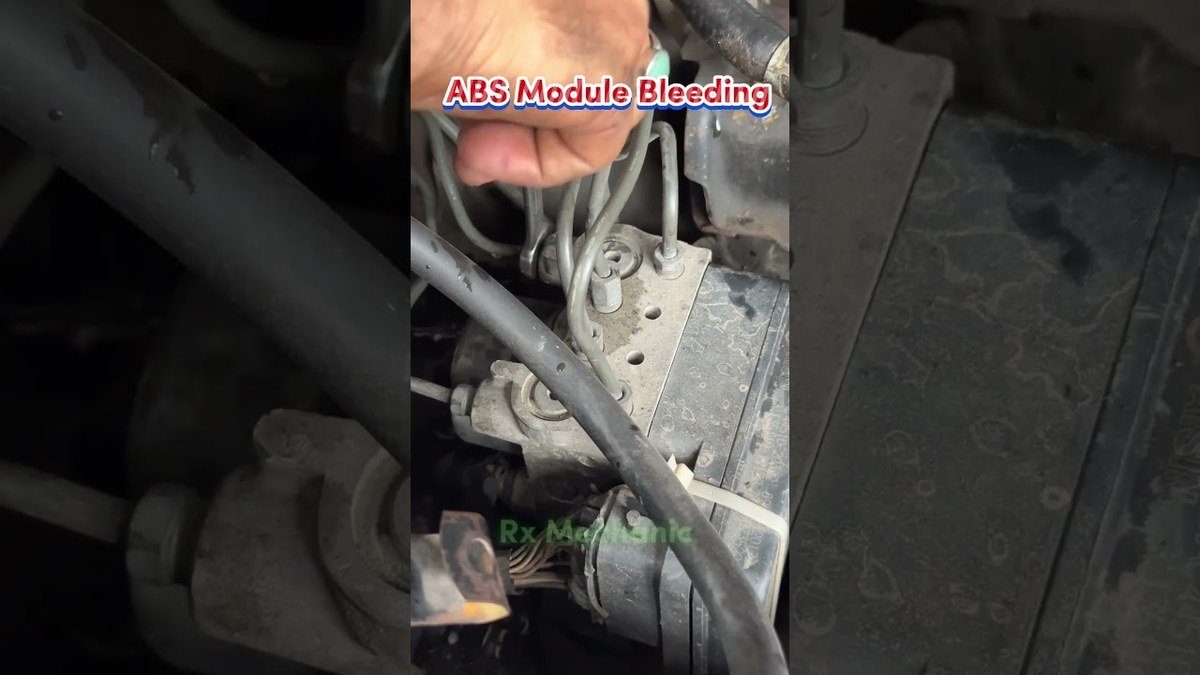
An ABS bleeding scan tool is a bi-directional diagnostic device that activates the ABS pump and solenoid valves to force trapped air out of the hydraulic control unit (HCU). Standard manual brake bleeding cannot remove air from inside the ABS module without this tool.
What Is an ABS Bleeding Scan Tool?
NHTSA explains related safety context in NHTSA vehicle safety information.
An ABS bleeding scan tool is a diagnostic device with bi-directional control capability that cycles the ABS pump and opens each solenoid valve in a programmed sequence. This process moves air trapped inside the hydraulic control unit into the brake lines, where it is then purged through the standard bleed screws at each wheel.
It differs from a basic OBD-II code reader in 3 key ways:
Ford F-150 ABS Module Repair: 5 Steps, Common Faults, and Repair Costs
2025 Kawasaki Ninja 500 SE ABS: Full Specs, 10 SE Features, and Price Guide
- It sends active commands to vehicle components rather than only reading data
- It accesses ABS-specific service functions beyond fault code retrieval
- It controls individual solenoid valves inside the ABS module
Why Does ABS Bleeding Require a Scan Tool?
ABS bleeding requires a scan tool because the hydraulic control unit contains sealed solenoid valve chambers and an internal pump that trap air. Manual brake bleeding only moves fluid through open brake lines. It cannot activate the solenoids or pump required to flush air from inside the HCU.
According to Bosch Automotive, air trapped in an ABS hydraulic unit is a leading cause of a spongy brake pedal following brake system repairs.
How Does a Scan Tool Bleed an ABS Module?
A scan tool bleeds an ABS module by transmitting electronic commands that cycle the pump motor and open each solenoid valve in sequence. This forces trapped air out of the sealed HCU chambers and into the brake lines, where it exits through the bleed screws at each wheel caliper.
What Is the Difference Between Manual Brake Bleeding and ABS Bleeding?
Manual brake bleeding and ABS bleeding serve 2 different purposes.
| Method | What It Clears | Tool Required | Clears HCU Air |
|---|---|---|---|
| Manual brake bleeding | Air in brake lines and calipers | Wrench and bleed kit | No |
| ABS scan tool bleeding | Air inside the hydraulic control unit | Bi-directional scan tool | Yes |
| Combined method | Air in the full brake system | Both | Yes |
The combined method is the most complete approach and is recommended after any brake repair that opens the hydraulic circuit.
What Are the 5 Best Scan Tools for ABS Bleeding?
The 5 best scan tools for ABS bleeding are:
- Autel MaxiCOM MK906 Pro: supports ABS bleeding on over 10,000 vehicle models with full bi-directional control
- Launch X431 V+: covers ABS service functions for domestic, Asian, and European vehicles with active test capability
- Snap-on ZEUS: provides dealer-level ABS bleeding functions and simultaneous live data monitoring
- Autel AL619: an entry-level option supporting ABS and SRS diagnostics with basic bi-directional ABS bleeding
- BlueDriver Pro: a Bluetooth scan tool that supports ABS bleeding on select vehicles through a smartphone application
What Features Should an ABS Bleeding Scan Tool Have?
An ABS bleeding scan tool requires 4 essential features:
- Bi-directional control to send active commands to the ABS pump and solenoids
- A dedicated ABS service menu with a brake bleed or HCU flush function
- Vehicle coverage that matches the make, model, and year being serviced
- Live data display to monitor brake fluid pressure and solenoid response in real time
How Do You Bleed ABS with a Scan Tool?
Bleeding ABS with a scan tool follows 8 steps:
- Fill the brake fluid reservoir to the maximum level with the correct fluid type (DOT 3, DOT 4, or DOT 5.1 as specified by the vehicle manufacturer)
- Connect the scan tool to the OBD-II diagnostic port located under the dashboard
- Navigate to the ABS or brake service menu on the scan tool
- Select the ABS bleeding or HCU flush function
- Follow the scan tool prompts to activate the ABS pump, which cycles for 20 to 30 seconds
- Open the brake bleed screw at the wheel the scan tool specifies
- Allow fluid and air to exit until no air bubbles are visible, then close the bleed screw
- Repeat at each wheel in the sequence the scan tool provides, refilling the reservoir between each wheel
Note that the correct bleeding sequence varies by vehicle. Examples include front-left, front-right, rear-right, rear-left for many domestic vehicles and rear-left, rear-right, front-left, front-right for some European models. Always follow the scan tool or vehicle service manual sequence.
What Are Common Mistakes When Bleeding ABS with a Scan Tool?
4 common mistakes occur when bleeding ABS:
- Allowing the brake fluid reservoir to run dry, which introduces additional air into the system
- Using the wrong bleeding sequence, which leaves air trapped in specific HCU sections
- Skipping the scan tool activation step and relying on manual bleeding alone
- Using an incompatible brake fluid type, which can damage ABS solenoid seals over time
What Is the Cost of ABS Bleeding Scan Tools?
ABS bleeding scan tools range in price based on vehicle coverage and feature depth.
| Tool | Price Range | Vehicle Coverage | Bi-directional Level |
|---|---|---|---|
| BlueDriver Pro | $120 to $150 | Select makes | Limited |
| Autel AL619 | $150 to $200 | Most domestic and Asian | Basic |
| Launch X431 V+ | $500 to $700 | Domestic, Asian, European | Full |
| Autel MaxiCOM MK906 Pro | $900 to $1,200 | Over 10,000 models | Full |
| Snap-on ZEUS | $5,000 to $8,000 | Comprehensive | Full dealer-level |
Professional shops benefit from tools in the $500 to $1,200 range. DIY users servicing a single vehicle can use basic tools in the $120 to $200 range for supported makes and models.
Can You Bleed ABS Without a Scan Tool?
ABS can be partially bled without a scan tool using gravity or pressure methods on the brake lines. Air inside the hydraulic control unit cannot be removed this way. A spongy brake pedal that persists after manual bleeding is a strong indicator that air remains trapped in the HCU.
Some technicians apply repeated firm brake pedal strokes to trigger ABS pump activation and move air through the system. This method is less reliable than scan tool activation and is not recommended by major vehicle manufacturers, including Ford, GM, and Toyota.
ABS Bleeding Scan Tool: Summary
An ABS bleeding scan tool is required for any brake repair that opens the hydraulic circuit on a vehicle with an anti-lock braking system. The tool activates the ABS pump and solenoid valves to clear air from the HCU that manual bleeding cannot reach. Tools range from $120 for basic options to over $5,000 for professional-grade equipment. Following the correct 8-step process and the vehicle-specific bleed sequence produces a firm brake pedal and a fully functional ABS system after repair.

Jimmy O’Riley is a UK-based mobile mechanic and automotive diagnostic specialist operating out of Bedfordshire, England. He founded O’Rileys Autos in 2011 with a focus on bringing professional vehicle repairs directly to customers at their homes and workplaces.
With over a decade of hands-on experience, Jimmy specializes in ABS diagnostics, brake system repairs, diesel emissions faults, and DPF cleaning. He is recognized across the UK and Ireland as one of the leading specialists in vehicle braking and emissions systems, earning the title “The DPF King” from his growing online audience.
Jimmy documents real-world automotive repairs through his YouTube channel, which has accumulated over 97,000 subscribers and nearly 2,000 published repair videos. His content covers ABS fault diagnosis, wheel speed sensor testing, brake module replacement, and roadside repair procedures across a wide range of vehicle makes and models.
He is active on YouTube, Instagram, and Facebook under O’Rileys Autos.