
Bleeding brakes with ABS removes trapped air from the hydraulic braking system, including the ABS pump and solenoid valves, to restore firm pedal feel and full braking performance. Air trapped inside the ABS modulator requires specific procedures beyond standard brake bleeding.
What Does Bleeding Brakes with ABS Mean?
NHTSA explains related safety context in NHTSA vehicle safety information.
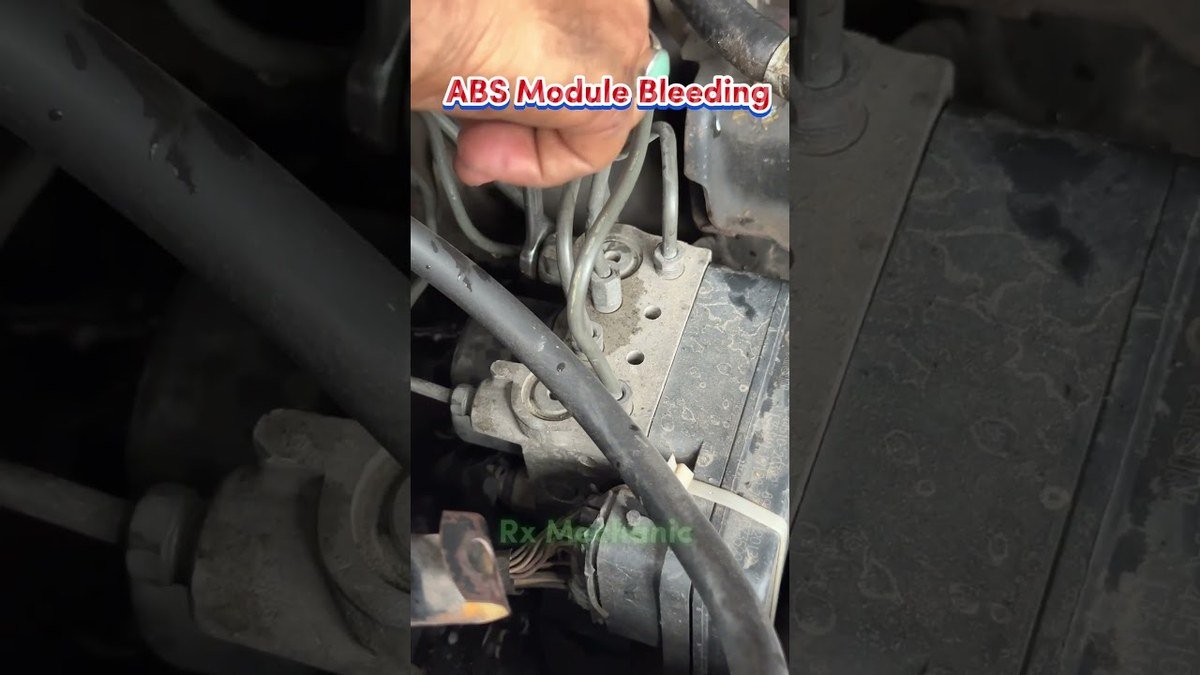
Bleeding ABS brakes is the process of purging air from both the standard brake lines and the ABS hydraulic modulator. Brake fluid is incompressible. Air is not. Air bubbles reduce hydraulic pressure transfer, producing a soft or spongy brake pedal.
The ABS modulator contains 8 to 10 or more solenoid valves, a hydraulic pump, and internal check valves. These components trap air in passages that standard manual bleeding cannot always reach.
WABCO ABS Blink Codes: 13 Trailer Fault Codes, Causes, and Fixes for Trucks and Trailers
Mercedes ABS Module Repair: 6 Symptoms, 4 Causes, and 3 Fix Options Explained
Why Does the ABS System Trap Air?
The ABS system traps air because its internal hydraulic circuit is a closed system. Air enters through 3 main causes:
- The master cylinder reservoir empties during a brake job
- Brake lines or ABS components are disconnected or replaced
- Leaks in ABS seals or hoses create a vacuum that draws air in
When Do You Need to Bleed Brakes with ABS?
Bleed ABS brakes in 4 situations:
- After replacing brake components, such as calipers, hoses, wheel cylinders, or lines
- After the master cylinder reservoir runs dry during any repair
- When the brake pedal feels spongy or travels excessively toward the floor
- As part of regular brake maintenance every 2 to 3 years
Do You Need a Scan Tool to Bleed ABS Brakes?
A scan tool is not required when only components downstream of the ABS modulator are replaced, such as calipers, hoses, or wheel cylinders. Standard manual bleeding clears these areas.
A scan tool is required in 3 cases:
- Air has entered the ABS modulator
- The master cylinder ran dry during a repair
- The ABS modulator was replaced
Many ABS modulators lack dedicated bleeder screws. Without a scan tool, the ABS pump and solenoid valves cannot be cycled manually to expel trapped air from internal passages. Per automotive service documentation, some systems, such as the Ford EBC 310, require a manufacturer-specific scan tool for correct ABS bleeding.
How Do You Bleed ABS Brakes Without a Scan Tool?
Bleed ABS brakes manually by opening each bleeder valve in the correct sequence, from the furthest wheel to the nearest, keeping the reservoir above the halfway mark throughout.
Follow these 9 steps:
- Jack up the vehicle and remove all 4 wheels.
- Use a turkey baster to remove old fluid from the master cylinder reservoir.
- Fill the reservoir with fresh brake fluid from a sealed container.
- Attach a plastic tube over the first bleeder bolt.
- Place the other end of the tube into a bottle containing 1 to 2 inches of fresh brake fluid. This prevents air from re-entering the caliper.
- Loosen the bleeder bolt no more than one-quarter turn. Do not remove it fully.
- Pump the brake pedal until clean, bubble-free fluid flows through the tube.
- Tighten the bleeder bolt and move to the next wheel.
- Repeat for all 4 wheels. Refill the reservoir after each wheel.
Note: Never let the fluid level drop below the halfway mark. An empty reservoir pulls air directly into the master cylinder and the ABS modulator.
What Is the Correct Bleeding Sequence for ABS Brakes?
The standard bleeding sequence is right rear (RR), left rear (LR), right front (RF), left front (LF). This starts at the wheel furthest from the master cylinder and works toward the nearest.
Always verify the sequence in the vehicle manufacturer's service manual. Sequences vary by make, model, and hydraulic circuit layout. Front-wheel-drive vehicles with a diagonal split system often use the sequence RR, LF, LR, RF instead.
How Do You Bleed ABS Brakes With a Scan Tool?
Bleed ABS brakes with a scan tool by completing a manual bleed at all 4 wheels first, then using the scan tool to activate the ABS pump and cycle the solenoid valves to purge air from the modulator.
The scan tool procedure:
- Complete a standard manual bleed at all 4 wheels.
- Connect the scan tool to the vehicle OBD-II port.
- Navigate to the ABS module within the scan tool software.
- Select the ABS Bleeding or Automatic Bleed Procedure.
- Set the ignition to ON with the engine OFF.
- Follow on-screen prompts. The tool activates the ABS pump and cycles all solenoid valves.
- Check the reservoir level after every single wheel. Refill before it drops low.
- Confirm a firm pedal feel after the procedure completes.
For systems requiring a pressure bleeder, connect the bleeder to the master cylinder reservoir, close all bleeder screws, and pressurize the system to 35 psi before beginning the scan tool cycle.
What Brake Fluid Should You Use When Bleeding ABS Brakes?
Use the brake fluid type specified in the vehicle owner's manual. The 3 ABS-compatible fluid types are DOT 3, DOT 4, and DOT 5.1. All 3 are glycol-based.
The table below defines each compatible fluid type, its boiling points, and ABS compatibility.
| Fluid Type | Dry Boiling Point | Wet Boiling Point | ABS Compatible |
|---|---|---|---|
| DOT 3 | 205°C (401°F) | 140°C (284°F) | Yes |
| DOT 4 | 230°C (446°F) | 155°C (311°F) | Yes |
| DOT 5.1 | 260°C (500°F) | 180°C (356°F) | Yes |
| DOT 5 | 260°C (500°F) | 180°C (356°F) | No |
DOT 5 is silicone-based. It is not compatible with ABS systems or glycol-based fluids. Mixing DOT 5 with DOT 3, DOT 4, or DOT 5.1 damages ABS solenoids and seals.
Many 2024 and newer vehicles require Low Viscosity (LV) DOT 4 fluid. Using standard DOT 4 in a system designed for LV DOT 4 slows solenoid response times in cold temperatures and increases stopping distances.
Always use fresh fluid from a sealed container. Opened containers absorb moisture, lowering the fluid's boiling point and reducing brake performance.
What Are the 4 Most Common Mistakes When Bleeding ABS Brakes?
The 4 most common mistakes are:
- Letting the reservoir run dry during the bleed. This pulls air into the master cylinder and modulator, requiring a complete restart of the procedure.
- Skipping the scan tool step after modulator replacement or when the master cylinder ran dry. Manual bleeding alone does not purge air from internal modulator passages.
- Using DOT 5 fluid in an ABS-equipped vehicle. DOT 5 is silicone-based and incompatible with glycol-based ABS systems.
- Opening the bleeder bolt more than one-quarter turn. Excessive opening discharges fluid too rapidly and introduces air into the system.
After all bleeding is complete, verify the brake pedal is firm and does not travel excessively toward the floor before returning the vehicle to service.

Jimmy O’Riley is a UK-based mobile mechanic and automotive diagnostic specialist operating out of Bedfordshire, England. He founded O’Rileys Autos in 2011 with a focus on bringing professional vehicle repairs directly to customers at their homes and workplaces.
With over a decade of hands-on experience, Jimmy specializes in ABS diagnostics, brake system repairs, diesel emissions faults, and DPF cleaning. He is recognized across the UK and Ireland as one of the leading specialists in vehicle braking and emissions systems, earning the title “The DPF King” from his growing online audience.
Jimmy documents real-world automotive repairs through his YouTube channel, which has accumulated over 97,000 subscribers and nearly 2,000 published repair videos. His content covers ABS fault diagnosis, wheel speed sensor testing, brake module replacement, and roadside repair procedures across a wide range of vehicle makes and models.
He is active on YouTube, Instagram, and Facebook under O’Rileys Autos.