
The Focus was parked on a residential street in Bedford, and the owner mentioned the ABS light almost as an afterthought. It had been on for eleven months. He knew, because he remembered it coming on the week before his last birthday.
That detail is always what stays with me – not the fault code, not the repair, but the specific way people anchor a warning light to a memory. A week before a birthday, or the day after the MOT, or the week something else broke and this had to wait. The reasons are rarely careless. They are just reasons.
In the United States, driving with an illuminated ABS warning light is legal in most states. There is no federal prohibition, no annual inspection equivalent to the British MOT that would catch it, and no mechanism that compels a driver to address it. The car is roadworthy, in the legal sense, because the base braking system still functions. The ABS is classified as a supplementary system, and its failure does not technically constitute a braking failure.
That framing worries me.
For official safety context, see this reference.
The British MOT fails a vehicle on an illuminated ABS warning light, and it does so correctly. Not because the car will immediately crash, but because a warning light that has been on for eleven months is not a warning light anymore. It is a system that has given up trying to tell you something. It is now sitting there as a permanent fixture on the dashboard, noticed so often that it registers as normal.
The Focus threw a C1175 – nearside rear wheel speed sensor. That code was honest. I pulled the connector at the rear axle and found corrosion that had been building for the better part of a year. It was the particular grey-green oxidisation that happens to unprotected copper on cars that spend their winters on salted British roads. The connector fought me. When something that corroded finally lets go, it comes apart in a way that tells you exactly how long it has been sitting there.
Except the sensor itself tested fine. The resistance was within tolerance, and the signal trace on live data was clean once I had cleaned the contacts and reseated the connection. The fault code had been generated by an intermittent contact problem, not a failed sensor. If I had replaced the sensor on the strength of the code alone, the fault would have returned within weeks. That is what a parts cannon approach does. It addresses the code. It does not address the car.
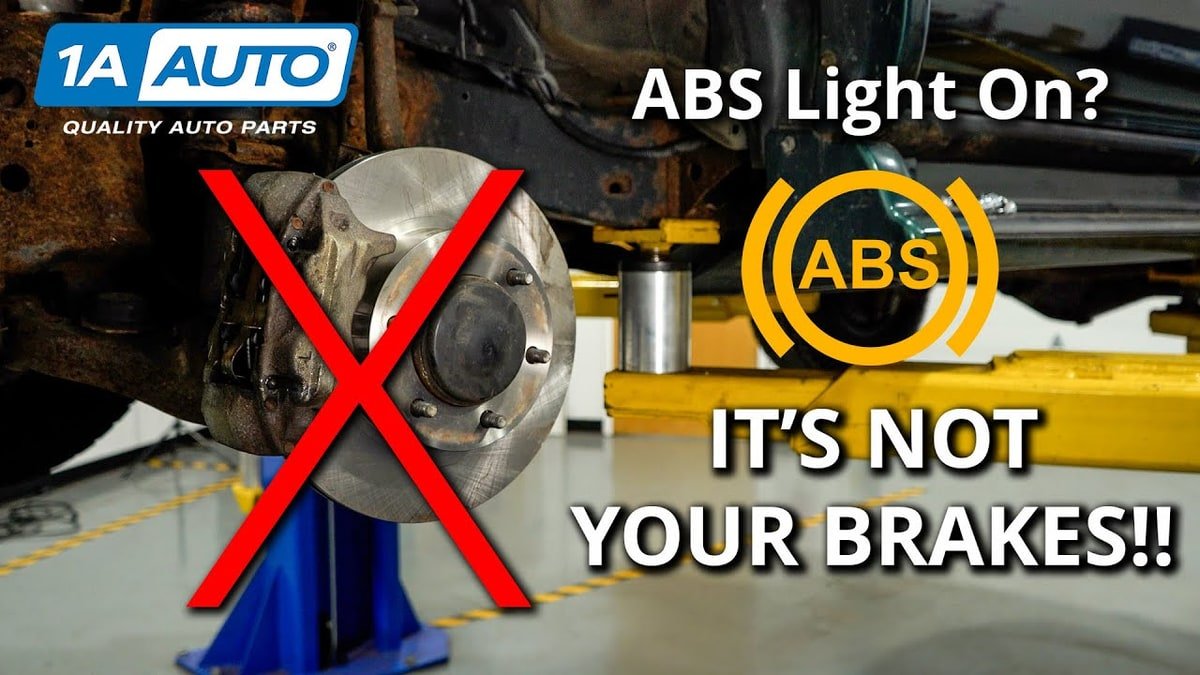
A code identifies a circuit. It does not tell you which component in that circuit is responsible, and it does not tell you whether the problem is inside the component or happening before the signal ever reaches it. These are two entirely different repairs, and they cost very different amounts of money.
What the eleven months had done, beyond the connector corrosion, was allow a slow deterioration in the modulator block's internal valve response time. It was not failing. It was not logging its own codes. But the live data showed pressure modulation that was slightly slower than it should have been. Not enough to feel at the pedal, but enough to tell me the system had been working against resistance for a long time.
That is what ignored ABS faults do over time. They do not announce themselves dramatically. They degrade quietly, accumulating lag in a system that is designed to respond in fractions of a second, and the degradation happens in increments too small to register as anything except a car that feels slightly less sharp than it used to.
The American legal position is not wrong in a narrow technical sense. An ABS fault does not make standard braking fail. But standard braking is designed with the assumption that all associated systems are functioning. A modulator block running degraded for eleven months is not the system the car was built around.
There is a difference between a car that can stop and a car that will stop the way it was engineered to stop. That difference shows itself at the moment when there is no margin for anything to be running below where it should.
The owner asked me how long the repair took. I told him two hours including diagnostic time, and that the connector was the bulk of the work rather than the sensor. He seemed surprised. He had budgeted for a new pump.
Fourteen years on British driveways, and the cars that worry me most are the ones where the owner has stopped seeing the warning light at all.

Jimmy O’Riley is a UK-based mobile mechanic and automotive diagnostic specialist operating out of Bedfordshire, England. He founded O’Rileys Autos in 2011 with a focus on bringing professional vehicle repairs directly to customers at their homes and workplaces.
With over a decade of hands-on experience, Jimmy specializes in ABS diagnostics, brake system repairs, diesel emissions faults, and DPF cleaning. He is recognized across the UK and Ireland as one of the leading specialists in vehicle braking and emissions systems, earning the title “The DPF King” from his growing online audience.
Jimmy documents real-world automotive repairs through his YouTube channel, which has accumulated over 97,000 subscribers and nearly 2,000 published repair videos. His content covers ABS fault diagnosis, wheel speed sensor testing, brake module replacement, and roadside repair procedures across a wide range of vehicle makes and models.
He is active on YouTube, Instagram, and Facebook under O’Rileys Autos.