
The ID.3 was pulled into a layby on the A6 south of Shillington, hazards going, owner standing beside it looking at his phone when I arrived. He had been driving it for eleven months, twenty-eight thousand miles, and the ABS light had come on hard at seventy miles an hour on the motorway. That kind of onset tells you something before you have even plugged anything in.
The first thing I did was check the calipers. The front pads had maybe two millimetres of wear from new, which on a car this mileage in anything other than an EV would concern you. On an ID.3 doing mostly motorway and commuter work, it is exactly what you expect.
The ID.3 brakes regeneratively through the motor on deceleration, and the friction brakes take over the last portion of a stop or during harder braking events. That split sounds efficient, and it is, for the pads. The ABS module is brokering that handover at every single deceleration, which at twenty-eight thousand miles is a figure worth thinking about.
The scan pulled a U0416 alongside a C1095. The U0416 is a lost data signal between the ABS module and the vehicle dynamics controller. The C1095 points at the hydraulic pump circuit. Two codes, and the natural reading of them together pushes you toward the pump.
For official safety context, see this reference.
The pump, when I ran it in live actuation mode through the diagnostic interface, cycled correctly and held pressure. That is not the behaviour of a failing pump. What the live data showed instead was the module dropping its communication with the vehicle dynamics system intermittently, not consistently, under thermal load.
That pattern points at the internal circuit board rather than any external component. On early ID.3 production runs, there is a known capacitor failure mode inside the ABS module controller that presents exactly this way. Replacing the pump on the strength of the C1095 code would have been a five-hundred-pound exercise in misdirection.
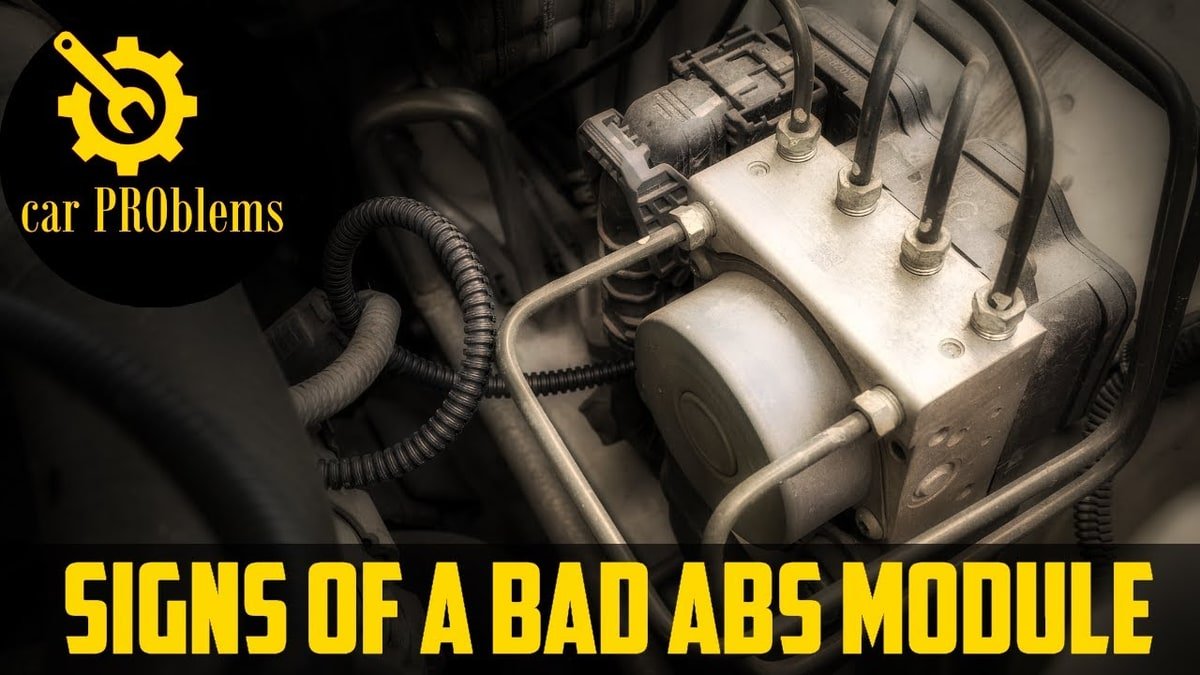
What concerns me about how EV braking faults are being handled at the moment is that the diagnosis still runs on ICE-era assumptions. A fault code on a conventional car pointing at a pump usually means the pump. On an EV where the module is managing regen transitions constantly, the same code can mean something different. That difference costs owners money when nobody checks past the first thing the scanner returns.
The owner of this ID.3 had taken it to a VW dealership first. He was told the pump needed replacing and given a quote of four hundred and eighty pounds including labour. He came to me because a friend had seen a Leaf video on the channel and recognised the pattern.
The dealership was not working from bad intentions. They ran the codes, identified the repair pathway most commonly associated with those codes, and priced accordingly. That approach works reasonably well when the fault is external and the code is accurate. It works less well when the fault is inside the module and the code is the module's best attempt at describing its own failure.
There are hundreds of comments on the ID.3 and Ioniq fault videos from people who went through the same sequence: pump quote, second opinion, module diagnosis. The pattern is consistent enough that I look for it now before I have finished reading the codes on the screen. That is what comes from documenting enough of these jobs where other people can find them.
The pads on that car were in better condition after twenty-eight thousand miles than some ICE car pads see at twelve. The module had done the equivalent braking work of a much older car, invisibly and electronically, in a fraction of the expected service life. Those two facts do not cancel each other out. They describe a car wearing in a completely different order from anything the service schedule was designed around.
The owner told me he had noticed a brief ABS flicker two weeks before it came on permanently, gone after a restart, and decided the car had sorted itself out. Most people make that call. A module fault that clears on a cold start and returns under load is doing exactly what capacitor degradation inside the controller does in warm operating conditions.
That car left the layby with the module replaced and the pump confirmed working correctly. The bill came in roughly three hundred pounds below what the dealership had quoted for a component that was not the problem. The pads will still be on that car when it changes hands. Fourteen years of this work has shown me that the quieter a braking system sounds, the more carefully you need to look at the part doing all the thinking.

Jimmy O’Riley is a UK-based mobile mechanic and automotive diagnostic specialist operating out of Bedfordshire, England. He founded O’Rileys Autos in 2011 with a focus on bringing professional vehicle repairs directly to customers at their homes and workplaces.
With over a decade of hands-on experience, Jimmy specializes in ABS diagnostics, brake system repairs, diesel emissions faults, and DPF cleaning. He is recognized across the UK and Ireland as one of the leading specialists in vehicle braking and emissions systems, earning the title “The DPF King” from his growing online audience.
Jimmy documents real-world automotive repairs through his YouTube channel, which has accumulated over 97,000 subscribers and nearly 2,000 published repair videos. His content covers ABS fault diagnosis, wheel speed sensor testing, brake module replacement, and roadside repair procedures across a wide range of vehicle makes and models.
He is active on YouTube, Instagram, and Facebook under O’Rileys Autos.