
The Leaf was on a driveway in Biggleswade, three years old and fifty-eight thousand miles on the clock, ABS light sitting steady on the dash. When I pulled the front wheels off to check the calipers, the pads were barely touched. There was almost no brake dust on the hub face, which on any other car at this mileage would tell you the brakes had been left off.
On this car it means the opposite. Regenerative braking handles most of the stopping work on a Leaf at normal road speeds, so the friction brakes barely get involved compared to a diesel doing the same distance. The pads on this one would probably see a hundred thousand miles before they needed changing.
The ABS module, on the other hand, had logged more operational cycles than I would expect to see on a car with twice this mileage. That is the thing about EV braking that most people have not had explained to them yet. The module on a conventional car activates during emergency stops and wheel lockup events. On this car, it is involved in every single deceleration.
When you lift off the accelerator in an EV, the motor switches to generator mode and starts slowing the car. The ABS module has to manage the handoff between regenerative braking and the friction brakes at the same moment, every time, to keep the stopping force smooth. That transition is not passive. The module is making active decisions at every junction and every roundabout, not just in emergencies.
What that means in terms of component wear is that the internal relays, transistors, and capacitors inside the module cycle far more frequently than the original design assumed. They did not build the module for a car braking electronically at every deceleration across fifty-eight thousand British miles. The thermal stress from that level of use accumulates in ways the friction brakes, barely touched, are completely insulated from.
When I ran the scan, the system had stored a C1108, which points at the ABS pump motor. A garage reading that code and pricing a pump replacement is not doing anything unreasonable on the surface. But the live data was showing something different. The module was losing communication with the pump intermittently, not because the pump had failed, but because the internal connector pins had degraded.
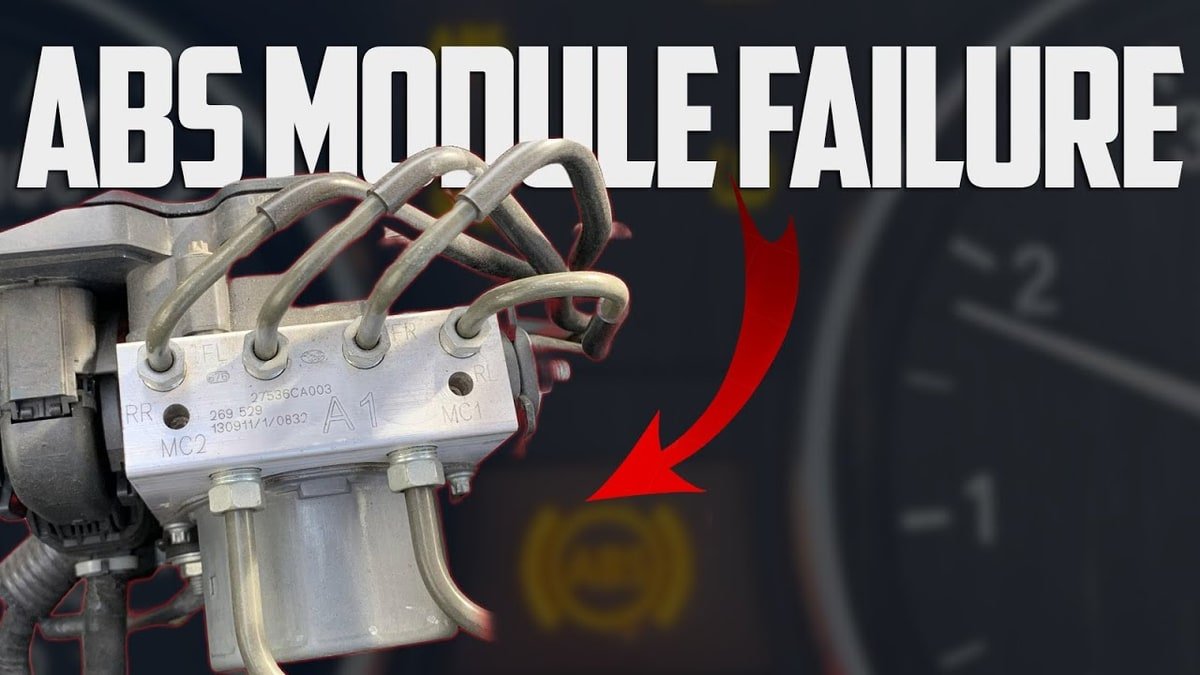
The pump itself was working correctly. Replacing it would have cost the owner four hundred pounds and solved nothing. The fault was in the module circuitry that had been cycling constantly since the car was new. It was showing the fatigue that kind of accumulated workload produces when the original specification did not account for it.
The owner had serviced the car on schedule and done everything the handbook asked. Nobody had raised the ABS module with him at any service visit because in the EV world, the brake pads look fine and so everything is assumed to be fine. That assumption does not survive contact with a proper diagnostic scan.
The manufacturers have also been slow to communicate this. A main dealer servicing an EV checks the software version, looks at battery health data, and sends the car back looking healthy on paper. Nobody is pulling live data from the ABS module and checking how many cycles it has logged since the last visit.
There are a lot of Leafs on UK roads now, and a growing number of ID.3s, Ioniq 5s, and Model 3s, all running the same fundamental pattern. The brake pads will outlast the warranty by some distance. The ABS module on some of these cars is being worked harder than the engineers originally planned for, and that has consequences.
What worries me most is not the owners who get the warning light and call someone. It is the owners who look at their brake pads, see they are nearly new, and decide the car cannot possibly have a braking system fault. That logic made sense in 2005. It does not hold on an EV.
I have put up videos on Leaf ABS faults over the last two years and the comment sections run long. Most people commenting had no idea the module had an independent failure profile from the friction brakes. They assumed, reasonably enough, that if the pads were fine, the braking system was fine. They found out otherwise in the same way this owner did, through a warning light and a scan rather than anything they could see or feel.
The pads on this Leaf will probably still be on the car when it changes hands again. The module I sourced for it had been remanufactured to a higher cycle specification than the original. That is not the kind of detail a dealer pulling a part by OEM number is going to consider. Fourteen years of doing this work has taught me that the part working hardest is rarely the one making itself obvious.

Jimmy O’Riley is a UK-based mobile mechanic and automotive diagnostic specialist operating out of Bedfordshire, England. He founded O’Rileys Autos in 2011 with a focus on bringing professional vehicle repairs directly to customers at their homes and workplaces.
With over a decade of hands-on experience, Jimmy specializes in ABS diagnostics, brake system repairs, diesel emissions faults, and DPF cleaning. He is recognized across the UK and Ireland as one of the leading specialists in vehicle braking and emissions systems, earning the title “The DPF King” from his growing online audience.
Jimmy documents real-world automotive repairs through his YouTube channel, which has accumulated over 97,000 subscribers and nearly 2,000 published repair videos. His content covers ABS fault diagnosis, wheel speed sensor testing, brake module replacement, and roadside repair procedures across a wide range of vehicle makes and models.
He is active on YouTube, Instagram, and Facebook under O’Rileys Autos.