Why Is My Steering Wheel Shaking? 9 Causes and How to Identify Each
A steering wheel shakes most often at highway speeds because of unbalanced front tyres. The 8 other causes are bent wheels, damaged tyres, warped brake rotors, worn suspension parts, misaligned wheels, loose wheel bearings, worn CV axles, and engine faults. The speed, braking, idle, and acceleration pattern identifies the cause.
What Does a Shaking Steering Wheel Mean?
A shaking steering wheel is a vibration that travels from a rotating or worn front-end component, such as a tyre, wheel, or brake rotor, through the steering system to the driver’s hands. Front wheels connect directly to the steering rack and column, with minimal mechanical damping between them.
Examples include a highway-speed shimmy, a pulse during braking, and a tremor at idle.
The location of the vibration narrows the source:
- Steering wheel: front tyre, wheel, balance, or brake issue
- Seat: rear tyre or wheel issue
- Floorboard: rear tyre, wheel, suspension, or drivetrain issue
What Are the 9 Causes of a Shaking Steering Wheel?
The 9 causes are unbalanced tyres, bent wheels, damaged tyres, warped brake rotors, worn suspension parts, misaligned wheels, loose wheel bearings, worn CV axles, and engine faults.
Why Do Unbalanced Tyres Make the Steering Wheel Shake?
Unbalanced front tyres cause shaking at highway speeds, typically from 45 mph (72 km/h) upward. Tyre and wheel assemblies are not perfectly round, so weight distributes unevenly around the rim. Discount Tire recommends balancing every 6,000 miles (about 9,700 km).
For related reading, see Automotive Steering Wheel Covers: 4 Materials and 5 Safety Checks. The same maintenance context also connects with Automotive Steering Wheel Covers.
Do Bent Wheels Make the Steering Wheel Shake?
Yes, a bent wheel causes a rhythmic pulse across a broad speed range, including slow speeds. Balancing does not fix a bent wheel, and straightening costs $80 to $180 per wheel at a specialist.
Do Damaged Tyres Make the Steering Wheel Shake?
Yes, uneven tread, internal damage, a separated belt, or a bulge cause vibration at highway speeds. Flat tyres and pressure problems also cause shaking.
Why Does the Steering Wheel Shake When Braking?
Warped or pitted brake rotors cause shaking only when the brakes are applied. Worn pads, dry guide pins, and stuck calipers also cause braking vibration.
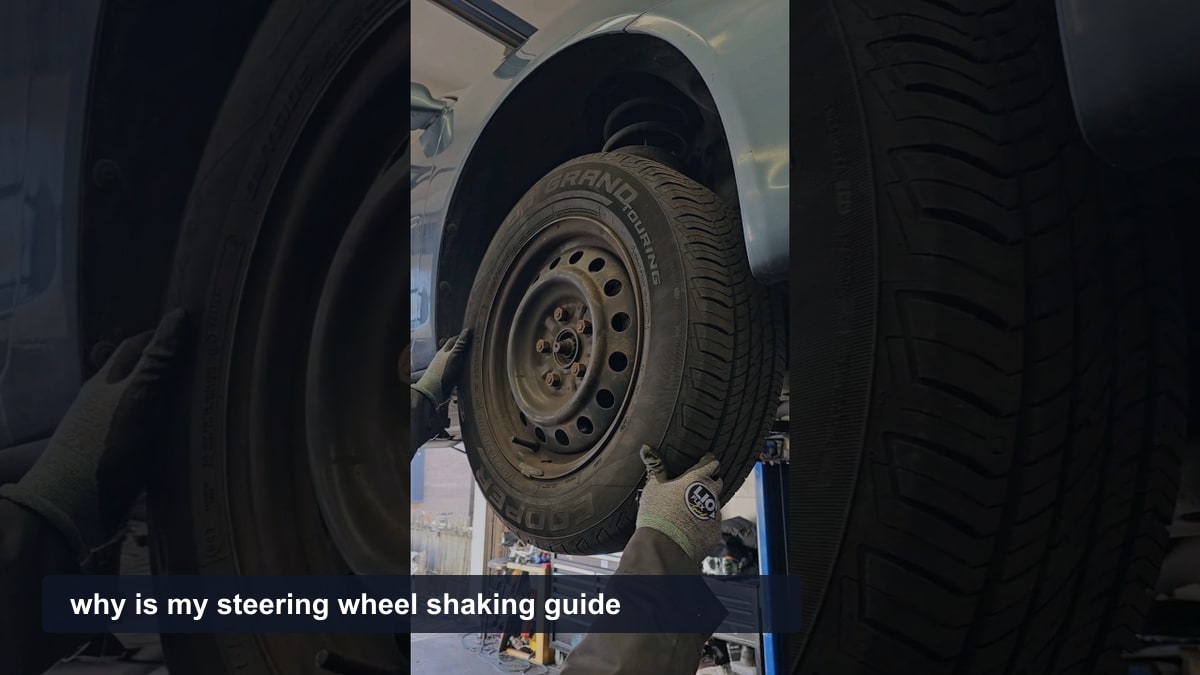
Do Worn Suspension Parts Make the Steering Wheel Shake?
Yes, worn shocks, struts, and tie rods cause shaking, mostly over bumps and in turns. Old shocks and struts lose the ability to dampen road vibration.
Does Wheel Misalignment Make the Steering Wheel Shake?
Misaligned wheels cause pulling and uneven tyre wear more often than shaking, but vibration at certain speeds is a recognised sign. Potholes, curbs, and accidents misalign wheels.
Do Loose Wheel Bearings Make the Steering Wheel Shake?
Yes, loose wheel bearings cause small wobbles in the steering wheel when braking or cornering. Each wheel rolls about 700 times per mile, so bearings wear over time.
Does a Worn CV Axle Make the Steering Wheel Shake?
A worn CV axle causes shaking mainly under acceleration, and the shake eases when coasting. A clicking noise during turns accompanies it.
Why Does the Steering Wheel Shake at Idle?
Worn engine mounts and engine misfires cause steering wheel shaking at idle. The shake eases once the vehicle moves. Other causes include dirty fuel injectors, vacuum leaks, and belt wear.
For a reliable reference point, see NHTSA vehicle safety information.
How Do You Identify the Cause by Shaking Pattern?
The table matches 9 shaking patterns to likely causes and additional signs.
| Shaking pattern | Likely cause | Additional sign |
|---|---|---|
| Highway speeds, 45 to 75 mph (72 to 121 km/h) | Unbalanced front tyres | Vibration peaks in a narrow speed range |
| Wide speed range, rhythmic pulse | Bent wheel | Possible tyre pressure loss |
| Highway speeds | Damaged tyres | Visible bulge or uneven tread |
| Braking only | Warped or pitted brake rotors | Pulsing in the brake pedal |
| Over bumps or in turns | Worn tie rods, ball joints, shocks, or struts | Clunking noise |
| Constant, with pulling to one side | Wheel misalignment | Off-centre steering wheel, uneven edge wear |
| Braking or cornering | Loose wheel bearings | Small wobble |
| Accelerating, eases when coasting | Worn CV axle | Clicking noise when turning |
| Idle or shifting into drive | Worn engine mounts or misfire | Eases once moving |
The speed ranges differ by source: Discount Tire reports 45 mph or higher, Newton Nissan reports 50 to 60 mph, and Lionheart Tires reports 55 to 75 mph. A shake after a pothole strike points to a bent wheel, tyre damage, or an alignment fault.
Repair shops follow a 5-step workflow to confirm the cause:
- Road test the vehicle to confirm the symptom.
- Lift the vehicle and inspect the front tyres, wheels, and brakes.
- Check the balance of all four wheels.
- Check the runout of suspect wheels.
- Inspect the front-end components, if no tyre or wheel issue appears.
Is It Safe to Drive with a Shaking Steering Wheel?
Tyre problems appeared before the crash in 9% of 5,470 crashes sampled in an April 2012 NHTSA study. Tyres underinflated by 25% or more were 3 times as likely to be cited as critical events. Among tyres with 0 to 2/32 inch (0 to 1.6 mm) of tread, 26% were on vehicles that had tyre problems.

Les Schwab states that worn brake pads left too long cause vibration and damage rotors and calipers. A stuck caliper may require towing, and improperly installed lug nuts also cause shaking.
How Much Does It Cost to Fix a Shaking Steering Wheel?
Reported repair costs are US shop quotes from 2 repair-shop guides:
- Wheel balance with rotation: about $60
- Wheel straightening: $80 to $180 per wheel
- CV axle replacement: $250 to $450
What Else Do People Ask About a Shaking Steering Wheel?
Why does my steering wheel shake at 60 mph?
A shake near 60 mph most often indicates an unbalanced front tyre, because imbalance vibration typically appears between 50 and 60 mph.
Why does my seat shake instead of my steering wheel?
Seat vibration indicates a rear tyre or wheel issue.
How often do tyres get balanced?
Discount Tire recommends balancing tyres every 6,000 miles.
Why does my steering wheel shake when accelerating?
Shaking that appears under acceleration and eases when coasting points to a worn CV axle or an engine mount.
Why does my steering wheel shake after hitting a pothole?
A shake after a pothole strike points to a bent wheel, tyre damage, or an alignment issue.
What Does the Pattern of a Shaking Steering Wheel Reveal?
The pattern of a shaking steering wheel reveals the cause through speed, braking, idle, and acceleration. Speed points to tyres, braking points to rotors, bumps point to suspension, acceleration points to the drivetrain, and idle points to the engine.
A shaking steering wheel has 9 common causes, and unbalanced front tyres are the most frequent cause at highway speeds.