Preview
Power Steering Pump: Definition, 4 Pump Types, 6 Failure Symptoms, and Replacement Facts
Meta description: Power steering pump definition, 4 pump types, 6 failure symptoms, causes, and replacement facts for Nigerian drivers, backed by manufacturer and research data.
What Is a Power Steering Pump?
A power steering pump is an engine-driven hydraulic pump that pressurizes steering fluid to reduce steering effort. Other names include servo pump, steering pump, and hydraulic pump.
Hydraulic power steering pumps are fitted to many older vehicles. Examples include the Peugeot 406, Mercedes-Benz E-Class W210, Lexus RX 300, and Toyota Hilux Vigo.
When Did Power Steering Pumps Enter Passenger Cars?
Francis W. Davis, an engineer at the Pierce-Arrow truck division, invented the first practical power steering system in 1926. Chrysler introduced the first commercially available passenger car system on the 1951 Chrysler Imperial. General Motors followed with the 1952 Cadillac.
For related reading, see Dexron 3 Power Steering Fluid: Specs, 3 Checks, and Dexron VI Differences. The same maintenance context also connects with Dexron 3 Power Steering Fluid.
How Does a Power Steering Pump Work?
A power steering pump works by drawing fluid from the reservoir, raising its pressure, and sending it to the steering gear. The process has 4 steps:
- The engine belt turns the pump.
- The pump draws fluid from the reservoir.
- The pump builds pressure when steering movement diverts the flow.
- The rotary valve sends the fluid to the left or right chamber of the steering cylinder, based on the steering direction.
What Are the 4 Types of Power Steering Pumps?
Power steering pumps come in 4 types: vane, roller, slipper, and gear pumps. The list below describes each type:
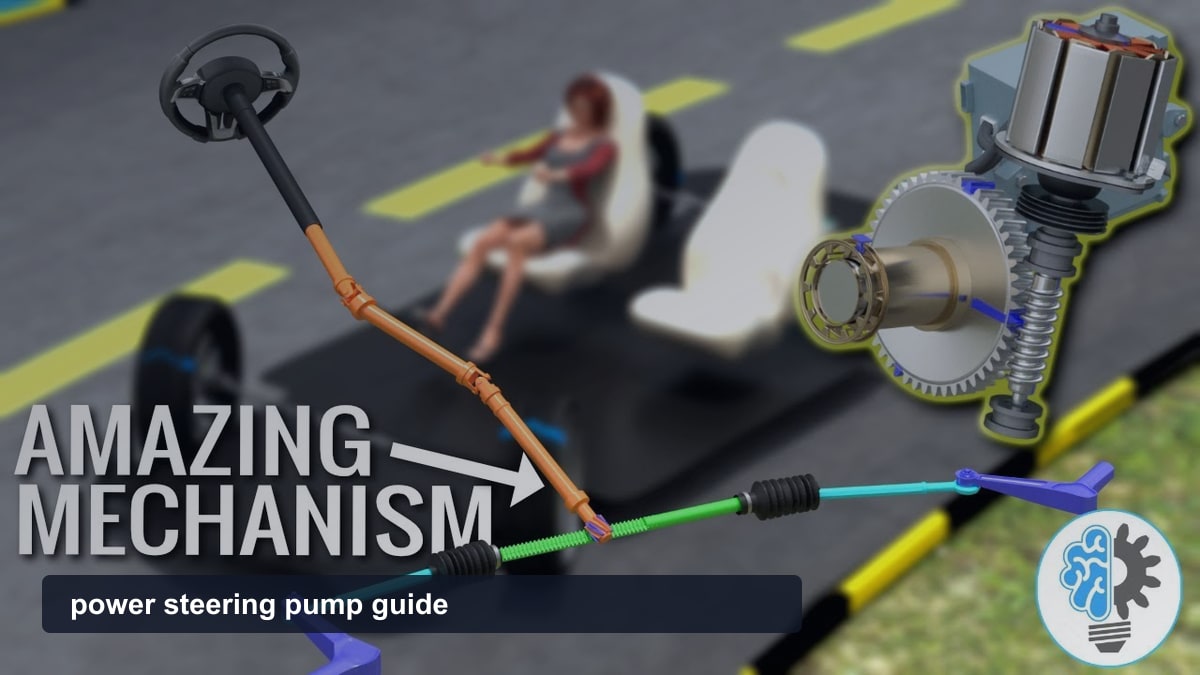
- Vane pump: operates as a positive displacement pump based on the rotary vane principle.
- Roller pump: supplies pressurized fluid to the steering gear or rack.
- Slipper pump: uses an engine-driven belt to generate hydraulic pressure.
- Gear pump: moves fluid between meshing gears.
The Saab 9-3 diesel pump contains 10 vanes and 10 pump cells.
What Is the Difference Between Fixed and Variable Displacement Pumps?
Variable displacement pumps adjust internal volume to hold flow constant, while fixed displacement pumps limit pressure with a pressure reducing valve. Variable displacement designs reduce the power needed to turn the pump, which improves fuel economy.
What Pressure Does a Power Steering Pump Produce?
Power steering pumps produce maximum pressures of 100 bar to 125 bar in the manufacturer documents reviewed here. Saab service documentation lists approximately 100 bar and 6 litres per minute for its diesel pump. Land Rover documentation lists 115 bar for the variable displacement TD4 pump and 125 bar for the fixed displacement i6 pump. The table below compares the 3 pumps.
| Pump (vehicle) | Pump design | Maximum pressure | Maximum flow |
|---|---|---|---|
| Saab 9-3 diesel | Vane pump with control and overflow valves | Approximately 100 bar (10 MPa) | Approximately 6 L/min |
| Land Rover Freelander 2 TD4 | Variable displacement vane pump | 115 bar ± 4 bar | 8.8 L/min ± 0.5 L/min |
| Land Rover Freelander 2 i6 | Fixed displacement vane pump | 125 bar ± 4 bar | Not stated |
An overflow valve protects the pump from excess pressure when the steering wheel is at full lock. Holding the wheel at full lock for a long period overheats the pump, according to Saab service documentation.
What Are the 6 Symptoms of a Failing Power Steering Pump?
A failing power steering pump causes 6 main symptoms: whining noise, stiff steering, squealing at startup, foamy fluid, dark fluid, and fluid leaks. The list below explains each symptom:
- Whining noise during turns: indicates low fluid, a leak, or a pump fault.
- Stiff or slow steering response: indicates a failing pump, especially with a whining noise.
- Squealing noise at engine start: indicates a faulty pump.
- Foamy or milky fluid: indicates damaged seals that let air into the system.
- Dark fluid with a burnt smell: indicates overheating or contamination.
- Red or red-brown puddles under the vehicle: indicate a fluid leak near the pump.
Related reading: [internal link: Power Steering Fluid Leak]
What Causes a Power Steering Pump to Fail?
Low or contaminated fluid is a common cause of power steering pump failure. A pump with low fluid runs dry, forms air bubbles, and sustains damage over time. Low fluid is also the most common cause of pump whining. The list below names 4 causes:
For a reliable reference point, see NHTSA recalls and vehicle safety.
- Low fluid level: causes the pump to run dry.
- Contaminated fluid: restricts flow through the system.
- Worn or slack drive belt: reduces pump speed, because the engine drives the pump through a belt.
- Damaged seals: allow air into the system and leak fluid.
How Is a Power Steering Pump Replaced?
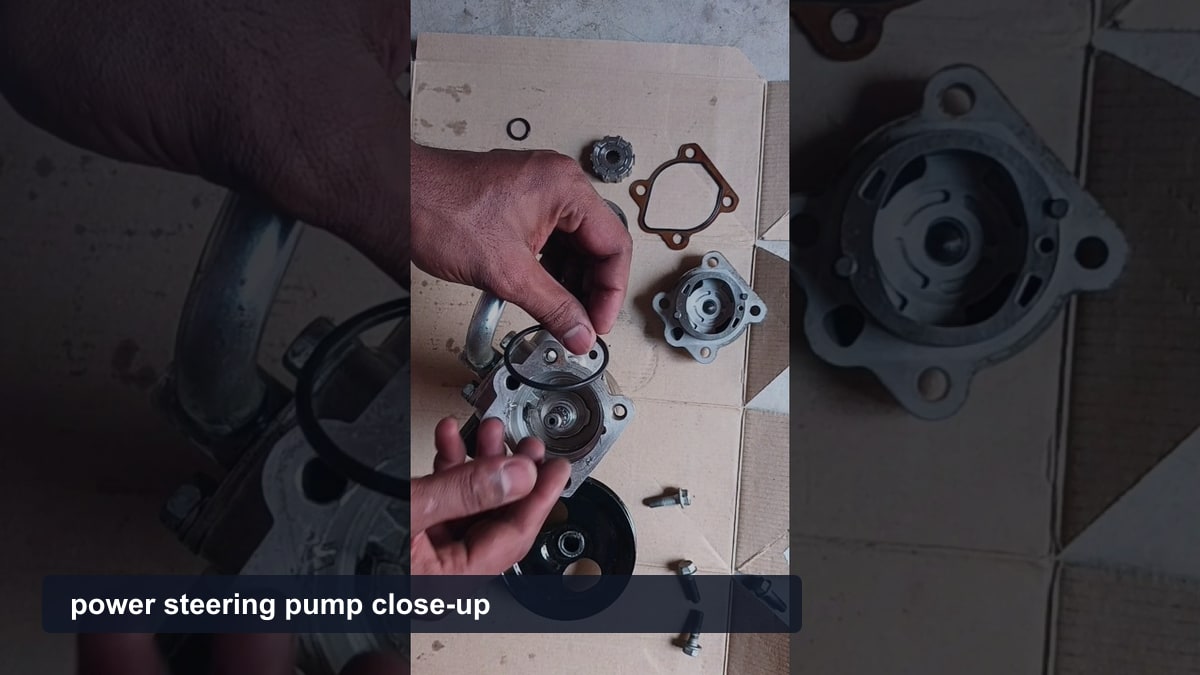
Mechanics replace a power steering pump in 6 steps, based on Hella technical guidance:
- Check the hydraulic system for contamination and flush it if needed.
- Disconnect the supply and high-pressure lines from the pump.
- Install the new pump according to the vehicle manufacturer’s instructions.
- Connect the hydraulic lines to the pump.
- Refill and bleed the system with new fluid specified by the vehicle manufacturer.
- Inspect the system for leaks.
Which Fluid Does a Power Steering Pump Use?
A power steering pump uses the fluid type specified by the vehicle manufacturer. Hella guidance specifies new fluid that matches the manufacturer requirement. Specifications include dedicated power steering fluid and automatic transmission fluid, depending on the vehicle. Power steering fluid is typically red or amber.
Related reading: [internal link: Power Steering Fluid Types]
How Does the Power Steering Pump Compare With Electric Power Steering?
Electric power steering replaces the hydraulic pump with an electric motor and improves fuel economy by 1.7% to 4%, depending on the source. The table below lists fuel economy gains over hydraulic power steering by system type.
| System type | Fuel economy improvement over hydraulic power steering | Basis | Source |
|---|---|---|---|
| Electro-hydraulic power steering (EHPS) | 1% | FTP-75 driving cycle, experiment and simulation | Springer-published study |
| Electric power steering (EPS) | 1.7% | FTP-75 driving cycle, experiment and simulation | Springer-published study |
| Electric power steering (EPS) | 3% to 4% | Manufacturer estimate | TRW Automotive |
The Springer-published study measured the 1% and 1.7% gains in the FTP-75 driving cycle. TRW Automotive estimates a 3% to 4% gain because the electric motor uses power only during steering. Hydraulic systems draw engine power through a belt, which increases fuel consumption. Electric systems have no pump, hoses, or hydraulic fluid.
Related reading: [internal link: Electric Power Steering]
What Are People Also Asking About the Power Steering Pump?
Where Is the Power Steering Pump Located?
The power steering pump is mounted on the engine and driven by a belt from the crankshaft pulley.
Can a Car Be Driven With a Bad Power Steering Pump?
A car can be driven with a bad pump, but steering effort increases and handling is affected.
What Is the Most Common Cause of a Whining Power Steering Pump?
Low power steering fluid is the most common cause of a whining pump.
Does Electric Power Steering Use a Pump?
Electric power steering does not use a pump, because an electric motor provides the steering assist.
What Is the Function of a Power Steering Pump?
A power steering pump generates the hydraulic pressure that reduces steering effort.