
The Mondeo is on a driveway off the A6 in Shillington, engine cold. The owner points at the dashboard like I need showing. Three months the ABS light has been on, and I am already running through the likely corners.
She is not wrong that the car still stops, and I understand why she kept driving it. The light came on, nothing felt different in the pedal, and a dealer quote north of six hundred pounds arrived without any explanation of what it covered.
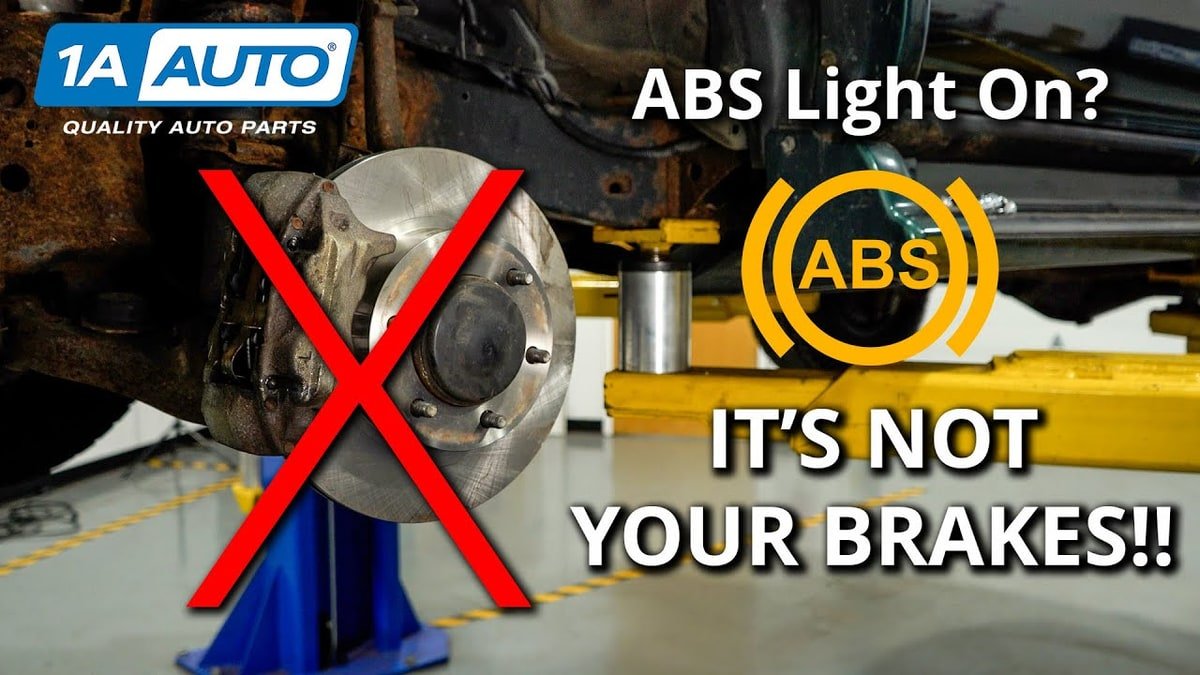
What most people do not know is that an ABS warning light is not one warning. It is amber on every dashboard, but it is describing three distinct situations. Two of those situations you can manage, at least temporarily, while you arrange a proper diagnosis. The third means you stop driving and you make the call today.
The fault I see most often is a wheel speed sensor reading incorrectly. The ABS module monitors all four wheel speeds constantly, even when you are not braking hard. One sensor produces data that does not match the other three, and the light comes on.
UK roads corrupt these sensors differently to anywhere else I have seen documented. Salt and standing water find the connector housing over months and build resistance across the pin contacts not a sudden failure, but a gradual degradation that produces an intermittent fault. That intermittency is what makes the code look like it is pointing at the wrong thing.
The scan tool will give you a code pointing at a specific corner, and usually that location is accurate. What it cannot tell you is whether the sensor itself has failed or whether the connector feeding it has corroded. Those are two different repairs, and a fault code alone cannot tell you which you are dealing with.
I had a Vauxhall Astra on a driveway in Luton last winter with a front-left wheel speed sensor code same code two separate garages had already read on it. Both had replaced the sensor. Both times the fault returned within a fortnight.
When I connected my diagnostic kit and pulled live data rather than codes, the sensor was reading within spec when cold. Only after ten minutes of driving did it start producing noise. I unplugged the connector it fought me, which tells you something and found corrosion through the length of two of the three pins.
Two sensor replacements, neither of which touched the actual fault, and that connector was probably corroded like that before either of those visits. The sensor was never the problem. The part neither workshop checked was a two-pound piece of plastic and copper.
The second scenario is the one that costs people money they should not be spending. I had a Volkswagen Passat in Kempston where the ABS module fault code had convinced two previous mechanics the module was failing. Live data told a different story.
The supply voltage was dropping under load. The module was not malfunctioning it was accurately reporting a power supply issue caused by a corroded chassis ground strap at the body end. Twenty-five minutes. Nothing replaced except a length of cable.
A new ABS module for that Passat was around four hundred and fifty pounds. That is what someone pays when the diagnosis stops at the fault code and goes straight to the parts bin. I will not fit a part to a car unless the live data or the physical inspection has confirmed specifically why that part needs replacing.
The third scenario is the one I want to talk about differently.
When the ABS light appears alongside the standard brake warning light, or alongside any change in how the car stops, that combination matters. It is not a sensor issue. You are looking at a hydraulic fault somewhere in the ABS modulator block or the pump, and that is a different situation entirely.
The ABS modulator block sits inside the main brake hydraulic circuit. When a solenoid valve starts to stick or the pump motor works against a blocked valve, the key-on self-test sounds different. A labouring, irregular cycle instead of the clean thump it should make. The pressure reaching your callipers is already inconsistent by that point.
I have been to two callouts where the pedal went soft mid-application a roundabout on the A507, a car park in Flitwick. Both drivers said they had noticed something felt slightly different under braking in the weeks before it happened. I am not saying that to make anyone feel bad I understand how these decisions get made.
This is the only one of the three scenarios where I want the car off the road before we figure it out. The pedal feeling different, the light on, the stop taking longer than it should that is the conversation you have today, not in three months.
The Mondeo in Shillington was a rear-left connector corroded through, fighting back when I unplugged it. Forty minutes, no new parts, fault gone. The only one of those three scenarios nobody phones about a second time is the third one.

Jimmy O’Riley is a UK-based mobile mechanic and automotive diagnostic specialist operating out of Bedfordshire, England. He founded O’Rileys Autos in 2011 with a focus on bringing professional vehicle repairs directly to customers at their homes and workplaces.
With over a decade of hands-on experience, Jimmy specializes in ABS diagnostics, brake system repairs, diesel emissions faults, and DPF cleaning. He is recognized across the UK and Ireland as one of the leading specialists in vehicle braking and emissions systems, earning the title “The DPF King” from his growing online audience.
Jimmy documents real-world automotive repairs through his YouTube channel, which has accumulated over 97,000 subscribers and nearly 2,000 published repair videos. His content covers ABS fault diagnosis, wheel speed sensor testing, brake module replacement, and roadside repair procedures across a wide range of vehicle makes and models.
He is active on YouTube, Instagram, and Facebook under O’Rileys Autos.