
The Focus had been driven to me on a Tuesday morning from a road in Leighton Buzzard, ABS light on for eight months, owner convinced it still stopped fine. She had a point in the sense that she had been driving it for eight months and nothing had happened. That is how most people with an ignored ABS light reason, and it is not an unreasonable position to take until it becomes one.
I understand why people make that call. The car still brakes, the pedal still feels the same, and nothing changes in the way the vehicle behaves in ordinary conditions. What changes, when the ABS system is deactivated, is what happens in the moments that are not ordinary.
The NHTSA, which is the American road safety regulator, published investigation data showing ABS deactivation was a contributing factor in twelve thousand crashes in a single year. That is not twelve thousand crashes caused by ABS failure in isolation. It is twelve thousand crashes where a functioning ABS system would have altered the outcome of an emergency braking event. When I saw that figure reported, I thought about every car I have attended where the owner said the same thing.
ABS does not make your brakes more powerful. It prevents wheel lockup under hard braking, which is what allows you to steer while stopping in an emergency. The moment wheels lock, you have no directional control regardless of how hard you turn. On a wet road, on gravel, or on any surface with reduced grip, that gap between steerable and unsteerable is where crashes happen.
When I connected the diagnostic interface to the Focus, the stored code was a C0035, right front wheel speed sensor circuit fault. That is where a quick read and a sensor order would end things. The live data showed something different. The left rear sensor was also producing intermittent signal drops, not enough to have stored its own code yet, but clearly visible on the live feed under braking load.
A single sensor fault limits ABS response at one corner. Two sensors degrading simultaneously puts the system in a position where it is working with incomplete data at two corners at once. Under hard braking, the module cannot accurately calculate what is happening across the axle. The ABS that activates in that moment is not the ABS the car was designed to provide.
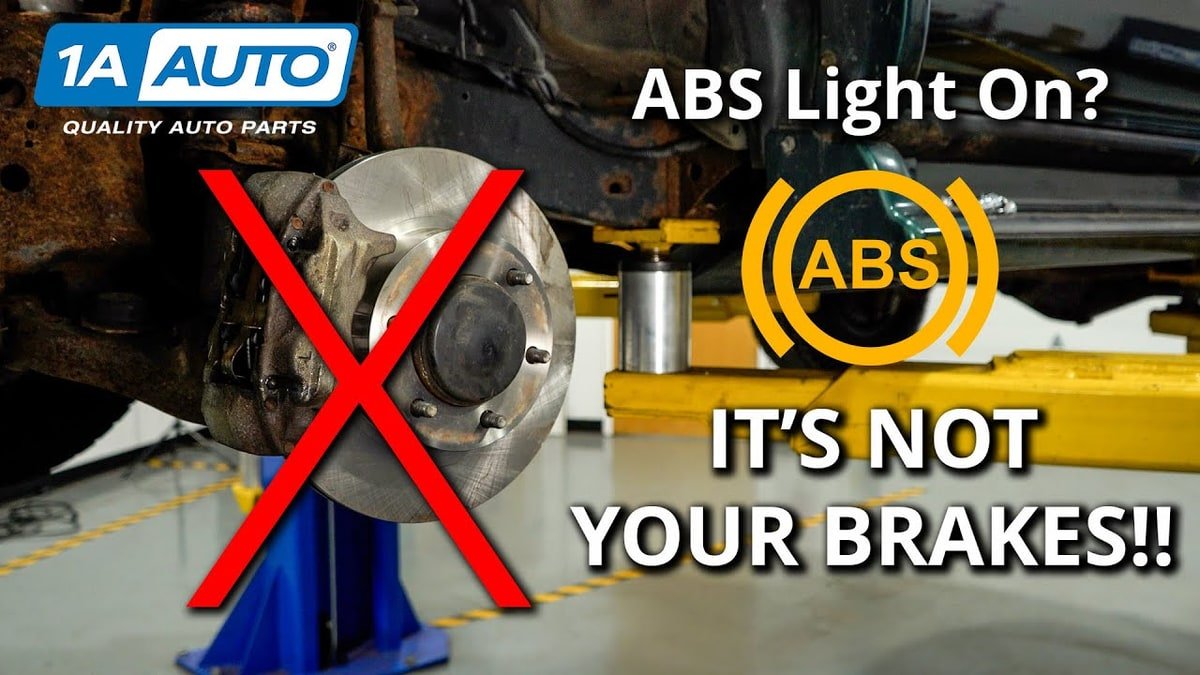
Eight months of driving with the right front sensor degraded is eight months of emergency braking events where that corner feeds the module unreliable data. Most people do not encounter emergency braking situations in eight months of driving. That is the nature of the risk. The experience of driving feels unchanged because the situations that would reveal the change do not arise every day.
I have seen this pattern more than once. An owner who has been driving with a single stored sensor fault for months comes in, and live data reveals a second sensor degrading alongside it. Both deteriorated together, one silently. In ordinary driving, with gradual controlled braking, degraded sensors do not announce themselves.
The twelve thousand figure belongs in a road safety conversation that rarely includes ABS diagnostics. Road safety discussions focus on speed, alcohol, distraction, and vehicle design. ABS deactivation through sensor degradation sits in the gap between those categories, because the driver has done nothing visibly wrong and the car gives no outward sign of the problem. It is the category of crash that a working diagnostic culture would prevent.
The British data on this is less consolidated, but the vehicles here are not meaningfully different from the ones generating crashes in American investigations. UK road salt is more corrosive than most European equivalents, which accelerates sensor connector degradation in ways that produce exactly this kind of intermittent fault. The Focus in Leighton Buzzard had never been outside Bedfordshire. British salt, British roads, and the same faults that show up in the American data on the other side of the Atlantic.
If you have an ABS warning light that has been on for weeks or months, the fault was there from the moment the light appeared. What has changed is the time the degradation has had to develop, and sometimes the chance for a second fault to follow the first. The car has not held together so far because the fault is not serious. It has held together because the specific emergency that would reveal the fault has not happened yet.
The Focus left Leighton Buzzard with two sensors replaced and a module confirmed healthy on live data before I packed the kit away. The owner mentioned she had nearly left it another month. I did not respond to that because there was nothing useful to add. Twelve thousand is a number with individual crashes inside it, and most of them started with a decision that felt reasonable at the time.

Jimmy O’Riley is a UK-based mobile mechanic and automotive diagnostic specialist operating out of Bedfordshire, England. He founded O’Rileys Autos in 2011 with a focus on bringing professional vehicle repairs directly to customers at their homes and workplaces.
With over a decade of hands-on experience, Jimmy specializes in ABS diagnostics, brake system repairs, diesel emissions faults, and DPF cleaning. He is recognized across the UK and Ireland as one of the leading specialists in vehicle braking and emissions systems, earning the title “The DPF King” from his growing online audience.
Jimmy documents real-world automotive repairs through his YouTube channel, which has accumulated over 97,000 subscribers and nearly 2,000 published repair videos. His content covers ABS fault diagnosis, wheel speed sensor testing, brake module replacement, and roadside repair procedures across a wide range of vehicle makes and models.
He is active on YouTube, Instagram, and Facebook under O’Rileys Autos.