A Power Steering Reservoir Is a Container That Stores Hydraulic Fluid and Supplies It to the Power Steering Pump
A power steering reservoir is known for holding the fluid that the power steering pump sends to the steering gear. Hydraulic systems use 2 reservoir types, pump-mounted and remote. Electric power steering systems have no reservoir. This article covers function, types, fluid checks, symptoms, and leak causes.
What Is a Power Steering Reservoir?
A power steering reservoir is a container that stores hydraulic fluid and supplies it to the power steering pump. The pump sends the fluid to the steering gear, which applies the pressure needed to turn the tires. Power steering system components include the pump, fluid, belt, hoses, and steering gear.
What Does Power Steering Fluid Do in the Reservoir?
Power steering fluid transmits hydraulic pressure and helps protect the rubber hoses and seals in the system, according to AAA.
Where Is the Power Steering Reservoir Located?
The power steering reservoir sits in the engine bay, either as part of the pump or in a separate mount. The cap is usually marked with a steering wheel icon.
How Does a Power Steering Reservoir Work?
A power steering reservoir feeds fluid to the pump by gravity and receives the fluid back from the steering gear through a return line. PSC Motorsports lists reservoir placement as a key factor in system problems, since the pump draws fluid from the reservoir mainly by gravity. The return line carries fluid from the steering gear back to the reservoir.
What Are the Common Parts of a Power Steering Reservoir?
Common parts of a power steering reservoir include the cap, vent, baffle, and filter.
For related reading, see Steering Wheel Lock: 5 Types, Effectiveness Data, and Bypass Methods. The same maintenance context also connects with Steering Wheel Lock.
- Cap: seals the reservoir and often carries the dipstick.
- Vent: stays open at all times.
- Baffle: limits air mixing with fluid as it enters.
- Filter: traps debris, and some models use a non-serviceable mesh filter.
AAA notes that the cap often carries the dipstick. PSC Motorsports states that the vent must remain open and that a baffled reservoir helps keep air out of the system. The 2011 to 2017 Honda Odyssey reservoir contains a mesh filter that clogs over time.
What Are the Types of Power Steering Reservoirs?
Hydraulic power steering systems use 2 reservoir types: pump-mounted reservoirs and remote reservoirs. Electric power steering systems use no reservoir. The table compares the 3 configurations by reservoir location and level check method.
| Configuration | Reservoir Location | Level Check Method |
|---|---|---|
| Pump-mounted reservoir | Part of the power steering pump | Cap with dipstick |
| Remote reservoir | Mounted away from the pump and linked by hoses | Translucent body with high and low marks |
| Electric power steering | No reservoir | No fluid check |
AAA describes both hydraulic layouts. A patent record states that reservoirs on the pump are generally made of sheet metal, and that remote reservoirs connect to the pump with hose lines. Some reservoirs, such as the Honda Odyssey unit, are plastic tanks.
Why Do Some Vehicles Have No Power Steering Reservoir?
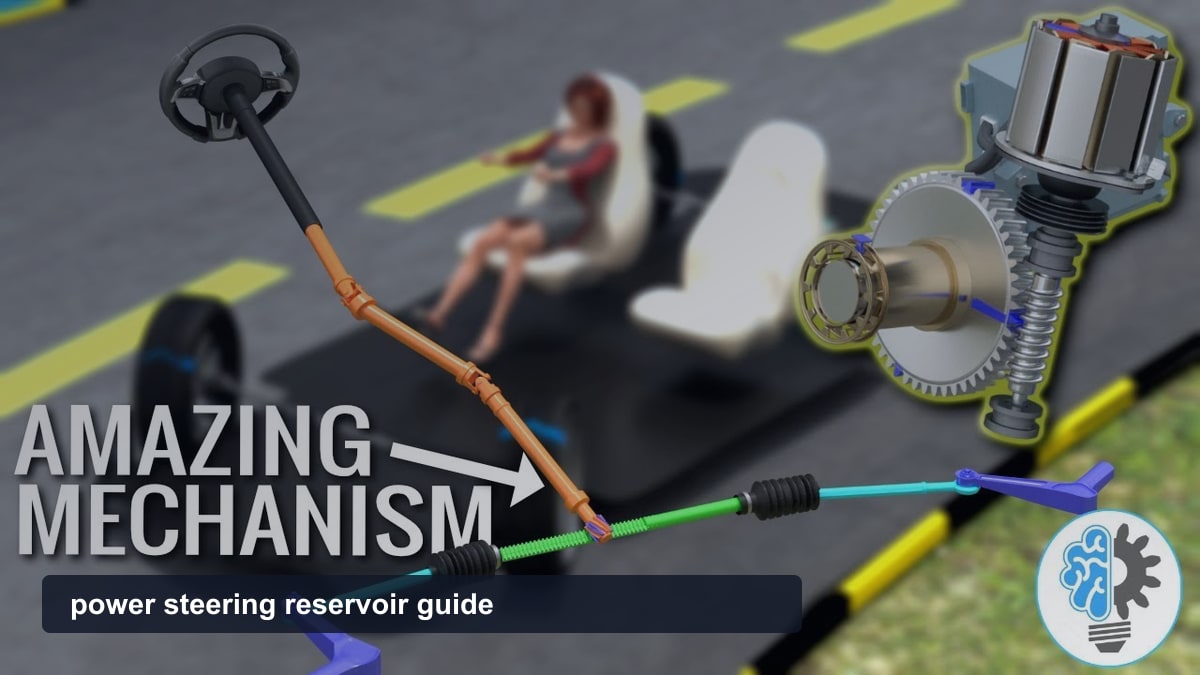
Vehicles with electric power steering have no reservoir because an electric motor assists the steering column and removes the need for a hydraulic pump and fluid.
What Did the Fuel Economy Study Find?
A Springer-published study measured a 1.7% fuel economy gain for full electric power steering and a 1% gain for electro-hydraulic power steering, both against conventional hydraulic power steering, in the FTP-75 driving cycle.
How Common Is Electric Power Steering?
A Qube Research report estimated that about 75% of new vehicles worldwide carried electric power steering at the time of publication, and forecast 88% by 2023. Added cost limits adoption in some emerging markets, where hydraulic systems remain in use.
How Do You Check a Power Steering Reservoir?
Check a power steering reservoir by reading the fluid level against the upper and lower marks on the dipstick or reservoir body. The 7 steps are:
- Park the vehicle on level ground.
- Clean around the reservoir cap.
- Remove the cap or dipstick and wipe it clean.
- Reinsert the dipstick fully, then remove it to read the level.
- Compare the level with the hot or cold marks.
- Add the specified fluid if the level is near or below the lower mark.
- Refit the cap securely.
Steps 1 to 6 follow AAA guidance. Step 7 prevents contamination. A remote reservoir shows high and low marks on its translucent body, and the level reads between the marks at operating temperature.
When Is the Fluid Level Checked Hot or Cold?
Many reservoirs show 2 sets of marks, one for hot fluid and one for cold fluid, because power steering fluid expands as it heats. For a hot check, start the engine and turn the steering wheel fully in both directions to warm the fluid. The owner’s manual states which check applies to a specific vehicle.
What Fluid Goes in a Power Steering Reservoir?
The fluid listed in the owner’s manual goes in the reservoir. Common fluid types include automatic transmission fluid (ATF), synthetic-based fluid, and universal power steering fluid. The 2007 Honda Civic owner’s manual lists Honda Power Steering Fluid as preferred and states not to use ATF.
For a reliable reference point, see NHTSA recalls and vehicle safety.
What Are the Symptoms of a Low or Failing Power Steering Reservoir?
The 4 main symptoms are whining noise, foamy fluid, heavy steering, and fluid puddles. The symptoms include:
- Whining or groaning noise when turning
- Foamy or bubbly fluid in the reservoir
- Heavy steering effort
- Fluid puddles under the vehicle
Detroit Axle links whining to low fluid and air in the system, and lists foamy fluid as a common symptom. YourMechanic reports that steering becomes harder and fluid may appear under the car when the reservoir runs low.
Why Does the Fluid Level Drop in a Sealed System?
Power steering systems are sealed, so a falling fluid level indicates a leak, according to Rick’s Free Auto Repair Advice. AAA advises a repair shop inspection when a fluid needs frequent top-ups.
What Does Foamy Power Steering Fluid Indicate?
Foamy fluid indicates air in the system. Air causes pump noise and foaming because power steering fluid does not compress. Detroit Axle identifies low fluid as the most common cause of pump whining.
What Causes a Power Steering Reservoir to Leak?
The 3 main causes of fluid loss at the reservoir are cracks in the body, clogged filters, and overfilling.
- Cracked body: the reservoir can crack and leak over time.
- Clogged filter: pressure builds and pushes fluid past the cap in some models.
- Overfilling: fluid expands when hot and vents through the cap.
Turners Service reports that reservoirs can crack, leak, or develop clogged filters. A clogged filter in the Honda Odyssey reservoir pushes fluid past the cap. Overfilled fluid expands when hot and can rupture seals or vent through the cap.
How Much Does Power Steering Reservoir Replacement Cost?
A power steering reservoir replacement costs $238 on average for a Kia Sedona, according to YourMechanic. The total includes $143 for parts and $95 for labor.
What Do People Also Ask About Power Steering Reservoirs?
Can you drive with low power steering fluid?
Low power steering fluid makes steering harder, and a cracked reservoir can cause sudden fluid loss, pump damage, and possible loss of control.
Does electric power steering have a reservoir?
No, electric power steering uses an electric motor instead of a hydraulic pump and fluid.
Can automatic transmission fluid go in a power steering reservoir?
Only when the owner’s manual specifies it, and the 2007 Honda Civic manual states not to use ATF.
What happens if the power steering reservoir is overfilled?
Overfilled fluid expands when hot and can rupture seals or vent through the cap.
What Is the Role of a Power Steering Reservoir in a Hydraulic Steering System?
A power steering reservoir stores hydraulic fluid and supplies it to the power steering pump in hydraulic steering systems. Level checks against the hot or cold marks identify low fluid, and the owner’s manual specifies the fluid type. Whining noise, foamy fluid, heavy steering, and fluid puddles are the 4 main symptoms of a low or failing reservoir. Cracks, clogged filters, and overfilling are the 3 main causes of fluid loss at the reservoir.