A Steering Wheel Lock Is a Mechanical Anti-Theft Device That Blocks Wheel Rotation to Deter Vehicle Theft
A steering wheel lock is known for adding delay and visible resistance to a theft attempt. Steering wheel locks come in 5 types. A British study found that new cars made up 20.9% of illegally taken cars in 1969 and 5.1% in 1973, and attributed the drop to anti-theft devices. This article covers types, effectiveness data, bypass methods, security ratings, and selection criteria.
What Is a Steering Wheel Lock?
A steering wheel lock is an aftermarket anti-theft device that attaches to the steering wheel and blocks it from turning. Anti-theft devices include audible alarms, kill switches, GPS trackers, and steering wheel locks. Names for the device include club lock and steering lock.
What Is the Difference Between a Steering Wheel Lock and a Steering Column Lock?
A steering column lock is a factory-fitted mechanism built into the steering column, while a steering wheel lock is an aftermarket device attached to the wheel.
How Does a Steering Wheel Lock Work?
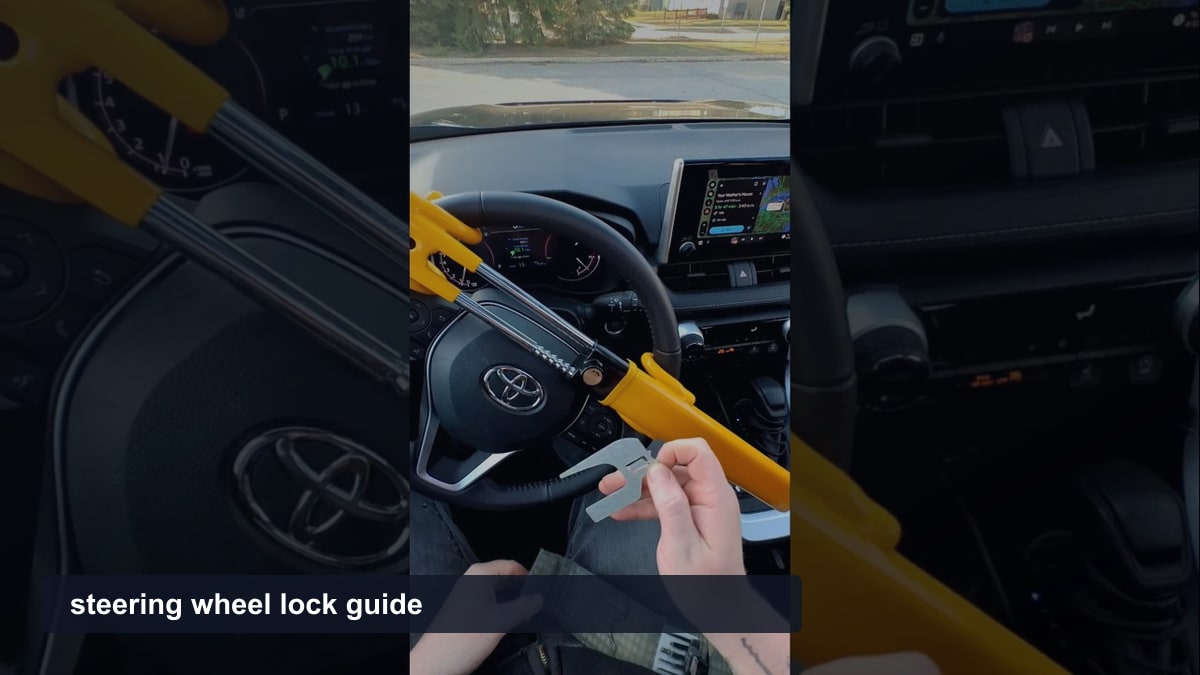
A steering wheel lock works by restricting wheel rotation. Bar types use a long handle that collides with other parts of the car or the driver’s legs. Full cover types encase the wheel in a steel case. Wheel-to-pedal types fix the wheel to another part of the car, such as the brake pedal.
What Are the 5 Types of Steering Wheel Locks?
The 5 main types of steering wheel locks are single bar, double bar, T-bar, full cover, and wheel-to-pedal locks. Retailers and reviewers classify these locks by how they attach to the wheel. The table compares each type by attachment method and blocked movement.
| Lock Type | Attachment Method | Blocked Movement |
|---|---|---|
| Single bar | One hook clamps onto the wheel | Wheel rotation |
| Double bar | Two hooks clamp onto the wheel | Wheel rotation |
| T-bar | Clips over the top of the wheel, with the bar resting on the dashboard | Wheel rotation |
| Full cover | Steel case encases the wheel, and a blocker bar holds the case in place | Wheel rotation and rim access |
| Wheel-to-pedal | Connects the wheel to the brake or clutch pedal | Wheel rotation and pedal movement |
How Effective Is a Steering Wheel Lock Against Vehicle Theft?
A steering wheel lock deters opportunistic theft but does not provide complete protection. Carwow reports that most locks slow a thief down. Halfords states that no lock is 100% thief-proof. Bollard Security notes that a visible lock can make a vehicle a less attractive target.
For related reading, see Dexron III Power Steering Fluid: 4 Versions and Replacements. The same maintenance context also connects with Dexron III Power Steering Fluid.
What Does Research Say About Steering Lock Effectiveness?
Two published studies found lower theft rates in cars fitted with factory steering column locks. Both studies measured factory-fitted column locks, not aftermarket wheel locks.
What Did the British Metropolitan Police Study Find?
New cars made up 20.9% of illegally taken cars in 1969 and 5.1% in 1973. Mayhew, Clarke, and Hough analyzed Metropolitan Police records and attributed the difference to anti-theft devices.
Do Steering Locks Move Theft to Other Cars?
Yes. The same study found that steering column locks redirected thieves to cars without locks. The authors concluded that owners gain real benefit only when the whole class of cars is secured at the same time.
What Did the German Regulation Study Find?
Webb (1994) found that steering column locks reduce vehicle theft, particularly theft for temporary use. The analysis covered German regulations that required anti-theft devices on vehicles.
How Many Vehicles Were Stolen in the United States in 2025?
The National Insurance Crime Bureau (NICB) recorded 659,880 vehicle thefts in 2025, a 23.2% decline from 850,708 thefts in 2024. NICB lists steering wheel locks among recommended anti-theft technology. Other recommended technology includes audible alarms, kill switches, and aftermarket GPS trackers.
How Did Hyundai and Kia Use Steering Wheel Locks?
Hyundai and Kia supplied steering wheel locks to police departments for models without engine immobilizers. Hyundai alone shipped more than 40,000 locks to law enforcement agencies. Police departments in Bellevue (Washington), Brooklyn Center (Minnesota), and Springfield (Illinois) distributed the locks to eligible owners.
Hyundai and Kia vehicles accounted for 21% of US thefts in 2023, 16% in 2024, and 14% in 2025. NICB attributes the national decline to coordinated efforts by law enforcement, insurers, and automakers.
How Do Thieves Bypass a Steering Wheel Lock?
Thieves bypass a steering wheel lock by cutting the wheel rim, picking the lock, or breaking the lock mechanism. Reported methods include picking tools, disabling internal mechanisms, and cutting the lock off the wheel. The 3 bypass methods are:
For a reliable reference point, see NHTSA vehicle safety information.
- Cut the wheel rim with a saw blade to release the lock without unlocking it.
- Pick the lock cylinder with picking tools.
- Break the lock open with force.
How Does Rim Cutting Defeat a Steering Wheel Lock?
A saw blade cuts through part of the wheel rim, and the lock comes off intact. The method damages the steering wheel and requires a saw blade plus enough time, according to a University of Washington security blog. Patent US4823573A states that steering wheels are usually made from material that a hacksaw cuts quickly.
How Do Full Cover Locks Prevent Rim Cutting?
A full cover lock places a metal shield over the wheel rim, and the shield stays in place while the lock is engaged. Cutting through the shield is harder than cutting through the rim.
How Do Security Ratings Measure Steering Wheel Lock Strength?
Security ratings measure steering wheel lock strength through timed attack tests. Sold Secure is an independent security product certification agency that tests products against attack. Halfords reports that the tests look for resistance and deterrence for up to 5 minutes. Manufacturer Milenco describes 2 automotive standards:
- Thatcham standard: 120-second attack test, now terminated.
- Sold Secure Gold automotive standard: 300-second professional attack test.
Milenco states that the Gold standard is 2.5 times tougher than the Thatcham standard.
How Do You Choose a Steering Wheel Lock?
Choose a steering wheel lock by matching compatibility, security rating, coverage, fitting speed, and storage size to the vehicle. The 5 checks are:
- Check compatibility with the steering wheel size and design.
- Verify the Sold Secure rating on the Sold Secure website.
- Compare coverage across lock types, such as bar and full cover.
- Confirm that fitting is quick and simple.
- Measure the lock against available storage space.
How Do You Fit a Bar-Type Steering Wheel Lock?
Fit a bar-type steering wheel lock by hooking the clamps onto the wheel rim, tightening the ratchet, and locking it with the key. A classic design uses two anchor points on the wheel, a ratcheting mechanism between them, and a long arm that prevents full turns. The 4 steps are:
- Place the hooks around the wheel rim.
- Slide the pieces together until the ratchet tightens against the wheel.
- Turn the key to lock the mechanism.
- Remove the key from the lock.
Models differ, so manufacturer instructions apply to each lock.
What Do People Also Ask About Steering Wheel Locks?
Do steering wheel locks work?
Steering wheel locks deter opportunistic thieves and add delay, but thieves with cutting or picking tools bypass them.
Can a steering wheel lock stop a vehicle from being towed?
No, a steering wheel lock does not stop thieves from towing a vehicle away.
Can a steering wheel lock damage the steering wheel?
Frequent fitting and removal can scratch or scuff the steering wheel, and rim cutting damages it.
Who makes The Club steering wheel lock?
Winner International, based in Sharon, Pennsylvania, makes The Club, a steering wheel lock first sold in the 1980s.
What Is the Role of a Steering Wheel Lock in Vehicle Theft Prevention?
A steering wheel lock is a mechanical anti-theft device that blocks wheel rotation and adds delay to a theft attempt. Research on factory steering column locks links them to lower theft rates, and NICB lists steering wheel locks among recommended anti-theft technology. Rim cutting, lock picking, and forced breakage are the 3 known bypass methods.