
The Cherokee was parked outside a kebab shop on Dunstable Road in Luton when I found it, both lights burning steady on the dash. The owner had been driving it for two months like that. He works early starts, needed the car, and to him it still stopped when he pressed the pedal.
I am not going to tell him that was wrong, because it did still stop and he had no reason to believe otherwise. That is what makes ABS and stability control failures so difficult to communicate. They are invisible right up to the moment they are not.
I connected the diagnostic interface, proper kit with direct ABS module access, not the Bluetooth adapters sold to enthusiasts for thirty quid. The scan returned two codes. One pointed at the hydraulic control unit internally, the other was a network communication dropout between the ABS module and the chassis system.
I have seen that pairing on Cherokees before. What it has taught me is that you do not start pulling hydraulic units on the strength of a stored code. You watch the live data first, because the live data does not conceal things the way a code sometimes does.
The data stream showed the module dropping off the network for fractions of a second under braking load. That is not a hydraulic fault.
It was a corroded ground connection on the module mounting bracket. The connector fought me when I unplugged it, which is usually the first sign that corrosion has been working in there for some time. The kind that forms on cars driven through British winters, where road salt works into the loom and degrades the signal path quietly before anything shows on the dashboard.
I cleaned the ground point, verified the earth path back to the chassis, and tested under load. Communication fault gone, HCU code gone with it.
The owner had been quoted five hundred pounds at a garage down the road for an ABS pump replacement. Based on a code alone, no live data, no ground checks. That is what happens when a fault code is read as a conclusion rather than a starting point.
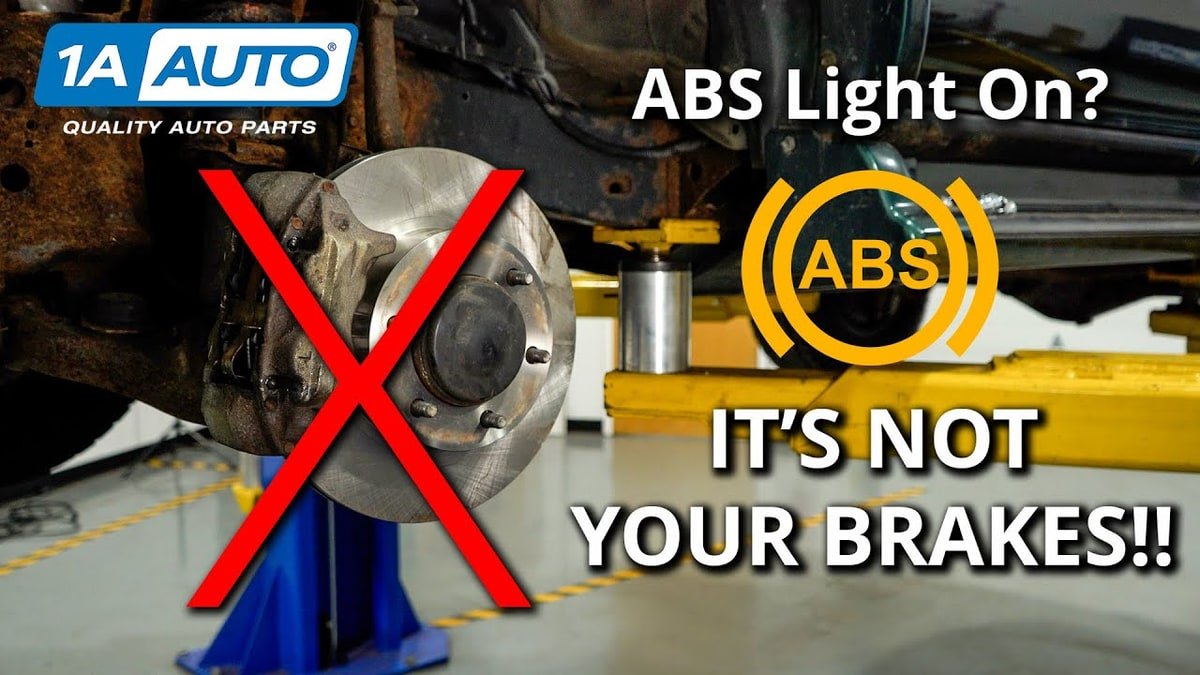
That garage is not staffed by people who do not know what they are doing. They read a code, identified a common fix associated with it, and priced accordingly. It happens on every make of car every day, and ABS is one of the systems where it costs people most.
I have posted three Cherokee jobs to the channel over the last two years. The comments run to hundreds of people with the same dashboard combination, same model years, same hesitation before they finally called somebody. That pattern is a genuine diagnostic tool when you have watched enough of the same problem develop from the same starting point.
The reason I am writing about this vehicle specifically is the recall Chrysler have filed for the Cherokee. The failure at the centre of that recall is worse in one particular way than the fault I found in Luton.
The recall involves the ABS module losing the ability to activate the Electronic Stability Control system without triggering any warning on the dashboard. The car drives normally. The stability system ceases to function and the instrument panel tells you nothing about it.
A warning light is not comfortable to live with, but it is at least honest. It tells you something has changed. This failure mode removes the safety system while leaving the driver with no indication that anything is different. On a wet roundabout or during an emergency manoeuvre, that is a considerably more serious position to be in.
If your Cherokee falls within the recall window, contact Chrysler and verify your VIN before you wait for symptoms to develop. The point of this recall is that symptoms may not appear before the circumstances that need the system do.
If you have had any combination of ABS and stability warning lights on a Cherokee, get the chassis codes read, not just the powertrain scan. Most of the tools garages use as a starting point do not reach into the chassis network where these faults actually live.
The codes on that Cherokee in Luton were not visible on a standard powertrain scan. They were in the chassis network. A basic scan would have confirmed an expensive guess and sent a man home five hundred pounds lighter for no reason.
Fourteen years of doing this on British driveways, and I still find it uncomfortable when a recall describes a failure that produces no warning at all. The warning is often the only thing an owner has to work with, and this one removes it entirely.

Jimmy O’Riley is a UK-based mobile mechanic and automotive diagnostic specialist operating out of Bedfordshire, England. He founded O’Rileys Autos in 2011 with a focus on bringing professional vehicle repairs directly to customers at their homes and workplaces.
With over a decade of hands-on experience, Jimmy specializes in ABS diagnostics, brake system repairs, diesel emissions faults, and DPF cleaning. He is recognized across the UK and Ireland as one of the leading specialists in vehicle braking and emissions systems, earning the title “The DPF King” from his growing online audience.
Jimmy documents real-world automotive repairs through his YouTube channel, which has accumulated over 97,000 subscribers and nearly 2,000 published repair videos. His content covers ABS fault diagnosis, wheel speed sensor testing, brake module replacement, and roadside repair procedures across a wide range of vehicle makes and models.
He is active on YouTube, Instagram, and Facebook under O’Rileys Autos.