
The Seat Leon has been parked behind the Anchor pub in Shefford since Tuesday, when the ABS light came on mid-corner and the owner pulled off the road. She has a quote from the Seat dealer in Luton for 950 pounds. The independent garage in Sandy quoted 540 pounds for the same job. Both quotes say the same thing: ABS control module, supply and fit.
I understand the logic of getting two quotes. The gap between 950 and 540 pounds looks like a decision, and for most people it is. What neither number actually contains is a diagnosis. They both contain a fault code cross-referenced to a parts price, which is a different thing entirely.
The fault code stored in this car is C0561: ABS system disabled. That code appears when the module shuts the entire ABS system down because something it is reading does not make sense. It tells you the system has given up. It does not tell you what the system gave up on.
I connect the interface and pull the live data while the engine runs. Three corners are producing clean, consistent speed signals, and the front left is producing a signal but not the right kind. The numbers are moving on the screen in a way that has no relationship to what the wheel is actually doing.
For official safety context, see this reference.
A corrupted signal is harder to read than no signal at all.
When a sensor input disappears completely, the module knows exactly what it has lost, and the fault code reflects that. When the signal goes noisy and erratic, the module starts guessing at what the disruption means. On this Leon, the corrupted input was generating phantom wheel speed differences that were not there, and the module eventually did what it was designed to do. It disabled the ABS and logged the shutdown code.
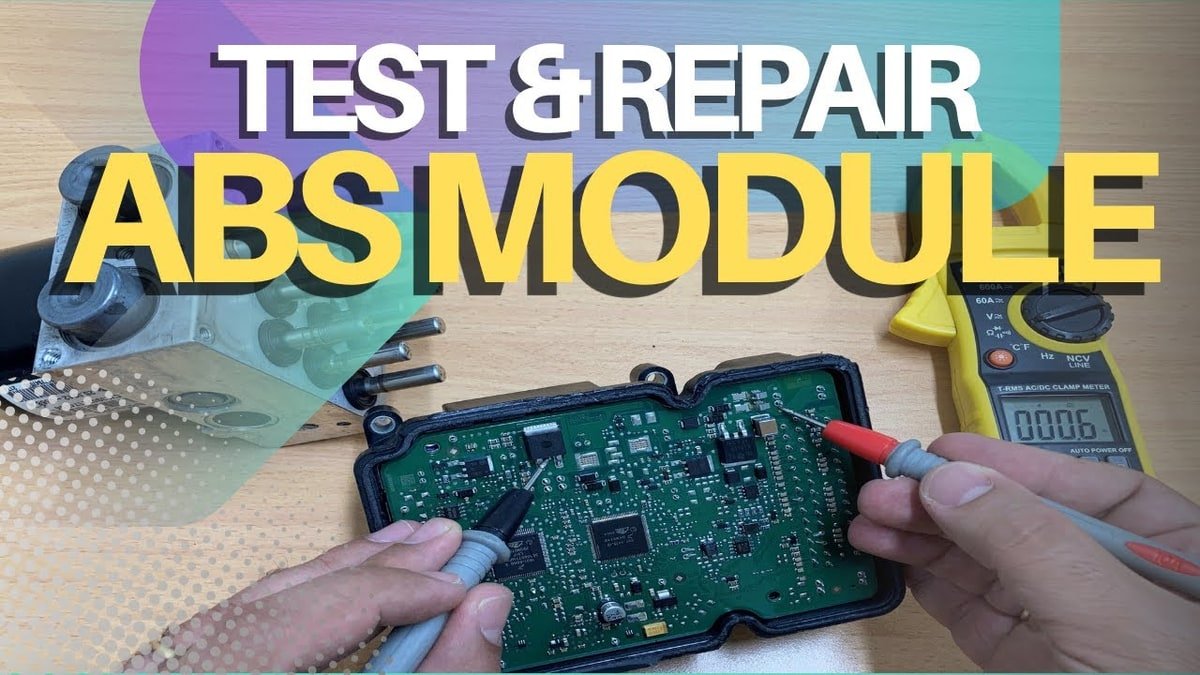
I got under the front left corner and turned the hub by hand. The disc was cold, no smell of brake dust, nothing to suggest the brakes themselves were involved. What I could feel in the hub rotation was a faint, irregular roughness that was not there two rotations ago and then was. The wheel bearing on the Leon is an integrated unit: the ABS sensor ring is pressed into the bearing housing, and the sensor reads through it.
The bearing was failing. The inner race had started to break down, and metallic debris was contaminating the sensor ring. The ring is what the ABS sensor reads to calculate wheel speed, and contaminated teeth produce the erratic signal I had been watching on the screen. The bearing had not failed completely, which is why the signal was corrupted rather than absent.
I want to be accurate about what both garages had done. They read C0561, identified the module as the component that had disabled the system, and priced a replacement. That is not an incompetent response to that code. It is what happens when the diagnostic process ends at the code rather than treating the code as a starting point.
The bearing cost 89 pounds from a quality supplier. Fitting it took just under an hour, including the road test where I watched the live data on all four corners return to clean, stable, consistent readings. Total cost was 149 pounds including labour, and the original Seat module has been on that car since 2018.
The independent quote was 391 pounds less than the dealer. It was also for a part that is still in its packaging and did not go near the car.
There is a version of the cheaper-quote outcome that actually ends cheaper, and it requires a proper diagnosis underneath it rather than a faster path to the same wrong conclusion. The module on this Leon was not malfunctioning. It was responding logically to a signal that had stopped making sense. Replacing it would have left the bearing in place, the ring still contaminated, and the light back on within days.
What I find on these integrated bearings, after five or six winters on British roads, is that the sensor ring contamination usually arrives before the bearing noise does. The roughness I felt when I turned that hub by hand would not have been audible from inside the car for another few months. The ABS light was the bearing's way of announcing itself before it got loud enough to be obvious. Most drivers, and most diagnostic processes, are waiting for the louder announcement.

Jimmy O’Riley is a UK-based mobile mechanic and automotive diagnostic specialist operating out of Bedfordshire, England. He founded O’Rileys Autos in 2011 with a focus on bringing professional vehicle repairs directly to customers at their homes and workplaces.
With over a decade of hands-on experience, Jimmy specializes in ABS diagnostics, brake system repairs, diesel emissions faults, and DPF cleaning. He is recognized across the UK and Ireland as one of the leading specialists in vehicle braking and emissions systems, earning the title “The DPF King” from his growing online audience.
Jimmy documents real-world automotive repairs through his YouTube channel, which has accumulated over 97,000 subscribers and nearly 2,000 published repair videos. His content covers ABS fault diagnosis, wheel speed sensor testing, brake module replacement, and roadside repair procedures across a wide range of vehicle makes and models.
He is active on YouTube, Instagram, and Facebook under O’Rileys Autos.