
The failure sheet was on the kitchen table at a house off Tavistock Street in Bedford. The owner had failed his MOT the previous afternoon on two ABS fault codes. The testing station's quote for a new pump and module was clipped to the paperwork. The quote was 620 pounds before labour.
The failure listed two codes stored in the ABS module and a note that the ABS warning lamp had illuminated during the test. That was all the paperwork told him. It did not say which part of the system those codes came from, what they meant, or why the lamp had been appearing without him noticing it.
I am not going to suggest he should have caught it sooner. The ABS warning light on many cars appears at certain temperatures or speeds and then clears on its own. If that happens on a cold morning commute and goes off before you reach the dual carriageway, you put it down to a glitch.
Most people I speak to after an MOT failure tell me the light had been appearing occasionally for months before the test. They had watched it clear and gone about their day, which is a completely understandable thing to do.
For official safety context, see this reference.
The DVSA publishes annual data from roadside enforcement checks, and the brake system defect figures in that data are what most people skip past. In the most recent roadside inspection survey, brake-related deficiencies were consistently among the most serious categories of defect found on private vehicles during enforcement stops. The vehicles being pulled over are not just commercial lorries or vans. A meaningful proportion are private cars, and the drivers have, in most cases, given no indication to anyone that something was wrong.
I plugged my kit into the car in Bedford and pulled both the stored codes and the live sensor data together. The stored codes pointed at the ABS module itself, which is what the testing station had used to recommend the pump and module replacement. The live data told a different story. The rear nearside wheel speed sensor was dropping out completely at speeds above 20 miles per hour, while the module and pump were both functioning correctly.
The module was being framed for something it had not done.
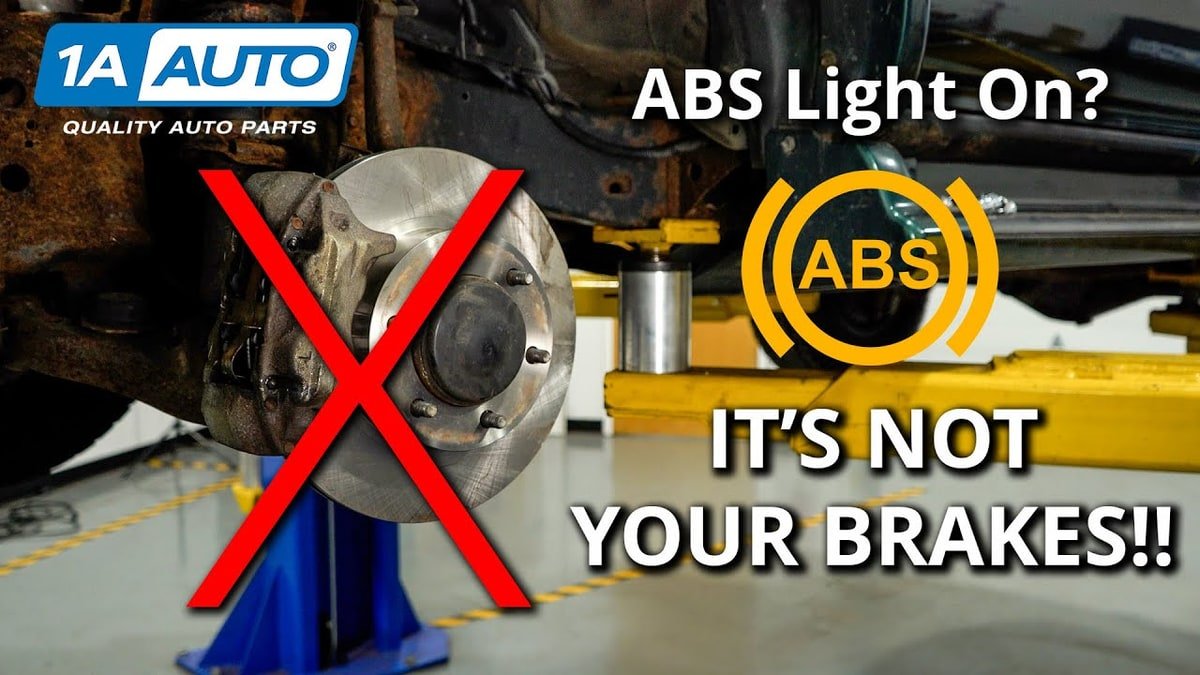
I got underneath and found the sensor connector on the rear nearside had corrosion at the terminals causing intermittent open-circuit resistance. The connector itself had not failed. It had been sitting in road spray from the rear wheel long enough for the terminals to oxidise past the point where they could maintain a reliable signal at speed.
The repair was a connector clean, a contact treatment, and a re-test on live data to confirm the signal was reading consistently across the full speed range. The sensor itself was in acceptable condition. That job needed no parts ordered, no new module, no pump. The total cost was a significant distance from the 620 pounds on the quote.
MOT testers are not diagnostic specialists, and I am not criticising them for that. Their job is to identify whether a system is functioning within the required standard, not to trace the fault to its source and price the repair. The problem comes when a failure notice gets handed to a driver with no diagnostic background, alongside a quote for the most expensive component a fault code mentions.
I picked up three MOT-related ABS jobs in Bedfordshire in a single month earlier this year. All three had been quoted for pump or module replacements based on stored fault codes. None of the three needed either. The actual faults were a corroded sensor connector, a damaged sensor harness, and a worn wheel speed sensor ring on a front hub.
The fault codes pointed at the module in all three cases.
If your car fails its MOT on ABS grounds, the failure notice gives you the right to take the vehicle to a different garage for the remedial work. You are under no obligation to have it repaired at the testing station. Getting a proper diagnostic scan before you authorise any parts is the difference between paying for the actual fault and paying for the nearest plausible component to the code.
The car in Bedford passed its retest within the week. The owner called to tell me, and mentioned he had spoken to four people he knew who had been quoted for ABS pump or module replacements after failing their MOTs. None of them had sought a second diagnostic opinion before authorising the work. A fault code on a failure notice is not a diagnosis, and the cost printed next to it is not the cost you are necessarily looking at.

Jimmy O’Riley is a UK-based mobile mechanic and automotive diagnostic specialist operating out of Bedfordshire, England. He founded O’Rileys Autos in 2011 with a focus on bringing professional vehicle repairs directly to customers at their homes and workplaces.
With over a decade of hands-on experience, Jimmy specializes in ABS diagnostics, brake system repairs, diesel emissions faults, and DPF cleaning. He is recognized across the UK and Ireland as one of the leading specialists in vehicle braking and emissions systems, earning the title “The DPF King” from his growing online audience.
Jimmy documents real-world automotive repairs through his YouTube channel, which has accumulated over 97,000 subscribers and nearly 2,000 published repair videos. His content covers ABS fault diagnosis, wheel speed sensor testing, brake module replacement, and roadside repair procedures across a wide range of vehicle makes and models.
He is active on YouTube, Instagram, and Facebook under O’Rileys Autos.