
There's a set of brake discs on the passenger seat of my van right now. I pulled them from a BMW 3 Series on a driveway in Dunstable this morning. The owner had been ignoring the grinding for four months, and the disc had worn to a lip you could catch your thumbnail on.
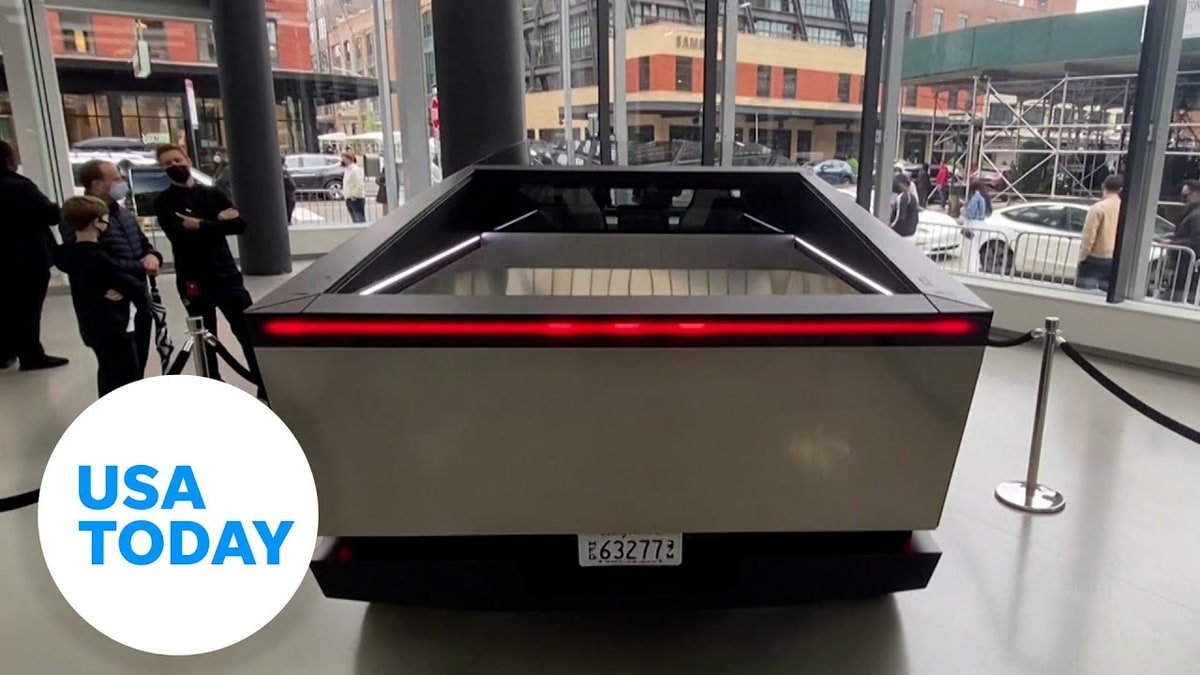
That job I could read from three feet away. Since the NHTSA announcement landed, I have been sitting with something I cannot diagnose from any distance at all. The investigation covers Cybertruck brake rotors cracking under load and wheels detaching from the vehicle entirely.
In fourteen years of brake work, I have pulled corroded rotors, scored rotors, warped rotors, and one that had partially fused to a hub seized solid by road salt. I have never pulled a rotor that cracked through its own body under normal road conditions. That should be structurally close to impossible on a production vehicle.
The difference between one cracked rotor and a pattern of cracked rotors matters more than it might look. One failure is a defect that slipped through quality control. A pattern across the fleet is a materials or specification problem. Those require entirely different conversations.
I get messages every week on YouTube from owners asking whether their ABS warning light is worth acting on. Most of them have already made peace with it. The car still stops, the pedal feels right, the light has been there for three months and nothing obvious has changed. That reasoning is entirely human, and it worries me every time without exception.
What makes the Cybertruck situation different is that there is no warning for what is happening. There is no fault code for metal fatigue developing inside a rotor. The ABS system cannot flag the failure until the wheel has already separated. By that point, the information arrives too late to be useful.
I had a callout near Flitwick last year on a Ford C-Max flagged for a nearside rear ABS sensor fault. The code was specific: wheel speed sensor, nearside rear, implausible signal. I got the connector off after a fight, the way every corroded connector on a British car does, road salt and time doing exactly what road salt and time do.
The sensor was not the problem.
The reluctor ring behind it had cracked nearly in half, and the sensor was reading incorrectly because what it was measuring had already structurally failed. The code pointed at the symptom. The actual cause was something the scanner was not designed to see directly.
I think about that Flitwick job when I read about the Cybertruck. A fault code is the system's best estimate of what went wrong somewhere upstream. It is never confirmation. Live data and physical inspection are what confirm things, and neither tells you a rotor is developing internal fractures until they have already progressed far enough to show.
Tesla has telemetry on every vehicle that has reported this failure. The NHTSA investigation forces some of that into the open. How quickly it moves, and what it produces for people currently driving those vehicles, is not something I can tell you.
What I will say is that traditional brake suppliers have spent decades refining rotor metallurgy for specific vehicle weights, load profiles, and operating temperatures. That expertise exists because the failures came first. Bypassing that knowledge to meet a production timeline is a decision that shows up later, on someone else's road, in a way nobody planned for.
The people who bought a Cybertruck spent significant money on a vehicle sold as engineering done properly. A brake rotor detaching from the vehicle at speed is not a wear issue or an edge case. It is the fundamental thing the braking system exists to prevent, happening inside the braking system itself.
What stays with me closing the van doors is not the jobs that were obvious. It is the ones where the component that eventually let go had seemed fine right up until it did not. Fourteen years of brake work and that pattern has never changed. The thing that fails is almost always the thing everyone had already decided was probably fine.

Jimmy O’Riley is a UK-based mobile mechanic and automotive diagnostic specialist operating out of Bedfordshire, England. He founded O’Rileys Autos in 2011 with a focus on bringing professional vehicle repairs directly to customers at their homes and workplaces.
With over a decade of hands-on experience, Jimmy specializes in ABS diagnostics, brake system repairs, diesel emissions faults, and DPF cleaning. He is recognized across the UK and Ireland as one of the leading specialists in vehicle braking and emissions systems, earning the title “The DPF King” from his growing online audience.
Jimmy documents real-world automotive repairs through his YouTube channel, which has accumulated over 97,000 subscribers and nearly 2,000 published repair videos. His content covers ABS fault diagnosis, wheel speed sensor testing, brake module replacement, and roadside repair procedures across a wide range of vehicle makes and models.
He is active on YouTube, Instagram, and Facebook under O’Rileys Autos.