
The 3 Series was on a drive in Flitwick, carrying an ABS fault two different garages had told the owner was dealer-only work. One of them had specified BMW dealer access, BMW diagnostic software, and BMW rates. He had accepted that for eight months before ringing me.
Eight months is a long time to run a car with an active ABS fault. It is also, given what I found when I got there, an uncomfortable amount of time. I do not say that to make the owner feel worse about it. He had every reason to believe what he had been told.
The short answer to whether a non-dealer mechanic can fix modern ABS systems is that it depends on the fault and on the mechanic. The long answer is what matters, because the short answer is where most people stop. Stopping there is not especially useful on its own.
There are ABS faults that genuinely require manufacturer-level software access. Certain BMW and Mercedes platforms use proprietary communication protocols not fully reproduced in third-party diagnostic tools. If the repair involves resetting adaptive brake values or reprogramming a replaced OEM module, some of that work sits behind a wall that non-dealer equipment cannot reach.
There are also faults that garages label dealer-only because their equipment cannot read them, not because the fault itself requires dealer access. These are different problems. A fault that is beyond a specific scanner is not necessarily beyond all scanners.
The professional kit I carry can communicate directly with ABS modules on BMW, Mercedes, Ford, Vauxhall, and most other common platforms. It reads live data from each wheel speed sensor individually. It shows me what the module was seeing before it logged the fault, not just what it concluded. That is a meaningful difference in what a diagnosis can find.
The 3 Series had three stored codes. Two were historical, logged months earlier and never cleared. The third was active and pointed at the nearside front wheel speed sensor. The live data told me the sensor was producing a signal, but the signal had a systematic irregularity at consistent intervals.
That pattern points at the tone ring rather than the sensor. A tone ring with a damaged tooth produces exactly that output. The signal looks almost right but carries a gap at one specific point in every rotation. I pulled the wheel and inspected it.
One tooth on the tone ring had cracked at its base and was moving slightly under rotation. It was still physically present but no longer sitting at the correct height above the ring body. The sensor was reading it, but the gap between that tooth and its neighbours had changed enough to produce an irregular signal.
The module had never been the issue.
I replaced the tone ring and cleared the codes. The live data ran clean across all four wheels on a short test drive. The codes did not return. That repair required no dealer software, no proprietary coding, and no manufacturer access.
But here is the part where it gets complicated. If that 3 Series had needed a new module and the replacement was a new OEM unit, the coding procedure would have required BMW dealer-level access. That is a genuine restriction, and I would have said so. Honest diagnosis includes knowing where your equipment ends.
The answer to the original question is not yes or no. It is: which fault, on which car, with which repair path. An independent with professional equipment can diagnose and resolve the majority of modern ABS faults, including faults that garages with lesser kit cannot reach. There are specific scenarios where dealer access is genuinely required.
What concerns me about the dealer-only label is how often it gets applied to faults that are nothing of the kind. It is applied when the scanner cannot read the system. It is applied when the technician has not gone far enough into the fault to find what is actually wrong. It saves the garage the embarrassment of saying they do not have the right tools.
Fourteen years on British driveways, and dealer-only has turned out to be accurate far less often than the people saying it seem to believe.
—
Jimmy O'Riley is a mobile ABS diagnostic specialist and founder of O'Rileys Autos, based in Bedfordshire. He documents real roadside repairs on YouTube, where he has built an audience of over 97,000 subscribers.
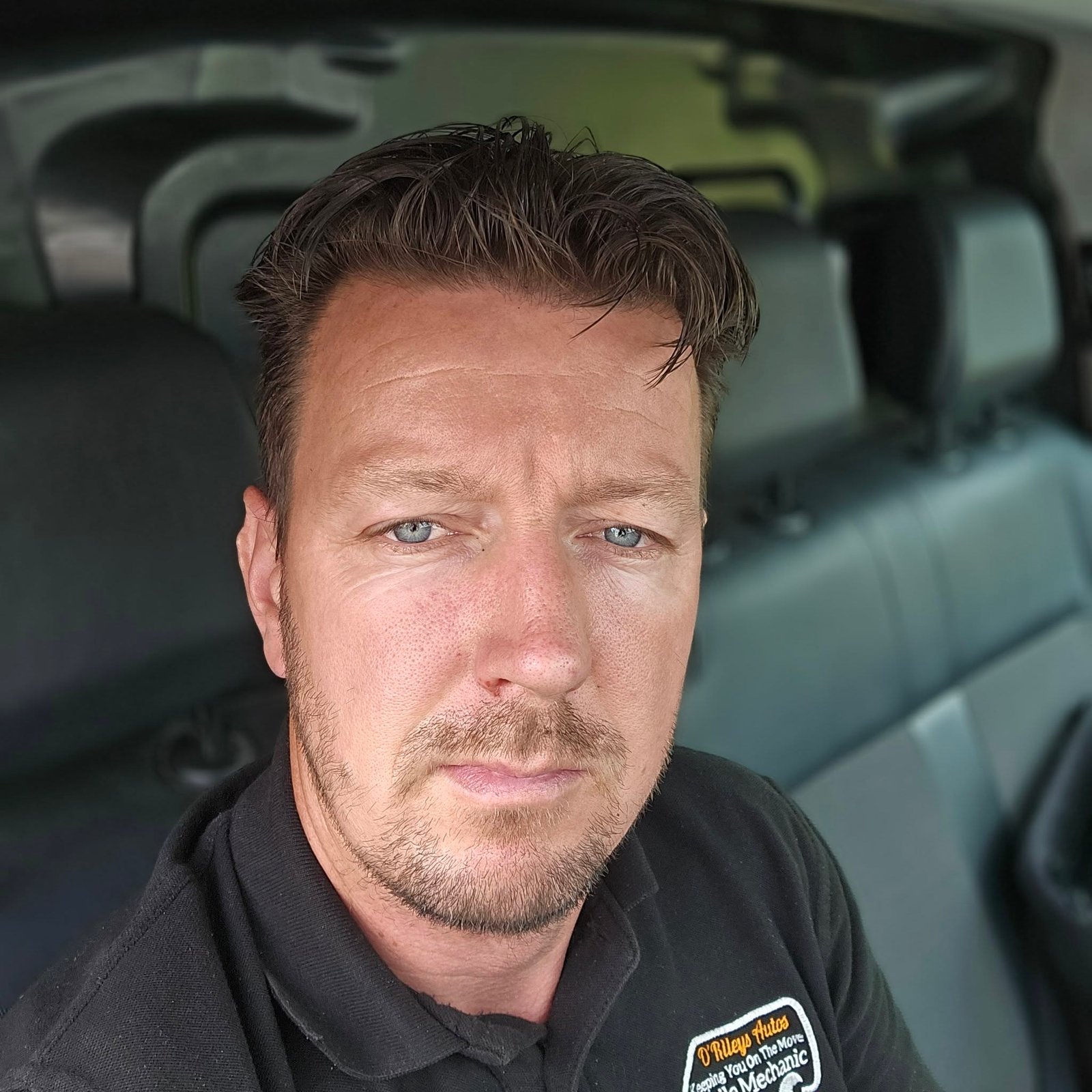
Jimmy O’Riley is a UK-based mobile mechanic and automotive diagnostic specialist operating out of Bedfordshire, England. He founded O’Rileys Autos in 2011 with a focus on bringing professional vehicle repairs directly to customers at their homes and workplaces.
With over a decade of hands-on experience, Jimmy specializes in ABS diagnostics, brake system repairs, diesel emissions faults, and DPF cleaning. He is recognized across the UK and Ireland as one of the leading specialists in vehicle braking and emissions systems, earning the title “The DPF King” from his growing online audience.
Jimmy documents real-world automotive repairs through his YouTube channel, which has accumulated over 97,000 subscribers and nearly 2,000 published repair videos. His content covers ABS fault diagnosis, wheel speed sensor testing, brake module replacement, and roadside repair procedures across a wide range of vehicle makes and models.
He is active on YouTube, Instagram, and Facebook under O’Rileys Autos.