
The ID.3 was on a driveway in Sandy, and the owner handed me a receipt before I had plugged anything in. The garage she had used three weeks earlier had replaced the nearside front wheel speed sensor. The ABS light had come back on before she had reached the end of her road.
I have seen that receipt before. Not the same garage, not the same car, but the same outcome. A sensor replaced on the strength of a code, then the code returning because the sensor was never the problem. With an EV, it happens more often than it should.
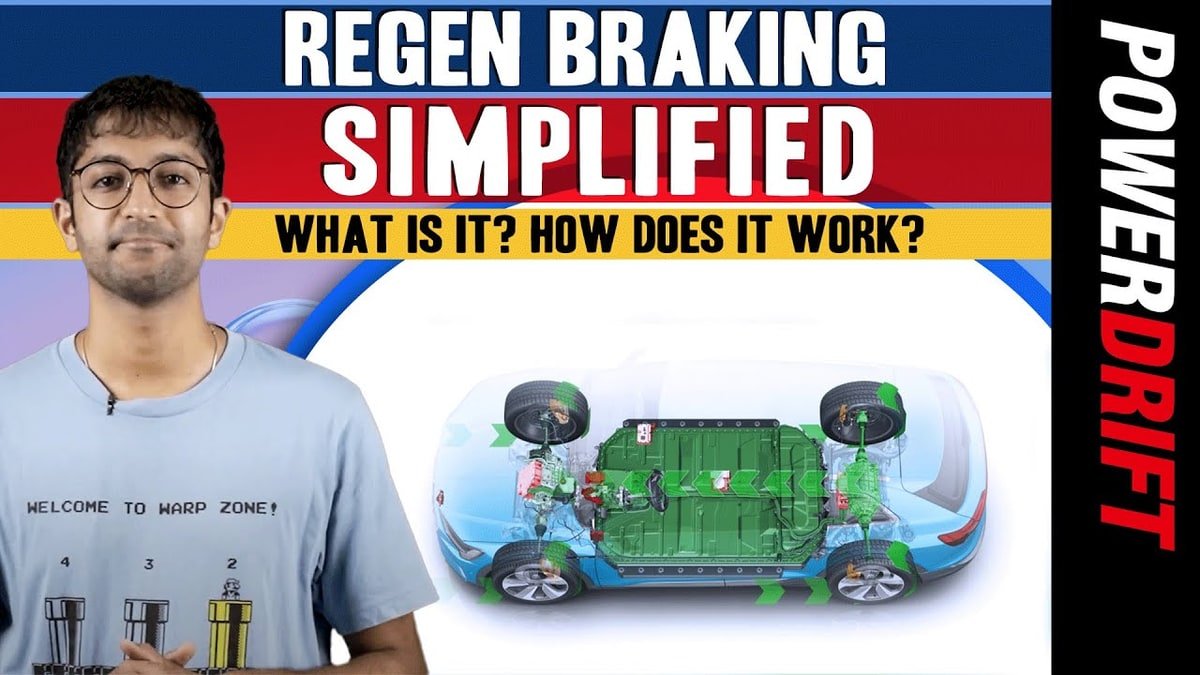
The ID.3 has a regenerative braking system managed by an integrated brake controller. That controller sits between the driver's input, the friction brakes, and the motor. When the driver lifts off the accelerator, the motor recovers energy and applies a resistance that functions like braking. The ABS module monitors all of it, comparing wheel deceleration against thresholds calibrated for conventional friction braking.
The problem is that regenerative braking can decelerate a wheel faster than friction alone. When it does, the deceleration profile sits outside the calibration window the ABS module was expecting. The module logs it as anomalous sensor behaviour, because it does not understand regenerative braking. It only understands wheel speed, and the wheel speed looked wrong.
That is not a sensor fault. That is calibration drift caused by a braking input the module was not set up to accommodate. The fix is a recalibration of the ABS module thresholds to account for the regenerative deceleration profile on that specific vehicle. That procedure requires manufacturer software or a diagnostic platform that can communicate with the integrated brake controller directly.
My scan tool pulled seventeen data points from the braking system that the previous garage's tool had not seen. I know this because their report listed only the ABS fault code and the sensor replacement. The integrated brake controller had been logging calibration deviation events for four months before the sensor code appeared. The sensor code was the module's conclusion, not the starting point.
I am not criticising that garage for the tool they had. I am pointing out that a traditional OBD-II reader talks to the ABS module. It does not talk to the integrated brake system as a whole. In an EV, those are different conversations, and the one that matters is the one most garages are not equipped to have.
I invested in a diagnostic platform that could communicate fully with EV brake systems about three years ago, when I started seeing more of them on driveways across Bedfordshire. The cost was significant. It was also, in practice, what the difference between a correct diagnosis and a sensor-shaped guess actually looks like.
There is a specific pattern I have seen on regenerative braking cars that I started documenting on YouTube about eighteen months ago. The friction brakes are used far less than on a combustion car, which means the discs sit longer between applications. British roads in the damp contribute corrosion to a disc not being cleaned regularly by brake pad contact. When the friction brakes finally apply in a heavy stop, the corroded disc surface creates an uneven braking force that the ABS sensor reads as a speed anomaly.
The comments section under that video is still running.
I recalibrated the brake controller threshold on the ID.3 using the manufacturer interface and cleared the calibration deviation history. The owner drove it the following morning and rang to say the light had not returned. The sensor the previous garage had fitted was fine. It will keep working – it was not why the light was on.
The thing about EVs is that the braking system is not a standalone component anymore. It is part of a network that includes the motor, the battery management system, and the energy recovery logic. Diagnosing a fault in it without access to all of those conversations is not diagnosing it. It is guessing with expensive parts.
Fourteen years on British driveways, and the receipts that concern me most are the ones with a replaced part, a cleared code, and no explanation of what connected the two.

Jimmy O’Riley is a UK-based mobile mechanic and automotive diagnostic specialist operating out of Bedfordshire, England. He founded O’Rileys Autos in 2011 with a focus on bringing professional vehicle repairs directly to customers at their homes and workplaces.
With over a decade of hands-on experience, Jimmy specializes in ABS diagnostics, brake system repairs, diesel emissions faults, and DPF cleaning. He is recognized across the UK and Ireland as one of the leading specialists in vehicle braking and emissions systems, earning the title “The DPF King” from his growing online audience.
Jimmy documents real-world automotive repairs through his YouTube channel, which has accumulated over 97,000 subscribers and nearly 2,000 published repair videos. His content covers ABS fault diagnosis, wheel speed sensor testing, brake module replacement, and roadside repair procedures across a wide range of vehicle makes and models.
He is active on YouTube, Instagram, and Facebook under O’Rileys Autos.