
ABS brakes can be turned off using 3 methods: activating the factory ABS disable button, removing the ABS fuse, or disconnecting a wheel speed sensor. Not all vehicles support all 3 methods.
The Anti-lock Braking System (ABS) prevents wheel lockup during hard braking. Some drivers disable it for off-road driving, track use, or specific terrain conditions where locked wheels improve stopping performance.
Manufacturer support pages provide related owner information in Ford owner support.
What Does Turning Off ABS Brakes Mean?
Turning off ABS brakes deactivates the Anti-lock Braking System, allowing the wheels to lock fully during braking. Without ABS, the driver controls brake pressure manually rather than the ECU managing it automatically.
Trailer ABS Blink Codes: A Complete Guide to 4 Fault Categories
Will ABS Light Fail Inspection? 3 Key Factors That Determine the Result
ABS modulates brake pressure between 3 and 20 times per second during an emergency stop, according to the Insurance Institute for Highway Safety (IIHS). Disabling it removes this automated function entirely.
Does Every Vehicle Have an ABS Disable Option?
Not every vehicle has a factory ABS disable option. Vehicles with a dedicated ABS off button include specific models from manufacturers such as Toyota, Ford, and Jeep.
Most passenger vehicles manufactured after 2012 do not include a factory disable switch. The NHTSA mandated ABS on all new passenger vehicles sold in the United States from September 1, 2013.
What Are the 3 Methods to Turn Off ABS Brakes?
There are 3 main methods to turn off ABS brakes. Each method varies in reversibility and complexity.
Method 1: How Do You Use the Factory ABS Disable Button?
Some vehicles include a factory ABS disable button that deactivates the system temporarily. Press and hold the ABS or traction control button for 3 to 5 seconds until the ABS warning light illuminates on the dashboard.
Vehicles known to include this feature are:
- Toyota Land Cruiser (select trims)
- Ford F-150 Raptor
- Jeep Wrangler Rubicon
This method is fully reversible. The ABS system reactivates automatically when the ignition is cycled. It is the most straightforward method available.
Method 2: How Do You Remove the ABS Fuse to Disable the System?
Removing the ABS fuse disables the system by cutting power to the ABS control module. Locate the ABS fuse in the vehicle's fuse box, identify it using the fuse diagram on the fuse box cover, and pull it using a plastic fuse puller tool.
This process requires 4 steps:
- Turn the ignition off completely
- Open the fuse box (located under the dashboard or in the engine bay)
- Identify the ABS fuse using the printed diagram on the fuse box cover
- Remove the fuse using a plastic fuse puller
ABS fuse ratings typically range between 10 and 40 amps depending on the vehicle make and model. The ABS warning light will illuminate on the dashboard after fuse removal.
Standard braking function remains active after the fuse is removed. Only the ABS modulation function is disabled.
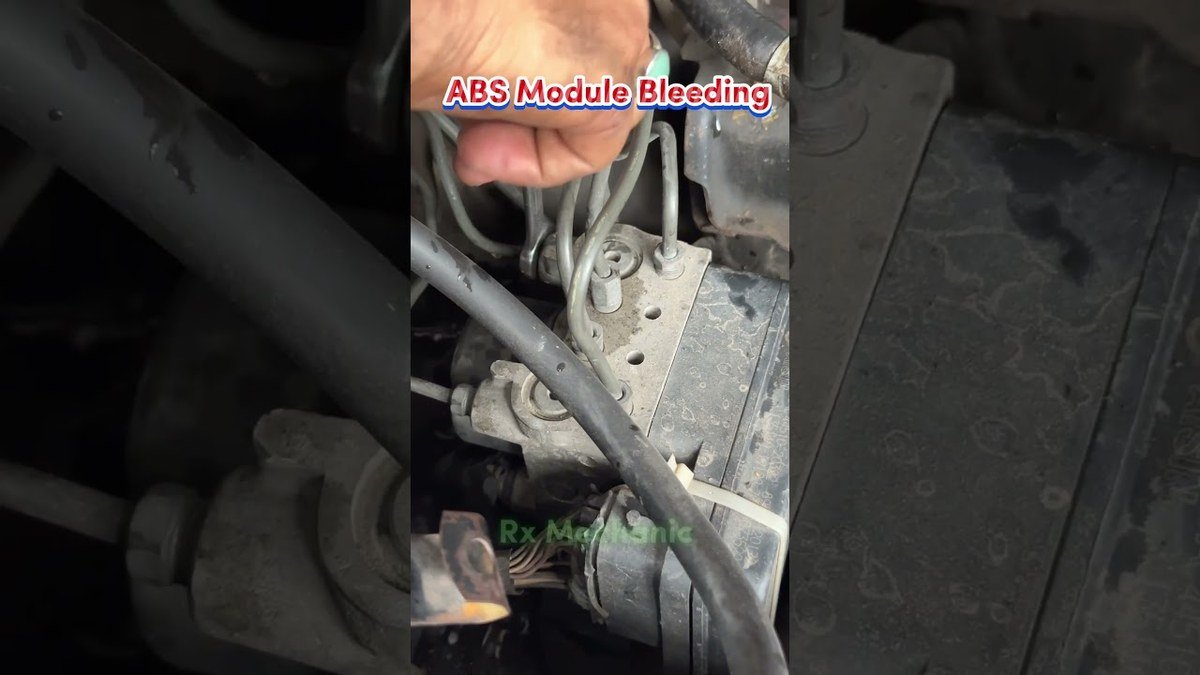
Method 3: Can Disconnecting a Wheel Speed Sensor Disable ABS?
Disconnecting one wheel speed sensor disables the ABS system by interrupting the data signal to the ABS control module. Locate the wheel speed sensor connector at any wheel hub, unplug it, and the ABS warning light will activate, confirming the system is disabled.
Wheel speed sensor connectors are located at each of the 4 wheel hubs. They are identifiable by a 2-pin or 3-pin connector attached to a wiring harness running from the hub to the chassis.
Note that disconnecting the sensor may also disable traction control and electronic stability control. These systems share wheel speed sensor data with the ABS control module.
Why Do Drivers Turn Off ABS Brakes?
There are 4 main reasons drivers disable ABS brakes.
- Off-road driving: ABS increases stopping distance on loose surfaces such as gravel, sand, and deep snow. A study by the University of Michigan Transportation Research Institute found that ABS increases stopping distance by up to 22% on loose gravel compared to locked wheels.
- Track driving: Motorsport drivers prefer direct manual brake control without ABS modulation.
- Deep snow braking: Locked wheels build a compacted snow wedge in front of the tire that aids in stopping.
- Towing configurations: Heavy loads can reduce ABS effectiveness in specific braking scenarios.
Is It Legal to Disable ABS Brakes?
Disabling ABS brakes is legal for off-road and private track use in most jurisdictions. It is not legal to operate a vehicle on public roads without a functioning ABS system where ABS is mandated by law.
In the United States, FMCSA regulations under 49 CFR Part 393 require functional ABS on all commercial vehicles. Removing a mandated safety system may result in a failed vehicle inspection or liability in a collision.
What Are the Risks of Disabling ABS Brakes?
There are 5 main risks associated with disabling ABS brakes:
- Increased stopping distance on wet and dry paved surfaces
- Loss of steering control during hard braking events
- Wheel lockup leading to flat spots on tires
- Reduced braking effectiveness at speeds above 60 mph
- Potential voiding of manufacturer warranty on braking components
The IIHS reports that ABS reduces fatal crash risk by 31% on wet road surfaces. This data applies to passenger vehicles operating on paved roads.
How Do You Turn ABS Back On After Disabling It?
ABS is restored using 3 methods that mirror the disabling process:
- Press the ABS enable button (factory switch vehicles only)
- Reinstall the ABS fuse in the correct fuse slot
- Reconnect the wheel speed sensor connector at the wheel hub
The ABS warning light turns off after the system reactivates and the ignition is cycled. Drive the vehicle above 12 mph to allow the ECU to complete a self-check and confirm the system is fully operational.
Summary
ABS brakes can be turned off using 3 methods: a factory ABS disable button, ABS fuse removal, or wheel speed sensor disconnection. Not all vehicles support all 3 options. Disabling ABS is practical for off-road and track use but increases stopping distance on paved surfaces. The system is fully reversible through fuse reinstallation or sensor reconnection.

Jimmy O’Riley is a UK-based mobile mechanic and automotive diagnostic specialist operating out of Bedfordshire, England. He founded O’Rileys Autos in 2011 with a focus on bringing professional vehicle repairs directly to customers at their homes and workplaces.
With over a decade of hands-on experience, Jimmy specializes in ABS diagnostics, brake system repairs, diesel emissions faults, and DPF cleaning. He is recognized across the UK and Ireland as one of the leading specialists in vehicle braking and emissions systems, earning the title “The DPF King” from his growing online audience.
Jimmy documents real-world automotive repairs through his YouTube channel, which has accumulated over 97,000 subscribers and nearly 2,000 published repair videos. His content covers ABS fault diagnosis, wheel speed sensor testing, brake module replacement, and roadside repair procedures across a wide range of vehicle makes and models.
He is active on YouTube, Instagram, and Facebook under O’Rileys Autos.