
ABS brakes lock up when the anti-lock braking system fails to regulate hydraulic pressure at 1 or more wheels. The 6 most common causes are a faulty wheel speed sensor, defective ABS module, damaged tone ring, failing ABS modulator, low brake fluid, and a stuck brake caliper.
What Does It Mean When ABS Brakes Lock Up?
NHTSA explains related safety context in NHTSA vehicle safety information.
ABS brakes locking up means the anti-lock braking system has failed to release brake pressure during a stop. Under normal conditions, the ABS modulates brake pressure to prevent wheel lockup. When the system fails, 1 or more wheels stop rotating while the vehicle is still moving.
This condition reduces steering control and increases stopping distance. According to the National Highway Traffic Safety Administration (NHTSA), wheel lockup without ABS correction increases stopping distance by up to 30% on wet road surfaces.
Signs of a Bad ABS Sensor: 8 Symptoms, Causes, and When to Replace
2016 Ram 1500 ABS Module: 5 Symptoms, Causes, and Replacement Costs
What Are the 6 Causes of ABS Brakes Locking Up?
The 6 causes of ABS brakes locking up are:
- Faulty wheel speed sensor: A failed sensor sends no signal or an incorrect signal to the ABS module, preventing the system from detecting wheel lockup.
- Defective ABS control module: A failed module cannot process wheel speed data or send commands to the hydraulic unit.
- Damaged ABS tone ring: A cracked or corroded tone ring produces a distorted signal, causing the ABS to respond incorrectly.
- Failing ABS hydraulic modulator: A faulty modulator valve cannot release brake pressure quickly enough to prevent lockup.
- Low or contaminated brake fluid: Insufficient fluid reduces hydraulic pressure and prevents the ABS from functioning correctly.
- Stuck brake caliper: A seized caliper applies constant brake force to 1 wheel, creating mechanical lockup independent of the ABS electronics.
How Does a Faulty ABS Sensor Cause Brake Lockup?
A faulty ABS sensor causes brake lockup by removing wheel speed data from the ABS control module. Without this data, the module cannot detect that a wheel has stopped rotating. It does not send a pressure release command to the modulator, and the wheel remains locked under braking force.
How Does a Defective ABS Module Cause Brakes to Lock Up?
A defective ABS module causes brake lockup by failing to process incoming wheel speed signals or failing to activate the hydraulic pump and solenoid valves. The module is responsible for all ABS decision-making. When it fails internally, brake pressure regulation stops entirely.
Can Low Brake Fluid Cause ABS Brakes to Lock Up?
Yes. Low brake fluid causes ABS brakes to lock up by reducing the hydraulic pressure available in the braking system. The ABS modulator requires consistent fluid pressure to cycle solenoid valves during an ABS event. A fluid level below the minimum mark compromises this process and allows wheel lockup to occur.
How Do You Diagnose ABS Brakes That Are Locking Up?
Diagnosing ABS brakes that are locking up requires 4 steps:
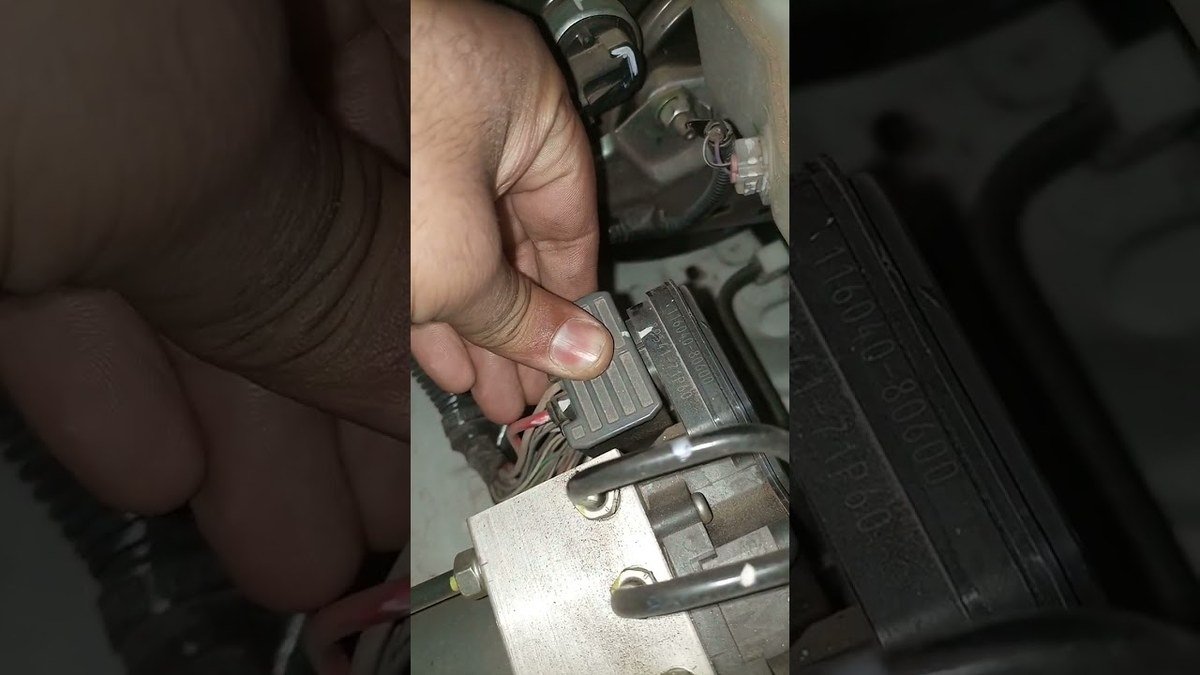
- Check the dashboard for active ABS, ESP, and brake warning lights. Active warning lights confirm an electronic fault is present.
- Connect an OBD-II scanner to the diagnostic port and retrieve all stored ABS fault codes.
- Inspect the brake fluid reservoir to confirm the fluid level is at or above the minimum mark.
- Inspect each wheel for a stuck caliper by checking for uneven brake pad wear or a wheel that is hot to the touch after a short drive.
What Fault Codes Indicate ABS Brake Lockup Issues?
The 5 fault codes most commonly associated with ABS brake lockup are listed below:
| Fault Code | Description | Likely Cause |
|---|---|---|
| C0035 | Front left wheel speed sensor fault | Faulty sensor or wiring |
| C0040 | Front right wheel speed sensor fault | Faulty sensor or wiring |
| C0110 | ABS pump motor circuit fault | Failed pump motor or relay |
| C0121 | ABS valve solenoid fault | Faulty modulator valve |
| C0278 | ABS control module fault | Internal module failure |
How Do You Fix ABS Brakes That Are Locking Up?
Fixing ABS brakes that are locking up depends on the fault code retrieved. There are 6 repair methods:
- Replace the faulty wheel speed sensor: Sensors cost $20 to $100. Labor ranges from $50 to $150 per wheel. This resolves fault codes C0035, C0040, C0045, and C0050.
- Replace the damaged tone ring: Tone rings cost $15 to $60. They are press-fit onto the wheel hub or axle shaft and require a hub puller for removal on most vehicles.
- Repair or replace the ABS control module: Repair services charge $100 to $250. A new OEM module costs $300 to $900 including programming.
- Replace the ABS hydraulic modulator: Modulator assemblies cost $150 to $400. Labor ranges from $100 to $300 depending on vehicle access.
- Flush and replace brake fluid: A full brake fluid flush costs $70 to $120 at a repair shop. Use the fluid type specified in the owner's manual, typically DOT 3 or DOT 4.
- Replace the stuck brake caliper: Calipers cost $40 to $150 per unit. Labor ranges from $80 to $200 per caliper.
How Much Does It Cost to Fix ABS Brakes Locking Up?
Repair costs for ABS brakes locking up range from $65 to $800 per component depending on the fault.
| Repair | Parts Cost | Labor Cost | Total |
|---|---|---|---|
| Wheel speed sensor | $20 to $100 | $50 to $150 | $70 to $250 |
| Tone ring | $15 to $60 | $50 to $150 | $65 to $210 |
| ABS control module | $150 to $500 | $100 to $300 | $250 to $800 |
| ABS hydraulic modulator | $150 to $400 | $100 to $300 | $250 to $700 |
| Brake fluid flush | $10 to $30 | $50 to $90 | $70 to $120 |
| Brake caliper | $40 to $150 | $80 to $200 | $120 to $350 |
How Do You Prevent ABS Brakes From Locking Up Again?
Preventing ABS brake lockup requires 5 maintenance practices:
- Replace brake fluid every 2 years or every 30,000 miles. Contaminated fluid absorbs moisture and loses hydraulic effectiveness over time.
- Inspect wheel speed sensor connectors every 12 months in vehicles operated in road salt regions.
- Replace brake pads before wear depth falls below 2 mm. Worn pads generate excessive heat that damages ABS sensor wiring near the wheel hub.
- Inspect tone rings for corrosion and cracking during routine tyre rotation, typically every 5,000 to 7,500 miles.
- Confirm ABS function annually by performing a controlled hard-brake stop on an empty, dry road to verify the system engages correctly.
A study by the Society of Automotive Engineers (SAE) found that vehicles with regularly maintained ABS components experienced 40% fewer brake-related fault codes over a 5-year period compared to vehicles with deferred brake maintenance.

Jimmy O’Riley is a UK-based mobile mechanic and automotive diagnostic specialist operating out of Bedfordshire, England. He founded O’Rileys Autos in 2011 with a focus on bringing professional vehicle repairs directly to customers at their homes and workplaces.
With over a decade of hands-on experience, Jimmy specializes in ABS diagnostics, brake system repairs, diesel emissions faults, and DPF cleaning. He is recognized across the UK and Ireland as one of the leading specialists in vehicle braking and emissions systems, earning the title “The DPF King” from his growing online audience.
Jimmy documents real-world automotive repairs through his YouTube channel, which has accumulated over 97,000 subscribers and nearly 2,000 published repair videos. His content covers ABS fault diagnosis, wheel speed sensor testing, brake module replacement, and roadside repair procedures across a wide range of vehicle makes and models.
He is active on YouTube, Instagram, and Facebook under O’Rileys Autos.