
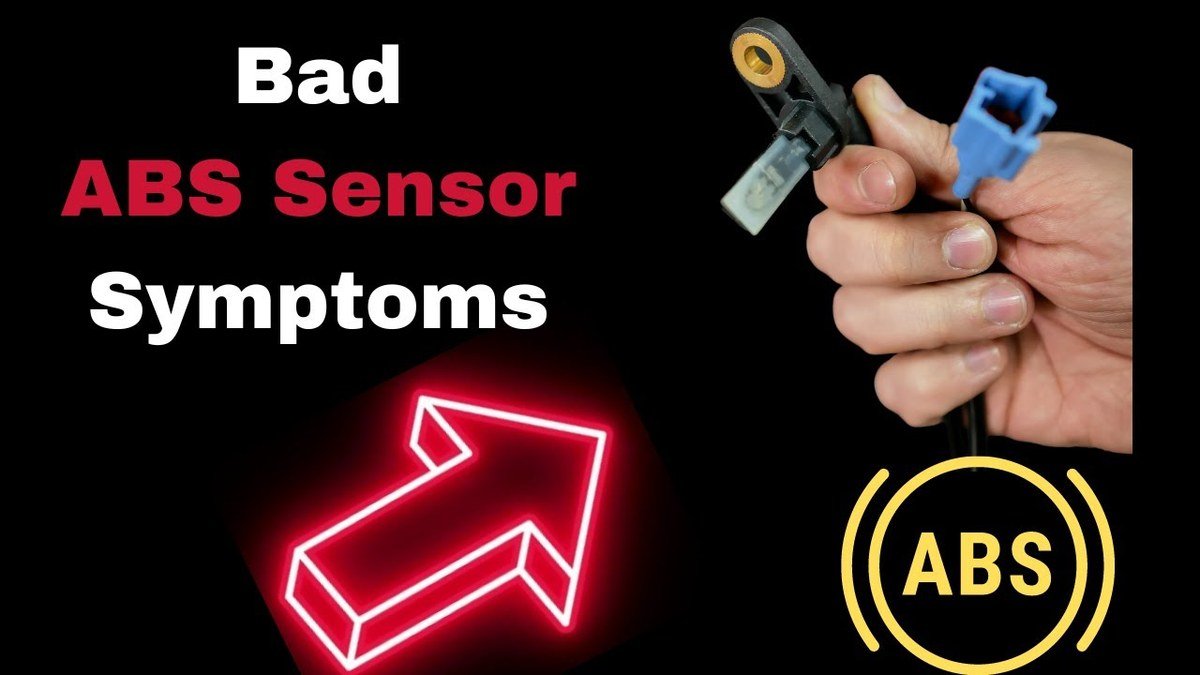
A bad ABS sensor produces 8 recognizable signs, including the ABS warning light, traction control light activation, and unintended ABS engagement during normal braking. The sensor fails when corrosion, physical damage, or wiring faults interrupt the signal it sends to the ABS control module.
What Is an ABS Sensor and What Does It Do?
Manufacturer support pages provide related owner information in Ford owner support.
An ABS (Anti-lock Braking System) sensor is an electronic device mounted at each wheel hub. It monitors wheel rotation speed and sends real-time data to the ABS control module. The module uses this data to prevent wheel lockup during hard braking.
Each vehicle uses 4 ABS sensors, 1 per wheel. Examples of vehicles with known ABS sensor issues include the Ford F-150, Honda Civic, and Toyota Camry, where corrosion and wiring damage are the most reported causes of failure.
ABS Sensor Test With Multimeter: 3 Methods and Correct Reading Values
ABS Brakes Locking Up: 6 Causes, How to Fix Each, and Prevention
What Are the 8 Signs of a Bad ABS Sensor?
The 8 signs of a bad ABS sensor are:
- ABS warning light turns on: The most direct indicator of a failed or failing wheel speed sensor.
- Traction control warning light activates: Both systems share sensor data, so 1 faulty sensor triggers both lights simultaneously.
- ESP or stability control light illuminates: The stability control system relies on wheel speed data from the same ABS sensors.
- ABS activates unnecessarily: The system engages during slow, normal braking where wheel lockup is not a risk.
- Increased stopping distance: Without accurate sensor data, the ABS module cannot regulate brake pressure effectively.
- Brake pedal pulsation at low speeds: Erratic sensor signals cause the ABS to modulate pressure at the wrong time.
- Speedometer errors: In vehicles where wheel speed sensors feed speedometer data, a faulty sensor produces inaccurate speed readings.
- Failed vehicle safety inspection: Most inspection programs test ABS functionality, and a faulty sensor causes an automatic failure.
Why Does the ABS Warning Light Turn On When the Sensor Fails?
The ABS warning light turns on because the control module detects a missing or erratic signal from 1 or more wheel speed sensors. The module runs a self-diagnostic check at every ignition cycle. A signal outside the expected range triggers the warning light and stores a fault code in the module's memory.
Why Does a Bad ABS Sensor Trigger the Traction Control Light?
The traction control system uses the same wheel speed sensors as the ABS. A single faulty sensor removes speed data from both systems simultaneously. This causes both the ABS and traction control warning lights to illuminate at the same time.
How Does a Faulty ABS Sensor Affect Braking Performance?
A faulty ABS sensor increases stopping distance by disabling automated brake pressure regulation. The Insurance Institute for Highway Safety (IIHS) found that ABS reduces fatal crash risk by 18% in passenger vehicles. Without a functioning sensor, this protective function is lost.
In some cases, a faulty sensor causes the ABS to engage during normal low-speed stops. This produces a pulsating pedal sensation and extends stopping distance on dry pavement.
How Do You Confirm a Bad ABS Sensor With a Diagnostic Scan?
Confirming a bad ABS sensor requires an OBD-II scanner with ABS module access. The process involves 3 steps:
- Connect the OBD-II scanner to the diagnostic port located beneath the dashboard.
- Navigate to the ABS or chassis fault code menu.
- Record the stored fault codes and match them to the corresponding wheel position and fault type.
A fault code confirms which specific sensor has failed and eliminates guesswork before purchasing replacement parts.
What Fault Codes Indicate a Bad ABS Sensor?
The 5 most common fault codes that point to a bad ABS sensor are listed below:
| Fault Code | Wheel Location | Fault Description |
|---|---|---|
| C0035 | Front left | Wheel speed sensor circuit fault |
| C0040 | Front right | Wheel speed sensor circuit fault |
| C0045 | Rear left | Wheel speed sensor circuit fault |
| C0050 | Rear right | Wheel speed sensor circuit fault |
| C0055 | Any wheel | Wheel speed sensor signal erratic |
Code definitions vary between manufacturers. Always cross-reference with the vehicle-specific service manual.
What Causes an ABS Sensor to Go Bad?
5 conditions cause an ABS sensor to fail:
- Corrosion: Road salt and moisture corrode the sensor body and wiring connectors. This is the most common cause in northern climates and coastal regions.
- Physical damage: Road debris strikes the sensor or tone ring, causing cracking or deformation of the sensor tip.
- Wiring harness damage: Repeated suspension movement causes sensor wiring to chafe against brackets and cut through insulation over time.
- Contamination: Metal particles from worn brake components accumulate on the sensor tip and disrupt the magnetic signal output.
- Excessive heat: Prolonged heat exposure from brake friction degrades the sensor's internal magnetic components.
How Long Do ABS Sensors Last Before They Fail?
ABS sensors last between 100,000 and 150,000 miles under normal operating conditions. Vehicles exposed to road salt, off-road environments, or repeated water immersion experience failures earlier, sometimes between 60,000 and 80,000 miles.
How Much Does It Cost to Replace a Bad ABS Sensor?
ABS sensor replacement costs range from $70 to $250 per wheel depending on the vehicle model and local labor rates.
| Cost Component | Price Range |
|---|---|
| ABS sensor (parts only) | $20 to $100 |
| Labor per wheel | $50 to $150 |
| Total per wheel | $70 to $250 |
| Total for all 4 sensors | $280 to $1,000 |
Replacing only the faulty sensor is sufficient in most cases. Replacing all 4 sensors is recommended only when multiple sensors show fault codes or when the vehicle exceeds 120,000 miles with original sensors still installed.
Can You Drive With a Bad ABS Sensor?
Yes, but only for short distances to reach a repair facility. Standard braking remains functional with a bad ABS sensor. However, 3 safety functions become inactive:
- ABS does not prevent wheel lockup during emergency braking.
- Traction control does not prevent wheel spin on wet or icy road surfaces.
- Electronic stability control (ESC) does not correct oversteer or understeer during cornering.
The NHTSA reports that ESC reduces single-vehicle crash risk by 33% in passenger cars and by 59% in SUVs. Driving with a bad ABS sensor removes this protection and increases collision risk in adverse road conditions. Replacing a faulty sensor restores all 3 safety systems simultaneously.

Jimmy O’Riley is a UK-based mobile mechanic and automotive diagnostic specialist operating out of Bedfordshire, England. He founded O’Rileys Autos in 2011 with a focus on bringing professional vehicle repairs directly to customers at their homes and workplaces.
With over a decade of hands-on experience, Jimmy specializes in ABS diagnostics, brake system repairs, diesel emissions faults, and DPF cleaning. He is recognized across the UK and Ireland as one of the leading specialists in vehicle braking and emissions systems, earning the title “The DPF King” from his growing online audience.
Jimmy documents real-world automotive repairs through his YouTube channel, which has accumulated over 97,000 subscribers and nearly 2,000 published repair videos. His content covers ABS fault diagnosis, wheel speed sensor testing, brake module replacement, and roadside repair procedures across a wide range of vehicle makes and models.
He is active on YouTube, Instagram, and Facebook under O’Rileys Autos.
1 Comment
Pingback: How to Test an ABS Sensor With a Multimeter