
5-Speed Gearbox: How It Works, Its Pros and Cons, and Where It’s Still Used
What Is a 5-Speed Gearbox?
A 5-speed gearbox is a manual transmission with five forward gear ratios plus a separate reverse gear, each selected through a clutch pedal and gear lever. Early examples include the 1948 Ferrari 166 Inter. More recently, five-speed manuals were standard in compact and economy cars built through the mid-2000s, including the Honda Civic, Toyota Corolla, and Volkswagen Golf.
The gearbox sits between the engine and the drive wheels. Each forward gear pairs a different set of teeth on the input and output shafts, changing the ratio between engine speed and wheel speed. First gear uses the largest ratio, for acceleration from a stop. Fifth gear uses the smallest ratio, close to or slightly below 1:1, for efficient cruising at speed. The terms gearbox, manual transmission, and stick shift describe the same component and are used interchangeably in this guide.
How Does a 5-Speed Gearbox Work?
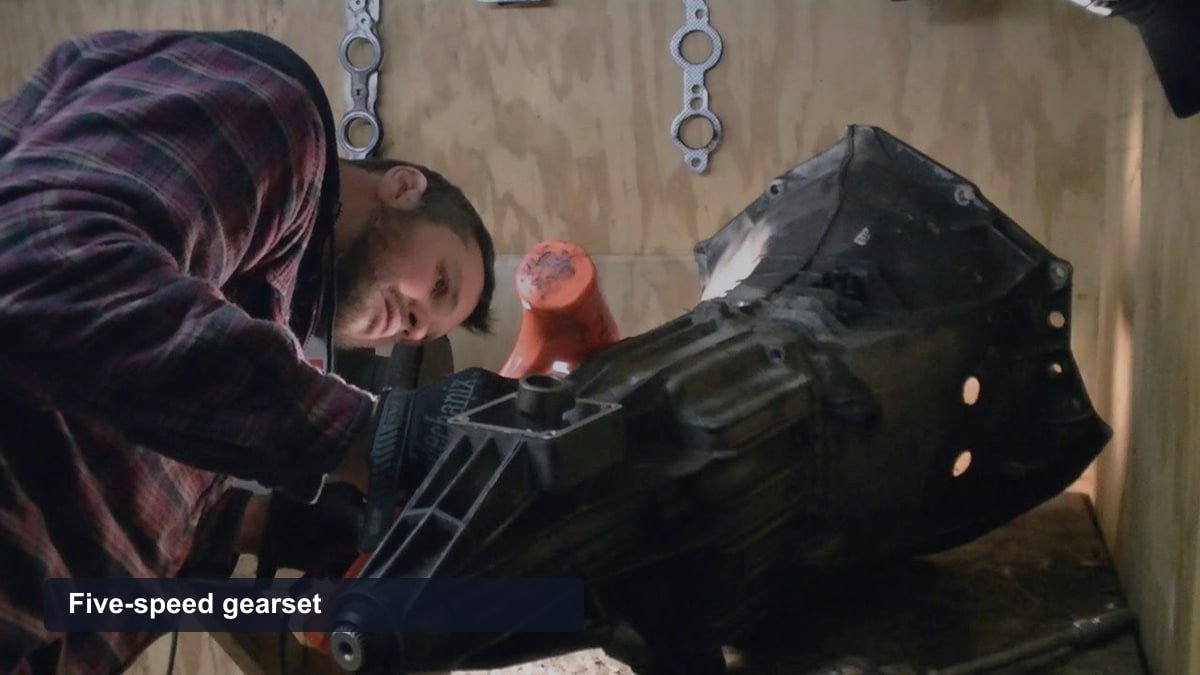
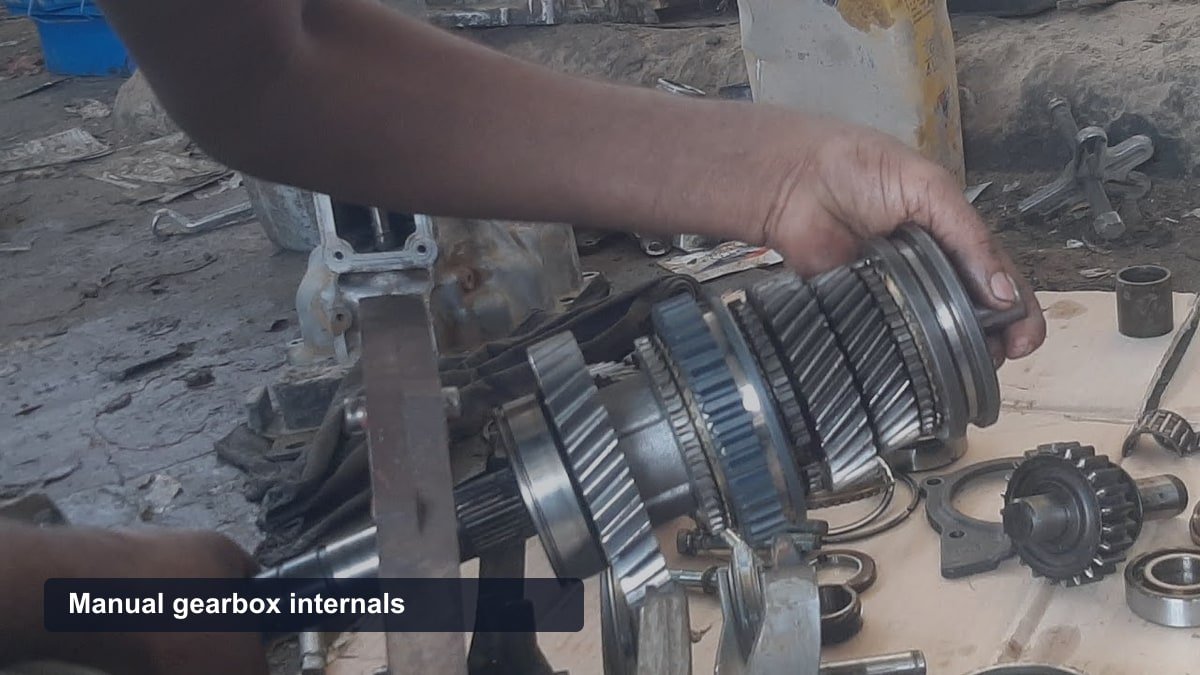
A 5-speed gearbox connects the engine to the wheels through five gear pairs, engaged one at a time through synchronizer rings that match shaft speeds before each gear locks into place.
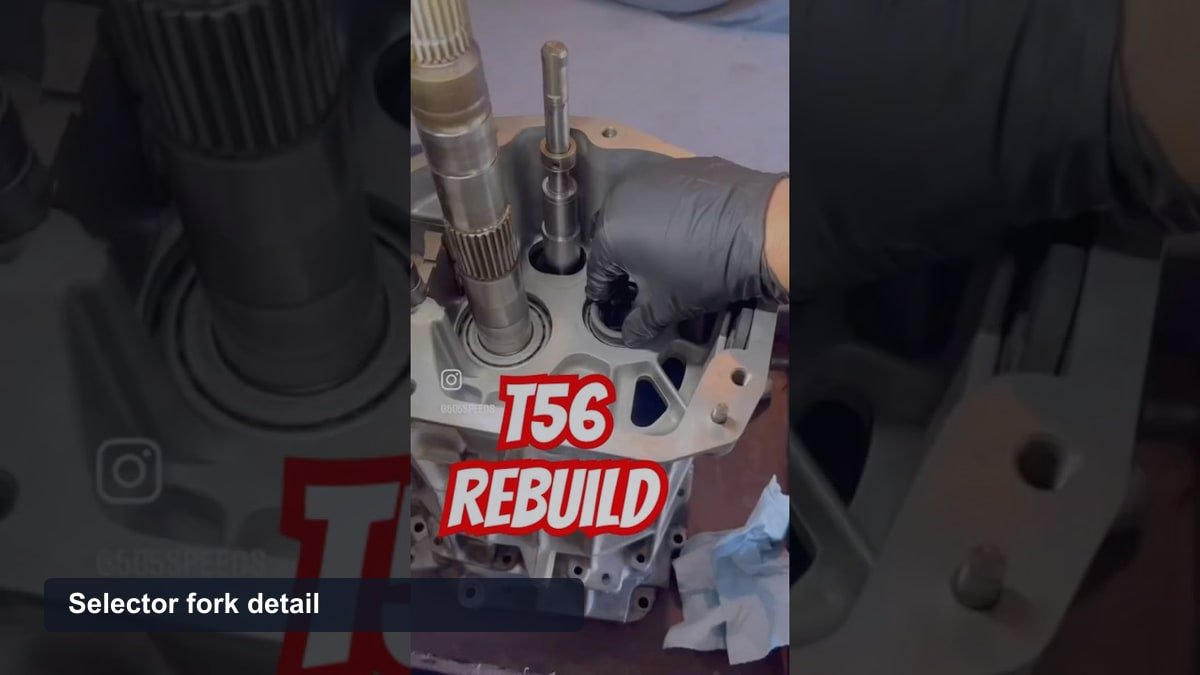
The clutch disengages the engine from the transmission during a shift. A shift fork moves a collar along the output shaft toward the selected gear. Friction rings on that gear speed it up or slow it down until it matches the shaft’s speed. Once matched, the collar’s teeth lock into the gear, and releasing the clutch reconnects engine power to the wheels.
What Is Synchromesh?
Synchromesh is a system of friction rings that match gear speed before engagement, preventing the grinding common in older, unsynchronized “crash box” designs. Earl Avery Thompson patented the concept in 1918, with the patent granted in 1922. Cadillac and LaSalle became the first production cars to use synchromesh, in 1928. Porsche extended synchromesh to all forward gears in the 356, released in 1952.
What Is the History of the 5-Speed Gearbox?
The 5-speed gearbox descends from the sliding-mesh transmissions developed by Panhard et Levassor in the mid-1890s, among the earliest gear-selection systems fitted to an automobile.
Three- and four-speed transmissions remained standard for most of the early 20th century. Five-speed transmissions appeared in sports cars as early as 1948, in the Ferrari 166 Inter, but stayed rare for decades. Five-speed manuals became a mainstream option in passenger cars during the 1980s, replacing four-speed units as the default in most compact and mid-size vehicles. Six-speed manuals followed a similar path: the 1967 Alfa Romeo 33 Stradale was an early example, but six-speed transmissions did not become common until performance cars adopted them in the early 1990s.
The shift from four speeds to five added a dedicated overdrive gear. Most 4-speed gearboxes used a 1:1 direct-drive top gear. A 5-speed gearbox instead keeps fourth gear for general driving and reserves fifth gear, geared below 1:1, to lower engine speed and reduce fuel consumption at highway speed.
What Are Typical Gear Ratios in a 5-Speed Gearbox?
In a 5-speed gearbox, ratios drop from a high number in first gear to near 1:1, or slightly below it, in fifth gear. Exact ratios vary by manufacturer, engine output, and vehicle weight.
| Gear | Typical Ratio Range | Purpose |
|---|---|---|
| 1st | 3.0:1 to 4.0:1 | Acceleration from a stop |
| 2nd | 1.8:1 to 2.3:1 | Low-speed acceleration |
| 3rd | 1.2:1 to 1.5:1 | Mid-range acceleration |
| 4th | 0.9:1 to 1.1:1 | General driving |
| 5th | 0.7:1 to 0.9:1 | Highway cruising, often an overdrive ratio |
| Reverse | 3.0:1 to 4.0:1 | Reverse motion, typically unsynchronized |
This table shows an illustrative ratio spread for a typical compact car. Individual ratios depend on engine torque, tire size, and final drive ratio.
The spacing follows one principle: gear ratios multiply engine torque. Lower gears trade top speed for pulling power at low road speed. Higher gears trade pulling power for lower engine speed and reduced fuel consumption at a given road speed.
What Are the Advantages of a 5-Speed Gearbox?
A 5-speed gearbox offers six main advantages over a comparable automatic transmission: lower cost, simpler repairs, less weight, direct power delivery, full driver control, and fewer parts prone to failure.
- Lower manufacturing and purchase cost than an automatic in the same vehicle, often several hundred to about $1,000 less.
- Fewer moving parts, which lowers the chance of a major failure.
- Less weight than most automatic or dual-clutch transmissions.
- Direct mechanical connection, with less power loss than an older torque-converter automatic.
- Full driver control over gear selection and engine speed.
- Lower repair costs when the clutch or synchronizers eventually wear out.
What Are the Disadvantages of a 5-Speed Gearbox?
A 5-speed gearbox has five main drawbacks compared to a 6-speed manual or a modern automatic: skill demands, wider gear spacing, a reduced fuel economy advantage, rarity in new vehicles, and clutch wear.
- Requires clutch coordination and practice, particularly on hills and in stop-and-go traffic.
- Wider gaps between gears than a 6-speed transmission, which can leave the engine outside its efficient range at highway speed.
- No longer more fuel efficient than a modern automatic; automatic transmissions have matched or exceeded manual fuel economy since model year 2016, according to the U.S. Department of Energy.
- Increasingly rare in new vehicles, as automakers have shifted most remaining manual options to 6-speed or higher.
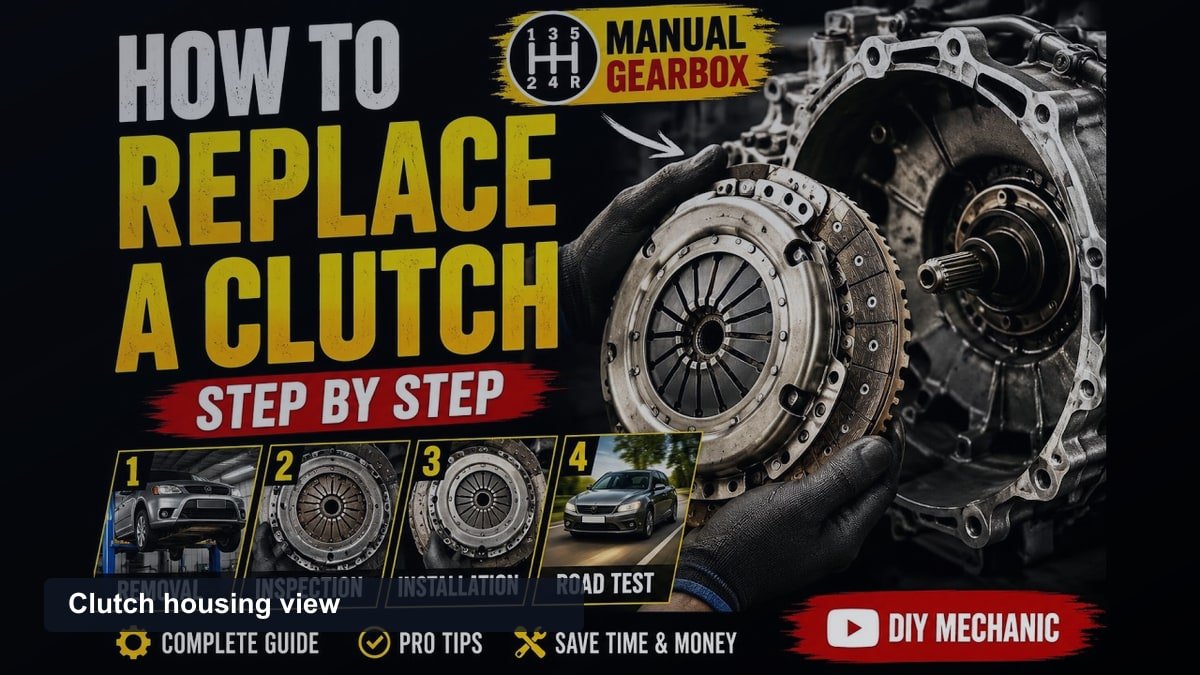
- Clutch wear eventually requires replacement, typically between 30,000 and 100,000 miles.
How Does a 5-Speed Compare to a 6-Speed or Automatic Gearbox?
A 5-speed gearbox differs from a 6-speed manual mainly in highway gearing, and from an automatic mainly in how the gears are selected.
| Feature | 5-Speed Manual | 6-Speed Manual | Automatic or CVT |
|---|---|---|---|
| Forward gears | 5 | 6 | Typically 6 to 10, or stepless |
| Gear selection | Driver, via clutch and lever | Driver, via clutch and lever | Transmission control unit |
| Highway gearing | Shorter overdrive | Taller overdrive gear | Multiple overdrive ratios |
| Common use today | Motorcycles, older cars | Most new manual cars | Most new cars overall |
| Fuel economy, modern models | Lower than current automatics | Comparable to automatics | Equal or better since 2016 |
| Typical repair cost | Lower | Lower | Higher |
Which Vehicles Still Use a 5-Speed Gearbox?
Genuine 5-speed gearboxes have mostly disappeared from new cars, replaced by 6-speed manuals, but remain common in motorcycles, particularly smaller-displacement and cruiser models.
Manual transmissions of any speed count made up below 1% of new car sales in the United States in 2025, according to EPA Automotive Trends data, down from 35% in 1980. 27 manual-transmission models were available for the 2025 model year, falling to 24 for 2026. Of those remaining manual cars, nearly all use a 6-speed or a 7-speed unit rather than a 5-speed. The Mazda MX-5 Miata, Honda Civic Si and Type R, Ford Mustang, Ford Bronco, Jeep Wrangler, and Toyota Tacoma each pair their manual option with 6 or more forward gears for 2026.
A genuine 5-speed manual in a new car is now largely a historical configuration, found mainly in used vehicles from the 1980s through the mid-2000s. Outside the United States, manual transmissions overall remain more common, particularly in budget vehicle segments across parts of Europe and Asia, though 6-speed units increasingly replace 5-speed ones in those markets too.
Motorcycles tell a different story. Small-displacement motorcycles, generally under 300cc, commonly rely on a 5-speed gearbox, since their engines operate effectively across a narrower rev range. Cruiser-style motorcycles with high-torque engines, including select Harley-Davidson models, also favor 5 speeds over 6. Triumph’s Bonneville line still uses a 5-speed gearbox, even as most rival manufacturers in that class have switched to 6 speeds.
For technical background, see mechanical transmission overview.
How Is a 5-Speed Gearbox Maintained?
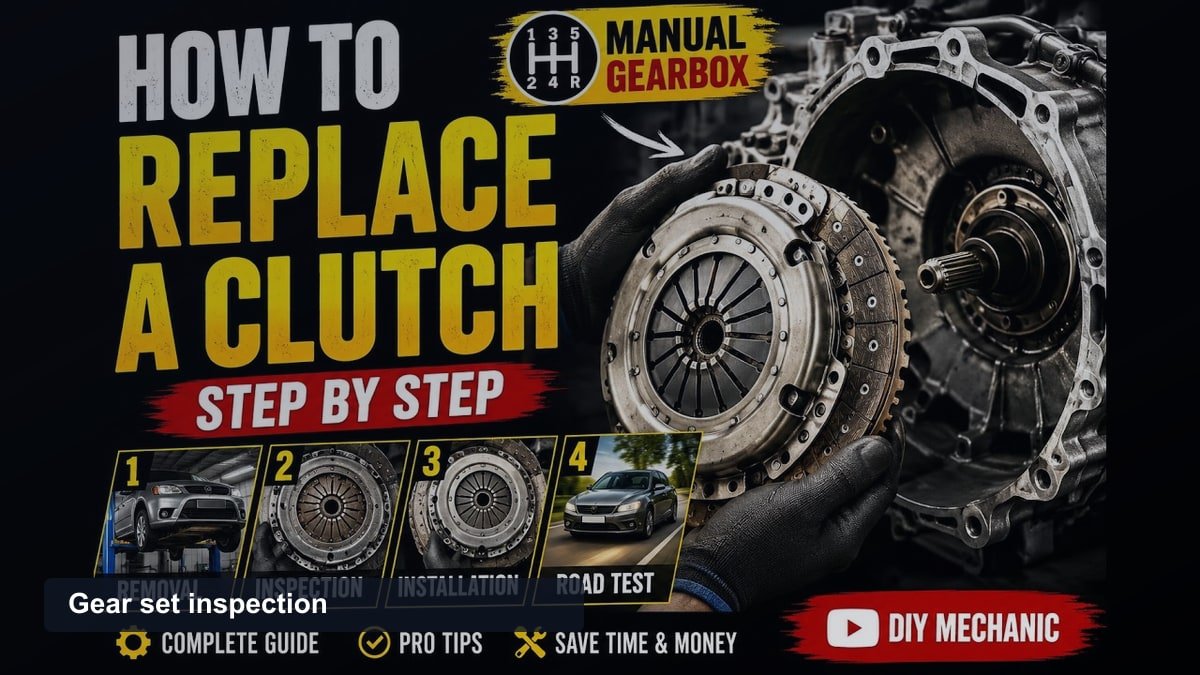
A 5-speed gearbox typically needs a gear oil change every 30,000 to 60,000 miles, along with regular clutch inspection and prompt attention to shifting problems.
- Change the gearbox oil every 30,000 to 60,000 miles, or per the manufacturer’s schedule.
- Watch for clutch wear signs: a rising bite point, slipping under load, or a burning smell.
- Avoid resting a foot on the clutch pedal between shifts, which accelerates wear.
- Address grinding gears or difficulty shifting promptly; these often signal worn synchronizers.
- Expect a clutch replacement between 30,000 and 100,000 miles, depending on driving style and traffic conditions.
Is a 5-Speed Gearbox Still Worth Choosing Today?
A 5-speed gearbox is no longer the default choice in new cars, but remains relevant in motorcycles and older vehicles, where low cost, light weight, and mechanical directness outweigh peak efficiency or convenience.
For new-car buyers, a 6-speed manual or a modern automatic now covers the same needs, with better highway gearing and, since 2016, equal or better fuel economy. For motorcyclists and owners of older vehicles, a 5-speed gearbox continues to connect engine to wheels in a simple, durable, and low-cost design.
Common Questions About 5-Speed Gearboxes
Is a 5-Speed Harder to Learn Than a 6-Speed?
No. The clutch and shift technique are the same. A 6-speed simply adds one more gear, usually a taller ratio for highway driving.
Can a 5-Speed Gearbox Be Swapped for a 6-Speed?
Only if a compatible 6-speed unit exists for the same platform, matching the bellhousing, shifter location, and electronics. This is normally a specialist repair, not a routine upgrade.
Does a 5-Speed Gearbox Need a Clutch Replacement at a Fixed Mileage?
No fixed mileage applies. Clutch life ranges from 30,000 to 100,000 miles or more, depending on driving habits and traffic conditions.
Sources
- U.S. Department of Energy: Model Year 2016 Automatic Transmissions Have Provided Better Average Fuel Economy Than Manual Transmissions
- Motor1: We Asked Every Automaker How Many Customers Went For Manuals In 2025
- The Autopian: Manual Transmissions Now Make Up Less Than 1% Of New Car Sales
- TREMEC Blog: 2026 Model Cars and Trucks Still Available With a Manual Transmission
- Jalopnik: Why Synchromesh Transmissions Were So Revolutionary
- EngineerSkill.blog: How Many Gears Do Motorcycles Have?
- AutoZone: How Long Does the Clutch Last?

Jimmy O’Riley is a UK-based mobile mechanic and automotive diagnostic specialist operating out of Bedfordshire, England. He founded O’Rileys Autos in 2011 with a focus on bringing professional vehicle repairs directly to customers at their homes and workplaces.
With over a decade of hands-on experience, Jimmy specializes in ABS diagnostics, brake system repairs, diesel emissions faults, and DPF cleaning. He is recognized across the UK and Ireland as one of the leading specialists in vehicle braking and emissions systems, earning the title “The DPF King” from his growing online audience.
Jimmy documents real-world automotive repairs through his YouTube channel, which has accumulated over 97,000 subscribers and nearly 2,000 published repair videos. His content covers ABS fault diagnosis, wheel speed sensor testing, brake module replacement, and roadside repair procedures across a wide range of vehicle makes and models.
He is active on YouTube, Instagram, and Facebook under O’Rileys Autos.