
The 4L60 Gearbox Is Known as General Motors’ Four-Speed Automatic Transmission for Rear-Wheel-Drive Trucks and Cars
The 4L60 gearbox is General Motors’ four-speed automatic transmission, known for powering rear-wheel-drive trucks, SUVs, vans, and performance cars such as the Silverado, Tahoe, and Camaro since 1990. Its electronic successor, the 4L60E, remains one of GM’s most widely used automatic transmissions.
What Is a 4L60 Gearbox?
A 4L60 gearbox is General Motors’ four-speed, longitudinally mounted automatic transmission, introduced in 1990 as a renamed version of the 700R4. The name follows GM’s transmission code: 4 means four forward gears, L means the engine sits longitudinally, and 60 refers to a legacy torque and GVW class. GM’s internal parts code, or RPO code, for the transmission is M30.
Most drivers searching for “4L60 gearbox” are actually referring to the 4L60E, the electronically controlled version introduced in 1993. The original, non-electronic 4L60 was only produced from 1990 to 1993, and it used a throttle-valve cable instead of a computer to control shifts. Examples of vehicles built with the non-electronic 4L60 include 1990 to 1993 Chevrolet Camaros and Pontiac Firebirds.
What Is the History of the 4L60 Transmission?
GM introduced the 700R4 in 1982 as its first automatic overdrive transmission, replacing the three-speed TH350. Specialists consider 700R4 units built between 1987 and 1993 the most refined of the pre-electronic generation, following internal upgrades GM made during that window.
In 1990, GM renamed the 700R4 to 4L60 to match a new naming system, with no mechanical changes. In 1993, GM added electronic shift control and released the 4L60E. A Vehicle Speed Sensor fed data to the Powertrain Control Module, which used solenoids, typically labeled the 1-2 shift solenoid and 2-3 shift solenoid, to manage shifts instead of a mechanical cable.
GM split the 4L60E into two design periods:
- Early 4L60E (1993 to 1996): one-piece cast aluminum case, generally paired with a 16-bolt oil pan.
- Late 4L60E (1996 to 2013): three-piece case with a removable bellhousing, main case, and tailhousing, generally paired with a 17-bolt oil pan.
GM discontinued the 4L60E in 2013, replacing it with the 6-speed 6L80E across most of its truck and SUV lineup.
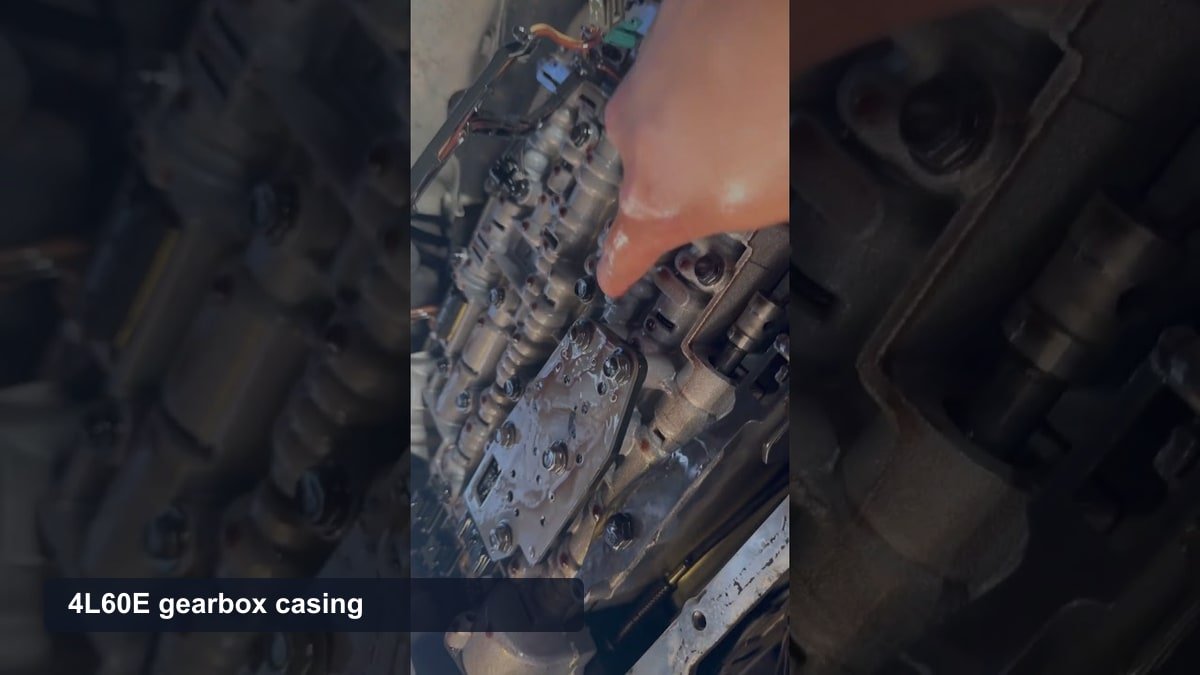
What Are the Specifications of the 4L60E Transmission?
The 4L60E uses 4 forward gears and 1 reverse gear, with the same gear ratios carried over from the original 700R4 and 4L60. The table below lists the core specifications and their values.
| Specification | Value |
|---|---|
| Forward gears | 4 |
| 1st gear ratio | 3.06:1 |
| 2nd gear ratio | 1.63:1 |
| 3rd gear ratio | 1.00:1 |
| 4th gear ratio (overdrive) | 0.70:1 |
| Reverse gear ratio | 2.29:1 |
| Stock torque capacity | Approximately 360 lb-ft |
| Dry weight | 146 lbs |
| Wet weight | 162 lbs |
| Maximum GVW rating | 8,600 lbs |
The low 3.06:1 first gear supports strong acceleration from a stop. The 0.70:1 overdrive gear reduces engine RPM at highway speed, which improves fuel economy.
Which Vehicles Use the 4L60 and 4L60E Transmission?
GM installed the 4L60 and 4L60E in nearly every rear-wheel-drive platform it produced between 1990 and 2013. Applications include:
Trucks and SUVs:
- Chevrolet Silverado and GMC Sierra
- Chevrolet Tahoe, Suburban, and Blazer
- GMC Yukon, Jimmy, and Envoy
- Chevrolet TrailBlazer and Avalanche
- Chevrolet S-10 and GMC Sonoma
- Hummer H2
Vans:
- Chevrolet Astro and GMC Safari
- Chevrolet Express and GMC Savana
Cars:
- Chevrolet Camaro and Pontiac Firebird
- Chevrolet Corvette (1994 to 2004)
- Chevrolet Caprice and Impala SS
- Buick Roadmaster and Cadillac Brougham
- Pontiac GTO (2004 to 2006)
Other markets:
- Holden Commodore and Statesman (Australia)
The Corvette application stands out. From 1997 to 2004, the C5 Corvette mounted the 4L60E at the rear of the car, bolted directly to the differential, instead of behind the engine.
What Is the Difference Between the 4L60 and 4L60E?
The core difference is the control method. The table below compares both versions directly.
| Feature | 4L60 | 4L60E |
|---|---|---|
| Years produced | 1990 to 1993 | 1993 to 2013 |
| Shift control | Throttle-valve cable | Electronic solenoids |
| Speed feedback | Governor | Vehicle Speed Sensor |
| Gear ratios | Same as 4L60E | Same as 4L60 |
| Identification | Governor cover, driver-side cable plug | No governor cover, wiring harness plug |
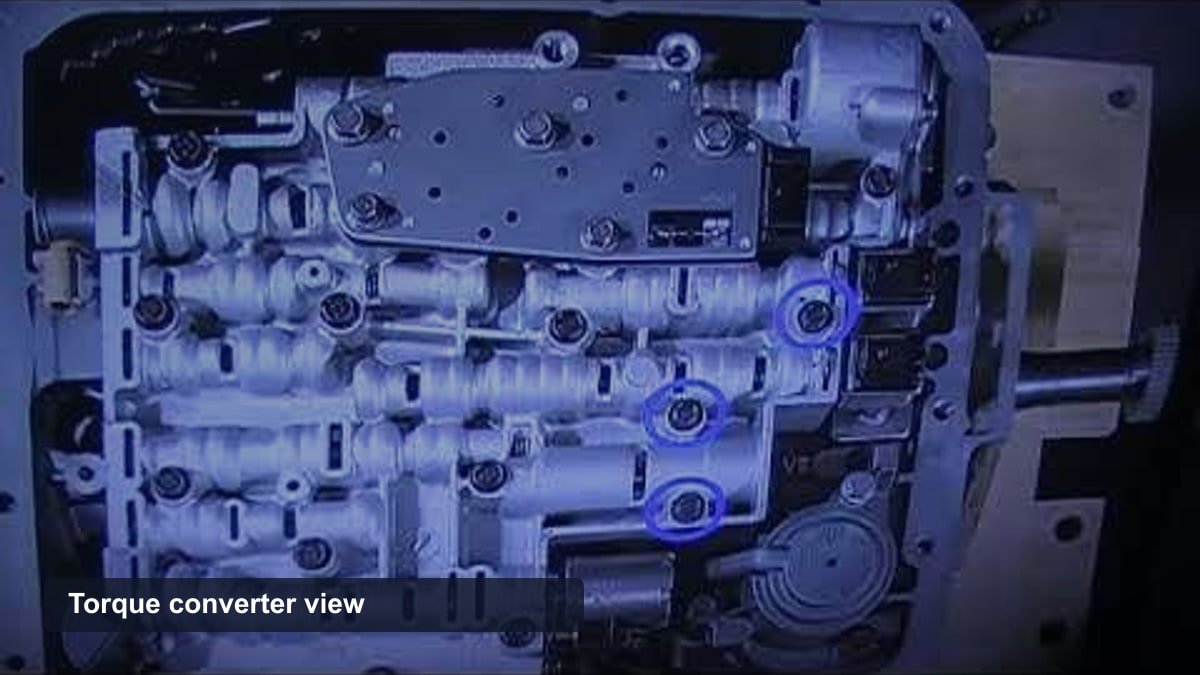
Both transmissions share the same core gear ratios and internal design, inherited from the 700R4. They are not directly interchangeable without changing the wiring harness, controller, and in some cases the driveshaft.
What Is the Difference Between the 4L60E, 4L65E, and 4L70E?
GM strengthened the 4L60E twice to handle more powerful engines, including the LS-series V8. The table below summarizes the 3 versions.
| Transmission | Introduced | Planetary Gearset | Torque Capacity |
|---|---|---|---|
| 4L60E | 1993 | 4-pinion | Approximately 360 lb-ft |
| 4L65E | Late 1990s | 5-pinion | Approximately 380 lb-ft |
| 4L70E | 2006 | 5-pinion | Approximately 430 lb-ft |
The 4L65E and 4L70E use a larger torque converter and a stronger output shaft than the standard 4L60E. Many parts suppliers use “4L60E” as an umbrella term for all 3 versions, since the case and mounting points are nearly identical.
What Are the Most Common 4L60E Transmission Problems?
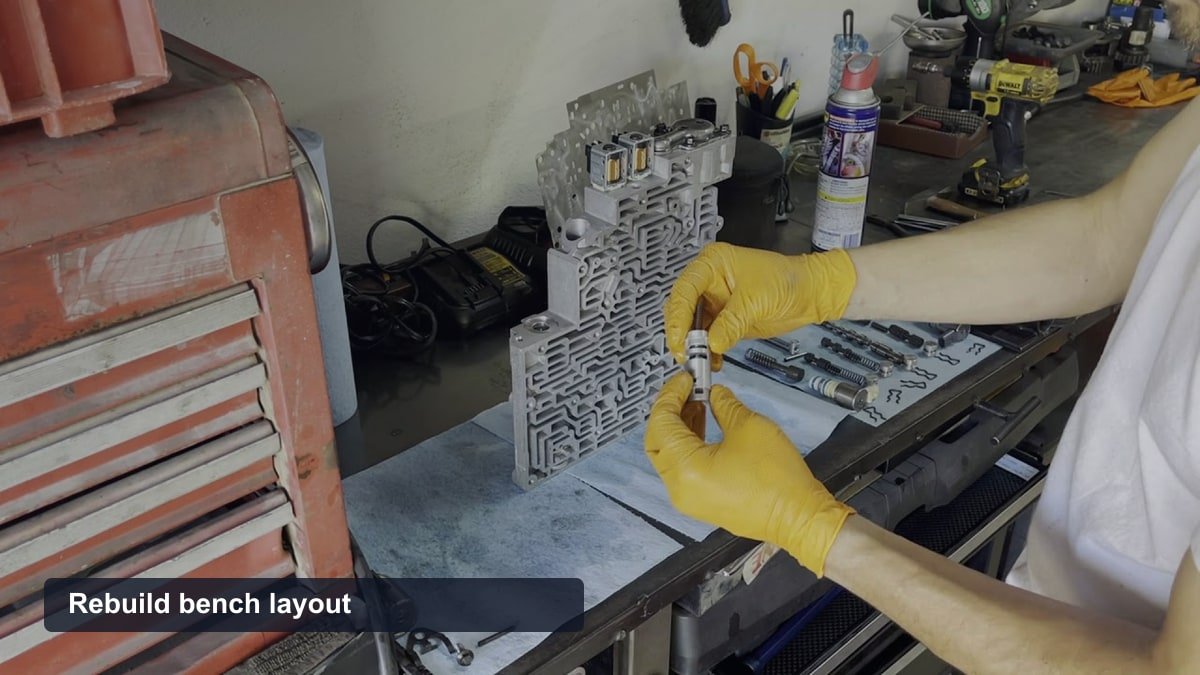
The 4L60E has 5 well-documented failure points.
- Worn 3-4 clutch pack: causes flaring or slipping between 2nd and 3rd gear. This is the most frequently reported failure.
- Cracked sun shell: the shell that holds the input planetary gears can crack under high torque or heat.
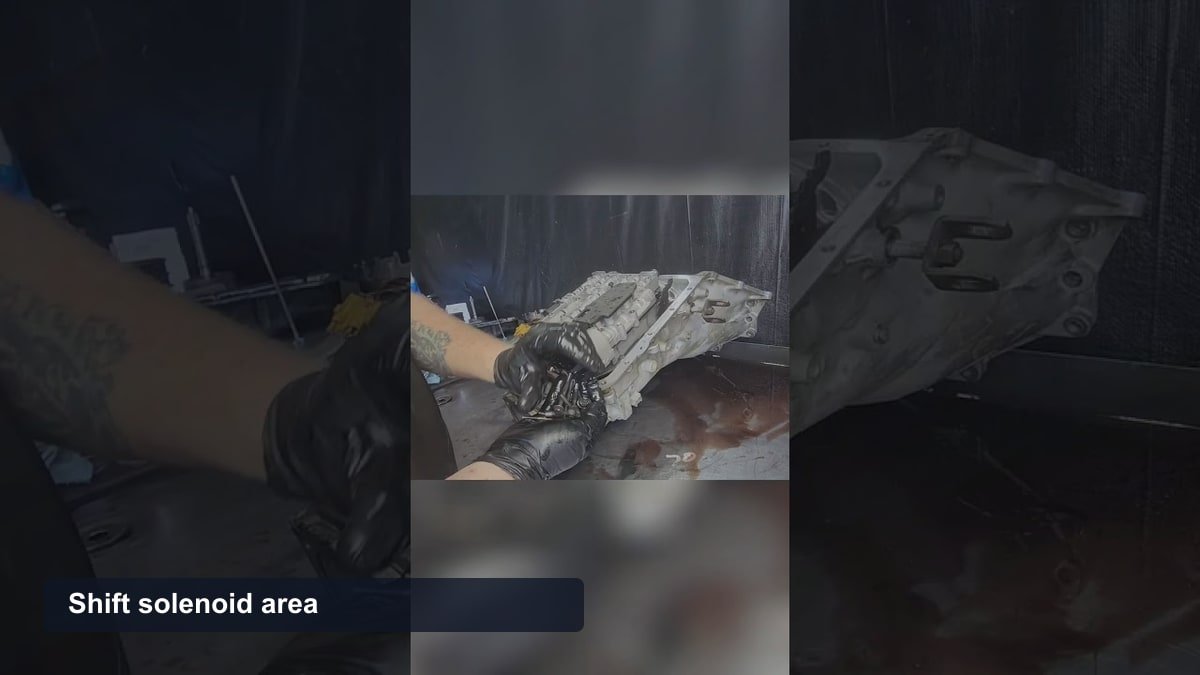
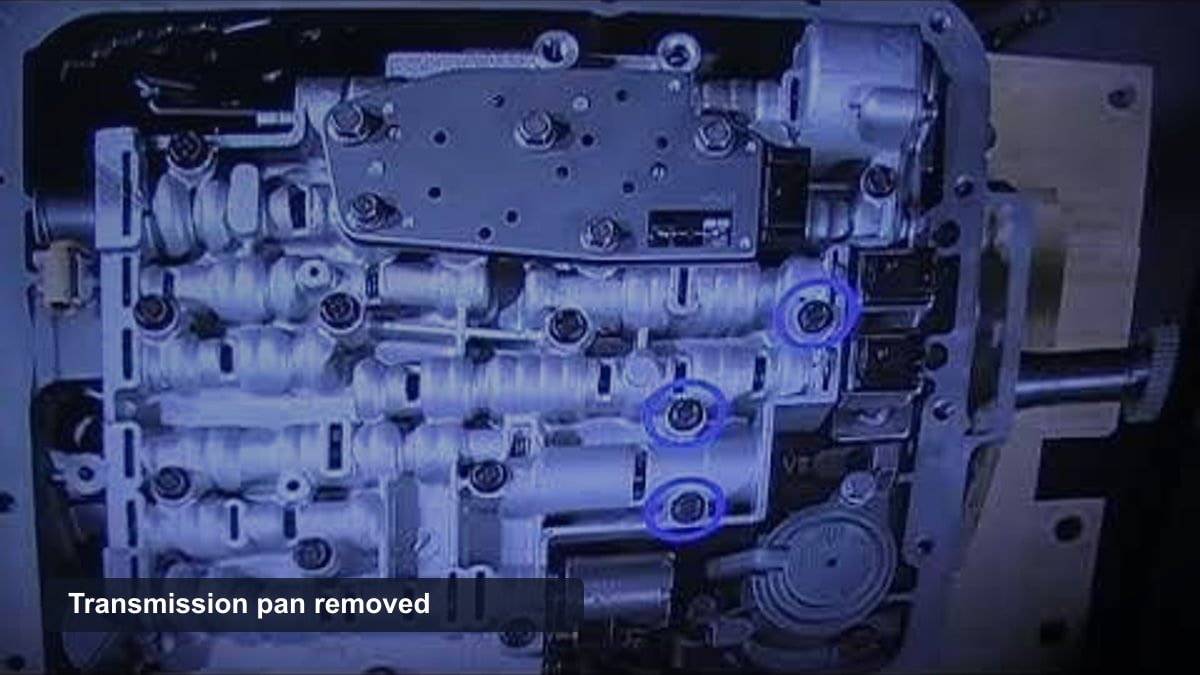
- Failed shift solenoids: cause harsh shifts, delayed engagement, or limp mode.
- Torque converter shudder: felt as vibration during acceleration, often linked to a failing lockup clutch.
- Slow or no reverse: caused by worn lo-reverse clutches, a broken sun shell, or a fluid leak in the reverse circuit.
For technical background, see GM 4L60-E transmission reference.
Most failures trace back to heat. Low or degraded fluid raises internal temperature, which accelerates clutch wear and leads to the problems listed above. An auxiliary transmission cooler and avoiding sustained towing in overdrive both reduce the heat behind most of these failures.
How Much Fluid Does a 4L60E Transmission Need?
A complete refill of a 4L60E, including the torque converter, takes approximately 11 to 14 quarts of automatic transmission fluid. The exact amount depends on the torque converter size and pan depth. A standard pan-drop service, which does not drain the torque converter, typically needs 5 to 6 quarts.
GM specified Dexron III for older 4L60E units and Dexron VI for newer models. Dexron VI is backward compatible and works in older applications.
How Much Does a 4L60E Rebuild Cost?
A professional shop rebuild typically costs 1,800 to 4,200 dollars, depending on labor rates, parts, and location. A DIY rebuild kit costs 300 to 800 dollars in parts alone, not including tools or labor.
A remanufactured replacement transmission, installed, often costs a similar amount to a shop rebuild, though prices vary by supplier and warranty length. Costs increase further when the rebuild includes upgraded parts, such as a reinforced sun shell or a larger torque converter, common additions for towing or performance builds.
What Else Should You Know About the 4L60 Gearbox?
Is the 4L60E the Same as the 4T60E?
No. The 4L60E is a longitudinal transmission for rear-wheel-drive vehicles. The 4T60E is a transverse transaxle built for front-wheel-drive GM cars. The two share a similar name but no interchangeable parts.
When Did GM Stop Using the 4L60E?
GM phased out the 4L60E in 2013. Most trucks and SUVs moved to the 6-speed 6L80E transmission afterward.
Can a Stock 4L60E Handle High Horsepower?
Not reliably. A stock 4L60E is rated for approximately 360 lb-ft of torque. Built versions with upgraded clutches and a reinforced sun shell can handle more than 700 horsepower.
Is the 4L60 Gearbox a Reliable Transmission?
The 4L60 gearbox, and its electronic successor the 4L60E, is regarded as a durable transmission when maintained on schedule. Its main weaknesses, the 3-4 clutch pack and the sun shell, both relate to heat and torque beyond stock ratings. Regular fluid changes every 30,000 to 60,000 miles prevent most documented failures. For stock engines under 360 lb-ft of torque, the 4L60E holds up well across hundreds of thousands of miles, which explains why it remains common in the used truck and SUV market today.

Jimmy O’Riley is a UK-based mobile mechanic and automotive diagnostic specialist operating out of Bedfordshire, England. He founded O’Rileys Autos in 2011 with a focus on bringing professional vehicle repairs directly to customers at their homes and workplaces.
With over a decade of hands-on experience, Jimmy specializes in ABS diagnostics, brake system repairs, diesel emissions faults, and DPF cleaning. He is recognized across the UK and Ireland as one of the leading specialists in vehicle braking and emissions systems, earning the title “The DPF King” from his growing online audience.
Jimmy documents real-world automotive repairs through his YouTube channel, which has accumulated over 97,000 subscribers and nearly 2,000 published repair videos. His content covers ABS fault diagnosis, wheel speed sensor testing, brake module replacement, and roadside repair procedures across a wide range of vehicle makes and models.
He is active on YouTube, Instagram, and Facebook under O’Rileys Autos.