
The trailer ABS light comes on when brakes are applied because the ABS module performs a self-check each time the brakes engage and detects a fault in 1 or more system components. The 6 most common causes are a faulty wheel speed sensor, damaged tone ring, low voltage supply, corroded 7-pin connector, failing modulator valve, and damaged wiring.
—
Federal brake-system rules are published in FMCSA brake systems guidance.
What Does It Mean When the Trailer ABS Light Comes On When Brakes Are Applied?
The trailer ABS light activates during braking when the ABS module detects an irregular signal from within the braking circuit. The system evaluates wheel speed sensor data, voltage supply, and modulator valve response each time the brakes engage. Any fault in these components triggers the yellow ABS warning lamp on the trailer.
Symptoms of a Bad ABS Module: 7 Warning Signs, Causes, and Fixes
Why Is My ABS and Brake Light On? 7 Common Causes and Fixes
Federal Motor Carrier Safety Administration (FMCSA) regulations under 49 CFR Part 393 require functional ABS on all trailers with a Gross Vehicle Weight Rating (GVWR) above 10,000 lbs manufactured after March 1, 1998. A trailer operating with a non-functional ABS is non-compliant under federal commercial vehicle standards.
Is It Safe to Tow a Trailer With the ABS Light On?
Towing a trailer with the ABS light on is possible but creates 2 safety risks. Standard friction brakes remain functional. However, the anti-lock system is disabled, increasing the risk of trailer wheel lockup and jackknifing during emergency braking on wet or slippery road surfaces.
—
What Are the 6 Causes of the Trailer ABS Light Coming On When Brakes Are Applied?
The trailer ABS light comes on when brakes are applied due to 6 primary causes:
- Faulty wheel speed sensor: The sensor produces a weak or inconsistent signal that becomes detectable only when braking loads are applied to the axle.
- Damaged tone ring: Debris buildup or physical damage to the reluctor ring generates incorrect speed signals during braking.
- Low voltage supply: The trailer ABS module requires a minimum of 9 volts to operate. Voltage below this threshold triggers a fault during braking when power demand increases.
- Corroded or loose 7-pin connector: The ABS power wire on pin 6 (blue wire) corrodes at the tow vehicle to trailer junction, causing intermittent power loss specifically during braking.
- Faulty ABS modulator valve: The modulator valve activates only during braking. A valve fault becomes detectable exclusively at that moment.
- Damaged wiring harness: Chafed or broken wires along the trailer frame flex under braking stress and produce intermittent faults detectable only during stops.
What Are the Most Common Trailer ABS Fault Codes?
Common fault codes retrieved from trailer ABS systems include:
- Code 1: Wheel speed sensor signal error
- Code 2: Wheel speed sensor supply voltage fault
- Code 4: ABS modulator valve circuit fault
- Code 8: Tone ring signal missing or intermittent
- Code 11: Control module internal fault
- Code 14: Low system voltage detected
These codes are retrieved using an ABS-specific diagnostic tool. Trailer ABS manufacturers including Haldex, Bendix, and Meritor WABCO each use proprietary diagnostic software for full fault code access.
—
How Do You Diagnose a Trailer ABS Light That Comes On When Brakes Are Applied?
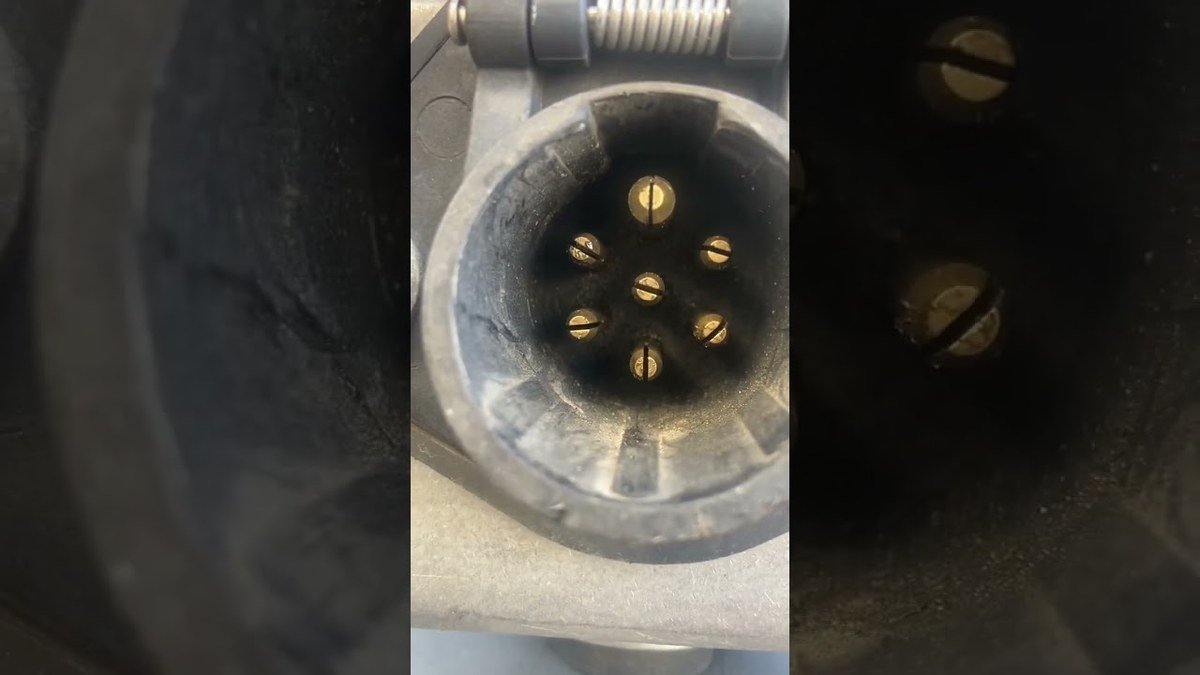
Diagnosing a trailer ABS light that activates during braking requires 5 steps:
- Connect an ABS-capable diagnostic tool to the trailer's ABS diagnostic port, typically located near the front axle or inside the trailer junction box.
- Retrieve and record all stored fault codes before clearing them.
- Inspect the 7-pin connector between the tow vehicle and trailer. Check pin 6 (blue wire) for corrosion, bending, or poor contact.
- Measure voltage at the trailer ABS module connector with brakes applied. The reading requires a minimum of 9 volts to confirm adequate supply.
- Inspect each wheel speed sensor and tone ring for physical damage, excessive air gap, or metallic debris accumulation.
How Do You Test a Trailer Wheel Speed Sensor?
Testing a trailer wheel speed sensor requires a digital multimeter. Disconnect the sensor connector and measure resistance across the 2 sensor terminals. Most trailer wheel speed sensors read between 900 and 2,500 ohms. A reading below 900 ohms indicates a short circuit. A reading above 2,500 ohms or an open circuit confirms sensor failure.
—
How Do You Fix a Trailer ABS Light That Comes On When Brakes Are Applied?
Fixing the trailer ABS light depends on the confirmed fault. The 4 most common fixes are:
- Replace the faulty wheel speed sensor: Disconnect the sensor connector, remove the mounting bolt, and install a replacement sensor. Torque to the manufacturer's specification, typically 13 to 18 ft-lbs.
- Clean or replace the 7-pin connector: Remove corrosion using electrical contact cleaner and apply dielectric grease to all pins. Replace the connector if pins are bent or broken.
- Replace the damaged tone ring: Remove the wheel hub assembly, press out the damaged tone ring, and press the replacement ring to the correct seating depth.
- Repair the damaged wiring harness: Locate the break using a multimeter in continuity mode, cut out the damaged section, and splice in a replacement segment with weatherproof butt connectors.
How Much Does It Cost to Fix a Trailer ABS Light Issue?
Fixing a trailer ABS light issue costs between $40 and $950 depending on the failed component and labor rate.
| Repair | Part Cost | Labor Cost | Total Estimate |
|---|---|---|---|
| Wheel Speed Sensor | $30 – $120 | $60 – $150 | $90 – $270 |
| 7-Pin Connector | $10 – $40 | $30 – $80 | $40 – $120 |
| Tone Ring | $20 – $80 | $100 – $200 | $120 – $280 |
| ABS Modulator Valve | $150 – $400 | $100 – $200 | $250 – $600 |
| ABS Control Module | $200 – $700 | $80 – $250 | $280 – $950 |
—
Can a Bad Trailer Connector Cause the ABS Light to Come On When Braking?
A bad trailer connector causes the ABS light to come on when braking through 3 mechanisms. First, corrosion on pin 6 of the 7-pin connector restricts ABS power supply below the 9-volt minimum threshold. Second, a loose connection drops voltage further when the braking circuit draws additional current. Third, a completely open circuit on pin 6 disconnects ABS power entirely during braking.
Cleaning or replacing the 7-pin connector resolves voltage-related ABS faults in many cases before further component-level diagnosis is required. Applying dielectric grease to all 7 pins after cleaning prevents corrosion recurrence.

Jimmy O’Riley is a UK-based mobile mechanic and automotive diagnostic specialist operating out of Bedfordshire, England. He founded O’Rileys Autos in 2011 with a focus on bringing professional vehicle repairs directly to customers at their homes and workplaces.
With over a decade of hands-on experience, Jimmy specializes in ABS diagnostics, brake system repairs, diesel emissions faults, and DPF cleaning. He is recognized across the UK and Ireland as one of the leading specialists in vehicle braking and emissions systems, earning the title “The DPF King” from his growing online audience.
Jimmy documents real-world automotive repairs through his YouTube channel, which has accumulated over 97,000 subscribers and nearly 2,000 published repair videos. His content covers ABS fault diagnosis, wheel speed sensor testing, brake module replacement, and roadside repair procedures across a wide range of vehicle makes and models.
He is active on YouTube, Instagram, and Facebook under O’Rileys Autos.