
Gearbox Leaking Fluid: 7 Causes, Symptoms, and Repair Costs
A gearbox leaking fluid is usually caused by a worn seal, a failing gasket, or a loose drain plug that lets oil or transmission fluid escape from the housing. The leak can affect manual or automatic transmissions, and it typically shows up as a red, pink, or amber puddle under the vehicle. Left unrepaired, a fluid leak lowers the gearbox’s lubrication level and can lead to slipping gears, overheating, or complete transmission failure.
Why Is My Gearbox Leaking Fluid?
A gearbox leaks fluid when a seal, gasket, or fitting that normally holds oil inside the housing wears out, cracks, or loosens, letting fluid escape under normal driving pressure.
Every gearbox holds fluid using some combination of gravity, heat, and, in automatic transmissions, hydraulic pressure. Rubber seals and gaskets keep that fluid contained while still letting the input shaft, output shaft, and axles rotate freely. Heat cycles harden and shrink these rubber components over years of use, and once a seal loses its shape, fluid finds a path around it. A cracked pan, a stripped drain plug, or a corroded cooler line produces the same result through physical damage rather than gradual wear.
What Are the Main Causes of a Gearbox Fluid Leak?
A gearbox fluid leak has 7 main causes: a worn pan gasket, a hardened shaft seal, a damaged drain or fill plug, a cracked cooler line, a failing torque converter seal, overfilling, and a cracked housing.
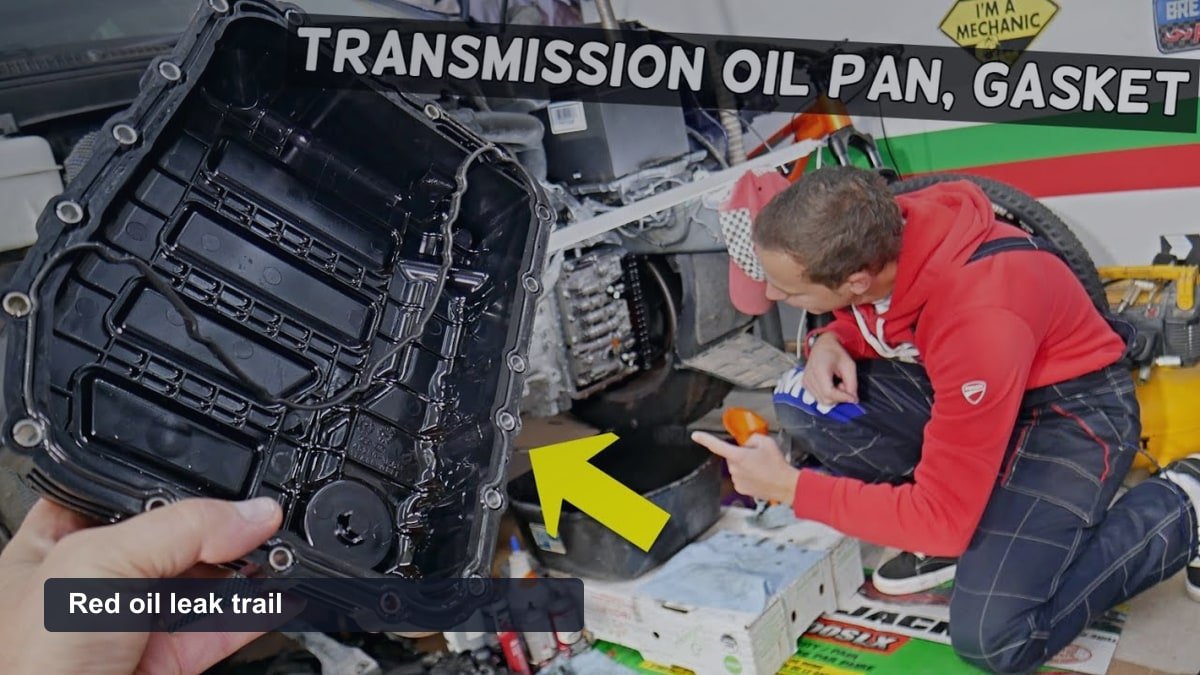
- Pan gasket wear: the gasket between the transmission pan and the housing hardens or cracks with age, and fluid seeps around the pan’s edge.
- Shaft seal wear: the front, rear, or output shaft seals harden from heat and let fluid escape at the point where the shaft spins.
- Drain or fill plug damage: an over-tightened or under-tightened plug strips its threads, often right after a fluid change.
- Cooler line damage: the rubber or metal lines that carry fluid to the radiator’s transmission cooler crack, loosen, or corrode.
- Torque converter seal failure: the seal around the torque converter, found only in automatic transmissions, wears out and leaks fluid near the bell housing.
- Overfilling or a blocked vent: excess fluid or trapped pressure forces oil past seals that would otherwise hold.
- Cracked housing: a rare cause, usually the result of impact damage from road debris or an accident.
What Is the Difference Between a Manual and an Automatic Gearbox Leak?
A manual gearbox and an automatic transmission leak in different ways because they hold fluid under different conditions.
An automatic transmission uses fluid for hydraulic pressure as well as lubrication, so it holds more fluid, at higher operating pressure, than a manual gearbox. This higher pressure pushes fluid through a worn seal faster, which is one reason automatic transmissions account for more reported fluid leaks. A manual gearbox relies on gravity and splash lubrication alone, so a worn seal in a manual gearbox tends to leak more slowly. Automatic transmissions also include a torque converter seal and cooler lines that manual gearboxes do not have, adding 2 extra points where a leak can start.
What Are the Symptoms of a Leaking Gearbox?
A leaking gearbox shows 6 main symptoms: visible fluid puddles, a low dipstick reading, slipping gears, grinding noises, a burning smell, and a dashboard warning light.
- Visible fluid puddles or spots under the vehicle, usually near the center or front of the car.
- A low fluid level on the dipstick or sight glass, checked while the engine is warm.
- Slipping gears or delayed engagement when shifting from park or neutral into drive.
- Grinding or whining noises caused by metal components running without enough lubrication.
- A burning smell from overheated fluid that no longer cools the transmission properly.
- A dashboard warning light, such as a transmission temperature or check engine light, on newer vehicles.
How Do You Identify a Gearbox Fluid Leak by Color?
Fluid color signals both the type of leak and its severity. Automatic transmission fluid runs red or pink when healthy, and manual gearbox oil runs amber or golden brown.
The table below defines each fluid color, the transmission type it applies to, and what the color means for gearbox health.
| Color | Transmission Type | Condition | Meaning |
|---|---|---|---|
| Bright red or pink | Automatic | Healthy | Fresh fluid, properly lubricating |
| Amber or golden brown | Manual | Healthy | Normal gear oil color, thicker than automatic fluid |
| Dark red or light brown | Automatic | Aging | Oxidizing fluid, service due soon |
| Dark brown or black, with a burnt smell | Automatic or manual | Degraded | Overheated or burnt fluid, needs immediate service |
| Milky or foamy | Automatic | Contaminated | Coolant has mixed into the fluid, often from a failed transmission cooler |
A smell test adds a second data point alongside color. Fresh fluid smells sweet, similar to petroleum. A burnt, acrid smell points to overheating, and a rotten egg smell in older manual gear oil points to breakdown of its sulfur-based additives.
How Do You Tell a Gearbox Leak From Another Fluid Leak?
Location, color, and texture separate a gearbox leak from a coolant, power steering, or engine oil leak.
- Coolant: green, orange, or pink, thin like water, with a sweet smell similar to maple syrup.
- Power steering fluid: often the same red color as automatic transmission fluid, but it leaks near the front of the engine, close to the belts, rather than from underneath the transmission.
- Engine oil: amber to black, thicker than coolant, and it drips from the front or bottom of the engine rather than the center of the vehicle.
- Gearbox fluid: red or amber, oily rather than watery, and it drips from underneath the transmission housing, roughly in the middle of the vehicle.
Is It Safe to Drive With a Leaking Gearbox?
A vehicle with a leaking gearbox can typically cover 10 to 15 miles to the nearest repair shop, but driving farther risks slipping gears, overheating, and permanent transmission damage.
Automatic transmissions rely on fluid for hydraulic pressure as well as lubrication, so a drop in fluid level affects shifting almost immediately. Manual gearboxes rely on fluid only for lubrication and cooling, so they tolerate a leak slightly longer before damage sets in, though the same practical limit applies. Continued driving with low fluid raises internal temperatures, accelerates wear on gears and bearings, and can turn a low-cost seal repair into a full transmission rebuild.
How Much Does It Cost to Fix a Leaking Gearbox?
Fixing a leaking gearbox costs between 150 and 1,200 US dollars for most seal or gasket repairs, and can exceed 3,000 US dollars if low fluid causes internal damage.
- Pan gasket replacement: 150 to 400 US dollars.
- Shaft seal replacement: 100 to 1,200 US dollars, depending on the seal’s location and accessibility.
- Torque converter seal replacement: 400 to 1,200 US dollars.
- Cooler line repair: 100 to 400 US dollars for hose replacement.
- Full transmission rebuild after neglected fluid loss: 3,000 US dollars or more.
Vehicle make and model change these figures. Luxury and performance vehicles often need more disassembly and specialized parts, and a shop’s choice between an OEM and an aftermarket seal adds further variation to the final price.
For technical background, see RAC automatic transmission fluid guide.
How Do You Fix a Leaking Gearbox?
Fixing a leaking gearbox involves locating the exact leak source, replacing the damaged seal, gasket, or line, and refilling the gearbox with the correct fluid.
- Clean the gearbox housing and surrounding components so new fluid is easy to spot at its true source.
- Check the fluid’s color and smell against a color chart to narrow down whether it is fresh, aging, or contaminated with coolant.
- Inspect the pan gasket, shaft seals, drain plug, and cooler lines for cracks, hardening, or looseness.
- Replace the specific damaged part rather than the entire gearbox, since most leaks trace back to a single seal or gasket.
- Refill the gearbox with the manufacturer-specified fluid type and quantity, then recheck the level after a short test drive.
How Do You Prevent a Gearbox Fluid Leak?
Preventing a gearbox fluid leak involves following the manufacturer’s fluid change interval, avoiding overfilling, and inspecting seals during routine service.
- Change automatic transmission fluid every 30,000 to 60,000 miles, based on the manufacturer’s schedule.
- Change manual transmission fluid every 60,000 to 100,000 miles, based on the manufacturer’s schedule.
- Use the exact fluid type specified in the owner’s manual, since the wrong fluid can damage seals and synchronizers.
- Check the fluid level after any service work, since overfilling raises internal pressure and forces fluid past the seals.
- Inspect the pan gasket and visible seals during routine oil changes, so early wear is caught before it becomes a leak.
What Do People Also Ask About Gearbox Fluid Leaks?
Can a Gearbox Fluid Leak Fix Itself?
No. A worn seal or gasket continues to degrade under heat and pressure, so a gearbox fluid leak gets worse over time rather than sealing on its own.
How Much Fluid Loss Is Too Much?
Any fluid loss that drops the level below the dipstick’s minimum mark is enough to affect lubrication and hydraulic pressure, so it counts as too much.
Does a Fluid Leak Always Mean the Gearbox Needs Rebuilding?
No. Most leaks trace back to a single seal, gasket, or line, and a full rebuild is only needed after the gearbox has run low on fluid for an extended period.
Is a Gearbox Fluid Leak Serious?
A gearbox fluid leak ranges from a minor, low-cost gasket repair to a serious mechanical problem, depending on how quickly it gets addressed.
A small, freshly noticed leak with fluid still at a healthy color typically points to an inexpensive seal or gasket fix. A leak paired with dark, burnt-smelling fluid, slipping gears, or a dashboard warning light points to a more advanced problem that has already affected internal components. Vehicles that continue running with low fluid for weeks or months face a higher chance of needing a full rebuild instead of a single-part repair.

Jimmy O’Riley is a UK-based mobile mechanic and automotive diagnostic specialist operating out of Bedfordshire, England. He founded O’Rileys Autos in 2011 with a focus on bringing professional vehicle repairs directly to customers at their homes and workplaces.
With over a decade of hands-on experience, Jimmy specializes in ABS diagnostics, brake system repairs, diesel emissions faults, and DPF cleaning. He is recognized across the UK and Ireland as one of the leading specialists in vehicle braking and emissions systems, earning the title “The DPF King” from his growing online audience.
Jimmy documents real-world automotive repairs through his YouTube channel, which has accumulated over 97,000 subscribers and nearly 2,000 published repair videos. His content covers ABS fault diagnosis, wheel speed sensor testing, brake module replacement, and roadside repair procedures across a wide range of vehicle makes and models.
He is active on YouTube, Instagram, and Facebook under O’Rileys Autos.