
The Nissan Leaf on the driveway in Leighton Buzzard had done thirty-one thousand miles and barely worn its brake pads. I could see that before I opened my kit. The discs told a different story.
The owner bought it partly for the brake savings. He had read about regenerative braking, worked out the numbers, and decided he would spend a fraction of what petrol car drivers spend on friction components. He is not wrong to think that. He was also not told the full version.
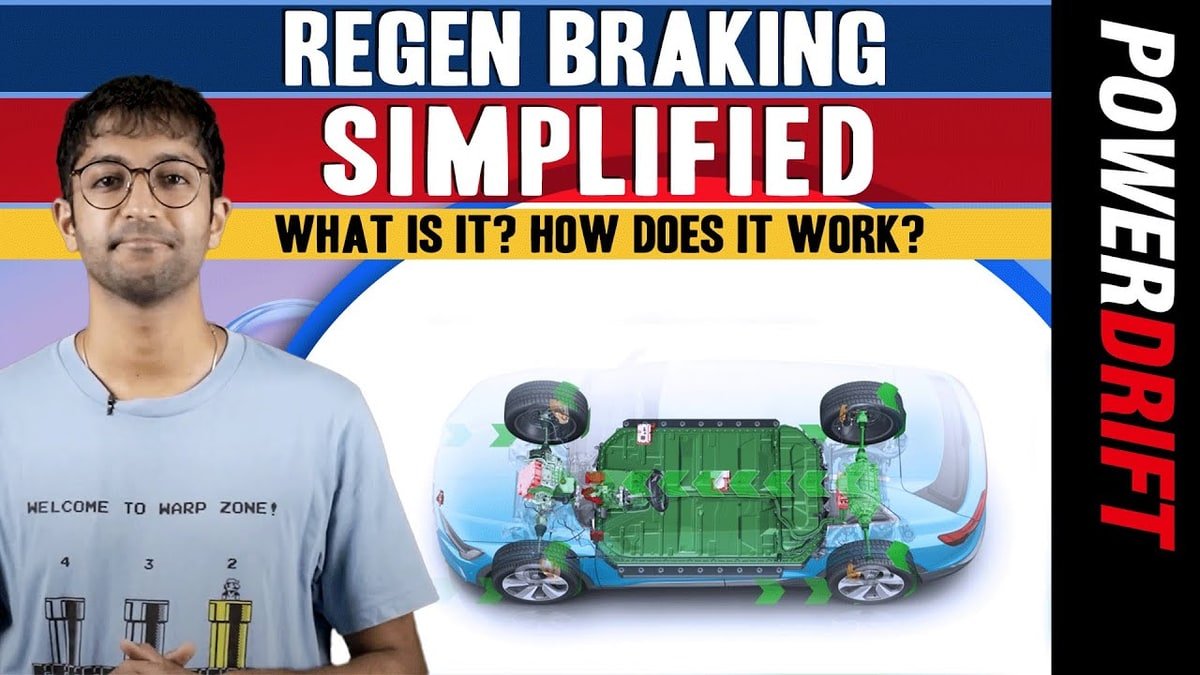
Regenerative braking does what it says. When the motor converts deceleration into battery charge, the friction brakes sit largely idle. Pad wear genuinely reduces. On a well-driven EV across reasonable mileage, that saving is real and it accumulates.
What the coverage tends not to mention is what happens to a rotor that is rarely asked to work. British roads from October through April deliver salt and surface moisture constantly. A rotor generating no regular friction heat has nothing working in its favour against that.
For official safety context, see this reference.
Steel corrodes.
The scanner on that Leaf pulled an ABS sensor code: nearside front, implausible signal. I switched to live data and watched the sensor read cleanly through two full wheel rotations. Nothing dropped, nothing spiked, nothing skipped. That is the moment when the code and the live data are contradicting each other, and working out which one to follow is where proper diagnosis actually begins.
It was the system's nearest estimate of a symptom it could not explain from the inside. When I got the wheel off and looked at the rotor face, the pitting across the surface was significant. The tone ring was losing signal intermittently as each corroded recess passed the sensor tip. That is not a sensor problem.
There is something else about EVs that does not get discussed enough. These vehicles are significantly heavier than equivalent petrol cars. A Nissan Leaf is roughly three hundred kilograms heavier than a comparable petrol hatchback. When the friction brakes engage hard, they are working against considerably more mass than most brake specifications anticipated.
The combination of corroded rotors from disuse and heavier braking loads when they are finally called upon is not one I am comfortable with. The thermal stress on a cold, pitted surface under that kind of load is not something brake engineers were designing around. This is not a theoretical scenario.
There is a specific version of this that concerns me. If the regenerative system develops a calibration fault or a software issue, the vehicle falls back entirely on its friction brakes. On an EV that has rarely used them, those brakes may be sitting on surfaces that are not in a condition to perform.
I put a video up about this last year. The comments reached several hundred within a few days, mostly from Leaf and Model 3 owners recognising exactly what they were looking at on their own cars. That kind of response tells me the problem is not contained to one vehicle or one part of the country. The pattern is consistent, and pattern recognition is how I build confidence in a diagnosis before I have even seen the car.
What EV owners are not being told is that reduced pad wear does not mean reduced brake system maintenance. It means the system needs different attention. A vehicle that almost never uses its friction brakes should have those components inspected more often, not on the same schedule as a petrol car that wears them naturally.
Main dealers are not saying this at the point of sale. The brake savings figure appears in the ownership cost comparison and that is where the conversation ends. Corrosion inspection intervals for vehicles that barely use their friction brakes do not appear anywhere in the standard handover.
The Leaf in Leighton Buzzard needed two new front rotors. The owner had not planned for that. He got the pad savings he was promised. He also got a rotor bill he had not been told to plan for.
What stays with me is the gap between the savings conversation at the point of sale and what I find two years later. The people who built those calculations will not be on the driveway. I will.

Jimmy O’Riley is a UK-based mobile mechanic and automotive diagnostic specialist operating out of Bedfordshire, England. He founded O’Rileys Autos in 2011 with a focus on bringing professional vehicle repairs directly to customers at their homes and workplaces.
With over a decade of hands-on experience, Jimmy specializes in ABS diagnostics, brake system repairs, diesel emissions faults, and DPF cleaning. He is recognized across the UK and Ireland as one of the leading specialists in vehicle braking and emissions systems, earning the title “The DPF King” from his growing online audience.
Jimmy documents real-world automotive repairs through his YouTube channel, which has accumulated over 97,000 subscribers and nearly 2,000 published repair videos. His content covers ABS fault diagnosis, wheel speed sensor testing, brake module replacement, and roadside repair procedures across a wide range of vehicle makes and models.
He is active on YouTube, Instagram, and Facebook under O’Rileys Autos.