
The Tiguan was on a drive in Biggleswade and the owner had circled the date on her kitchen calendar. Six weeks to the MOT, three warning lights on the dash, and a dealer quote she had photographed on her phone. She could not quite believe what it said.
The quote was for two forward collision cameras, a radar calibration, and a lane departure sensor unit. The total came to slightly over two thousand pounds. She had been told all three items needed replacing before the car would pass inspection. I told her to put her phone away and let me look at it properly first.
ADAS components in modern vehicles do not exist independently of the braking and stability systems. A forward-facing camera that feeds the automatic emergency braking system is in constant communication with the ABS module. When the camera flags a fault, the AEB flags a fault, and the ABS module logs an associated code. The scan tool returns three fault codes pointing in three directions, and the temptation is to treat each one as a separate repair.
Industry pricing data recorded a 23 percent increase in ADAS component costs across the UK market over the previous twelve months. Radar units, camera modules, and ultrasonic sensor arrays have all risen, partly from supply chain pressure and partly because manufacturers have not reduced pricing as volumes have grown. The cost of that lands entirely with the driver.
The Tiguan's fault codes pointed at the forward collision camera and the lane departure unit. The live data told a different story. Both camera systems were producing clean signal output with no anomalies visible in the data stream. The fault had appeared three weeks earlier, which the owner confirmed was exactly when she had the windscreen replaced.
The replacement garage had not recalibrated the cameras after the new glass was fitted. The cameras were reading their own mounting angle as a fault because the alignment reference had been reset and never corrected. That is not a camera failure.
The windscreen replacement trade has been fitting glass for decades without needing to think about camera alignment, because until recently there were no cameras to think about. That changed when autonomous emergency braking became standard equipment across most new vehicles. The calibration training and equipment investment required after a glass replacement has not kept pace with how common these systems now are.
That is a calibration issue, and it costs a fraction of what the dealer had quoted for parts. I carried out the calibration on the drive using a target board and manufacturer software. It took forty-five minutes. The fault codes cleared, the warning lights went out, and the car did not need two new cameras.
What I find difficult is that this pattern is becoming more frequent. Not the specific fault, but the shape around it: an ADAS warning appears, a scan tool returns codes, and a quote follows that treats every code as a failed component. At twenty-three percent above last year's prices, that approach is generating repair bills that are genuinely damaging to drivers who do not have the knowledge to push back on what they are being told.
Main dealers have calibration equipment and use it when they choose to. The question of whether calibration gets considered before parts are ordered is one my ADAS diagnostic videos have been raising consistently for two years now. I do not have a kind answer to it.
The comments under those videos come from people across the country, and most of them are not asking for technical guidance. They already know something is wrong. They are asking whether the quote they received was honest, and the fact that so many people are asking the same question is not something I find easy to set aside.
I have seen three windscreen-replacement-triggered ADAS faults in Bedfordshire this year alone, all of which arrived with dealer quotes for physical components that were not needed.
The owner of the Tiguan had the MOT booked for a Tuesday. She had been quoted over two thousand pounds. She paid for forty-five minutes of calibration work and passed without issue.
The 23 percent figure is not a pricing footnote. It is the number that makes a misdiagnosis financially comfortable and a proper diagnosis feel like an optional extra. That is the part of this that concerns me most.
Fourteen years on British driveways, and the gap between a fault code and the actual fault has never cost ordinary drivers more than it does right now.
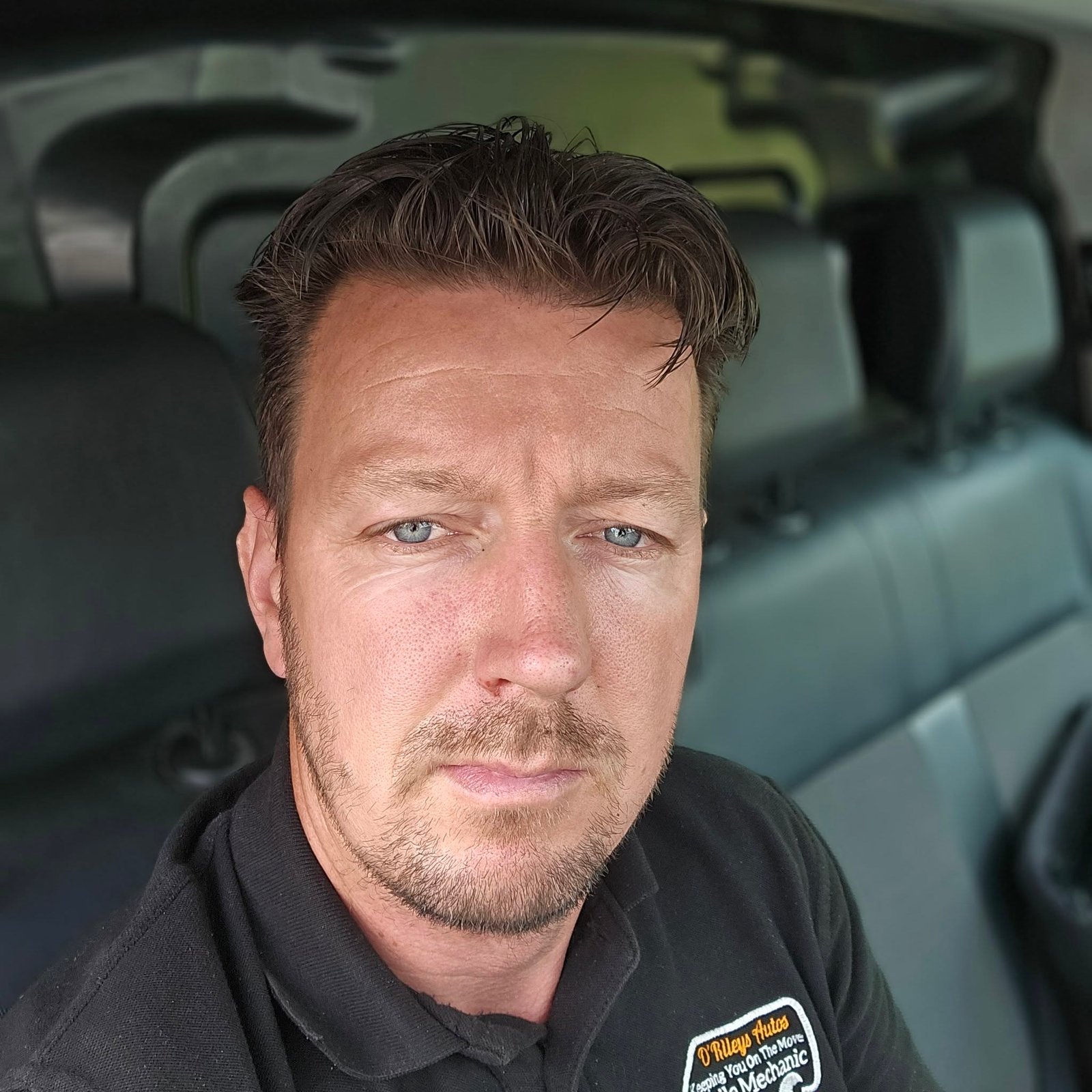
Jimmy O’Riley is a UK-based mobile mechanic and automotive diagnostic specialist operating out of Bedfordshire, England. He founded O’Rileys Autos in 2011 with a focus on bringing professional vehicle repairs directly to customers at their homes and workplaces.
With over a decade of hands-on experience, Jimmy specializes in ABS diagnostics, brake system repairs, diesel emissions faults, and DPF cleaning. He is recognized across the UK and Ireland as one of the leading specialists in vehicle braking and emissions systems, earning the title “The DPF King” from his growing online audience.
Jimmy documents real-world automotive repairs through his YouTube channel, which has accumulated over 97,000 subscribers and nearly 2,000 published repair videos. His content covers ABS fault diagnosis, wheel speed sensor testing, brake module replacement, and roadside repair procedures across a wide range of vehicle makes and models.
He is active on YouTube, Instagram, and Facebook under O’Rileys Autos.