
The ABS light turns on in a Honda when the anti-lock braking system detects a fault. There are 7 main causes: a faulty wheel speed sensor, a defective ABS control module, low brake fluid, a blown fuse, a worn tone ring, a failing ABS pump motor, or a damaged wiring harness.
—
NHTSA explains related safety context in NHTSA vehicle safety information.
What Does the ABS Light Mean on a Honda?
The ABS light on a Honda is a yellow dashboard warning that signals a malfunction in the anti-lock braking system. It disables ABS when illuminated. Standard braking remains active. The light turns off within 3 seconds at startup if no fault is detected.
Jeep Wrangler ABS and Traction Control Light On: 6 Causes and How to Fix It
WABCO Trailer ABS Blink Code 6: Meaning, Causes, and 3 Reset Methods
Honda models that commonly report ABS warning light issues include the Civic, CR-V, Accord, Odyssey, Pilot, HR-V, and Ridgeline. The ABS system prevents wheel lockup during emergency braking by modulating brake pressure at each wheel.
—
Can a Faulty Wheel Speed Sensor Cause the ABS Light to Come On in a Honda?
Yes. A faulty wheel speed sensor is the most common cause of an ABS warning light in Honda vehicles. The sensor monitors wheel rotation and sends speed data to the ABS module. When it fails, the module loses accurate data and disables the system.
Honda models with high wheel speed sensor failure rates include:
- Honda Civic (2006 to 2015): front sensor connector corrosion
- Honda CR-V (2007 to 2016): rear axle sensor wear
- Honda Accord (2008 to 2017): sensor wiring damage from road debris
Wheel speed sensor replacement on a Honda costs between $140 and $400. Labor ranges from $80 to $150 per hour at a certified shop.
—
Does a Defective ABS Control Module Trigger the Warning Light on a Honda?
Yes. A defective ABS control module triggers the warning light by failing to process wheel speed data correctly. The module is the central processor of the ABS system. It receives signals from all 4 wheel speed sensors and adjusts brake pressure at each wheel.Common causes of ABS module failure in Honda vehicles include:
- Moisture and corrosion from water exposure under the hood
- Internal circuit board failure in high-mileage vehicles
- Electrical damage from improper jump-starting
Honda ABS module replacement costs range from $350 to $1,100. Remanufactured modules for Civic and Accord models are available between $150 and $400.
—
Can Low Brake Fluid Activate the ABS Light on a Honda?
Yes. Low brake fluid reduces hydraulic pressure in the ABS system and activates the warning light. The ABS system depends on consistent fluid pressure to function. When fluid drops below the minimum level, the module triggers the warning.
Low brake fluid in a Honda results from 2 causes:
- Brake fluid leaks in the master cylinder, brake lines, or caliper seals
- Worn brake pads that lower fluid volume as they compress
The brake fluid reservoir on a Honda is on the driver’s side of the engine bay. It is translucent for easy level checks. Fluid should remain between the MIN and MAX markings. A refill costs between $20 and $50.
—
Does a Blown Fuse Cause the ABS Light to Come On in a Honda?
Yes. A blown ABS fuse cuts power to the ABS module and activates the warning light. The fuse protects the module from electrical surges. When it blows, the module loses power and the ABS system becomes inoperative.
The ABS fuse on a Honda is located in the underhood fuse box. Locations vary by model:
- Honda Civic: underhood fuse box, driver’s side
- Honda CR-V: underhood fuse box, near the battery
- Honda Accord: underhood fuse box, labeled ABS or VSA
The ABS fuse on most Honda models is a 40-amp or 50-amp maxi-fuse. Replacement fuses cost between $2 and $15.
—
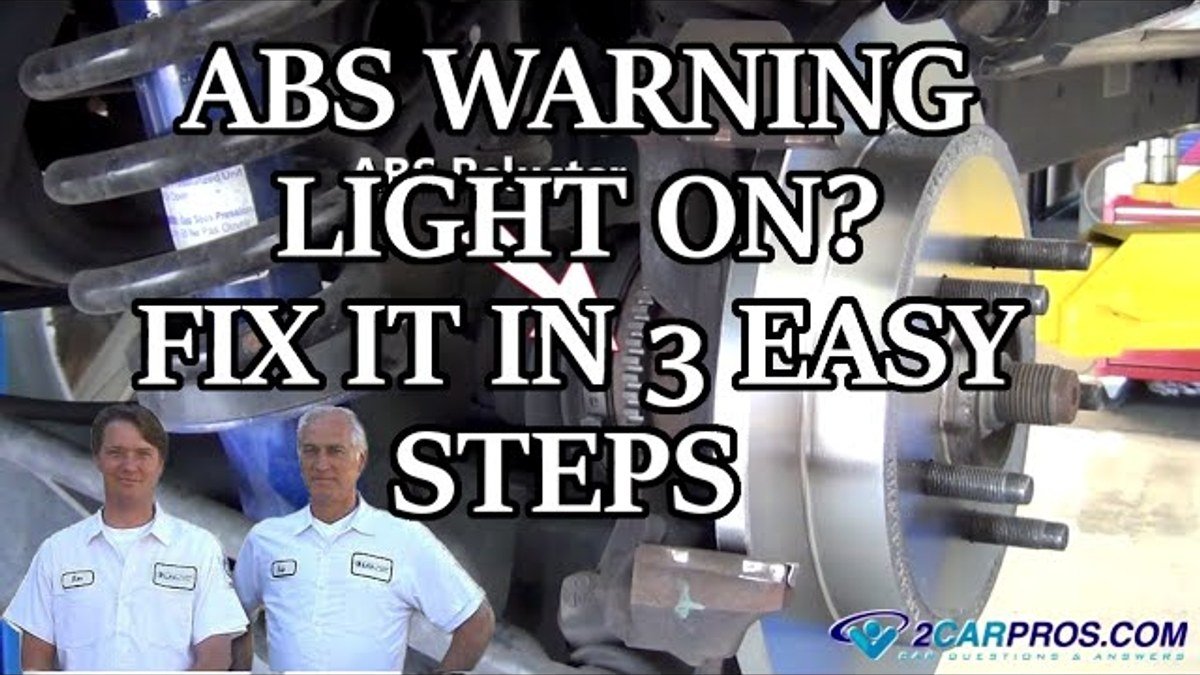
Can a Worn Tone Ring Trigger the ABS Light on a Honda?
Yes. A worn or corroded tone ring causes the wheel speed sensor to send inaccurate signals to the ABS module, triggering the warning light. The tone ring is a toothed wheel mounted on the axle or hub. The sensor reads the teeth as the wheel rotates.
Tone ring damage in Honda vehicles results from:
- Corrosion on high-mileage vehicles in humid or coastal areas
- Physical impact from potholes or road debris
- General wear on vehicles with over 100,000 miles
Tone ring replacement on a Honda costs between $120 and $320 including labor.
—
Does a Failing ABS Pump Motor Activate the Warning Light on a Honda?
Yes. A failing ABS pump motor prevents the system from building hydraulic pressure and triggers the warning light. The pump motor powers the hydraulic control unit. It activates during ABS braking events to modulate pressure at each wheel.
Symptoms of a failing ABS pump motor on a Honda include:
- A grinding or humming noise from the engine bay during braking
- ABS activating on dry roads without driver input
- The ABS warning light appearing alongside the brake warning light
ABS pump motor replacement on a Honda costs between $200 and $700.
—
Is It Safe to Drive a Honda with the ABS Light On?
Driving a Honda with the ABS light on means the anti-lock braking system is disabled. Standard brakes remain functional. The risk increases during emergency braking on wet, icy, or loose surfaces where wheel lockup is likely.
According to the National Highway Traffic Safety Administration (NHTSA), vehicles with active ABS stop up to 20% shorter on low-traction surfaces. Risks include:
- Wheel lockup during hard braking on wet roads
- Reduced steering control on icy or loose surfaces
- Deactivation of the Vehicle Stability Assist (VSA) system
Honda vehicles with VSA, including the CR-V, Pilot, and Odyssey, are particularly affected because VSA relies on ABS sensor data.
—
How Do You Diagnose and Reset the ABS Light on a Honda?
The ABS light on a Honda is diagnosed using an OBD-II scanner capable of reading Honda ABS and chassis fault codes. Standard OBD-II scanners read only engine codes. Honda-specific scanners access ABS module codes stored in the chassis control system. The OBD-II port on a Honda is located beneath the steering column on the driver’s side.
What OBD-II Codes Appear When the ABS Light Is On in a Honda?
| Fault Code | Description | Estimated Repair Cost |
|---|---|---|
| 61-01 | Right front wheel speed sensor fault | $140 to $400 |
| 61-02 | Left front wheel speed sensor fault | $140 to $400 |
| 61-03 | Right rear wheel speed sensor fault | $140 to $400 |
| 61-04 | Left rear wheel speed sensor fault | $140 to $400 |
| 62-01 | ABS motor relay fault | $200 to $700 |
| 63-01 | ABS fail-safe relay fault | $350 to $1,100 |
| 67-01 | ABS pump motor failure | $200 to $700 |
Honda-compatible scanners such as the Autel MaxiCOM MK808 and iCarsoft CR Pro read ABS codes on Civic, Accord, CR-V, Pilot, and Odyssey models. The ABS light resets after the fault is repaired and the vehicle completes a drive cycle.
—
Why Does Early Diagnosis of the ABS Light on a Honda Prevent Costly Repairs?
Diagnosing the ABS light on a Honda early prevents fault escalation that turns a $140 sensor repair into a $1,100 module replacement. A failed wheel speed sensor left unaddressed produces persistent false signals that force the ABS module to cycle the pump motor continuously, accelerating wear and causing secondary failure.
Honda vehicles with over 150,000 miles face higher risk of cascading ABS faults due to corrosion in wheel speed sensors, tone rings, and wiring harnesses. An OBD-II scan identifies the root cause before secondary damage occurs.

Jimmy O’Riley is a UK-based mobile mechanic and automotive diagnostic specialist operating out of Bedfordshire, England. He founded O’Rileys Autos in 2011 with a focus on bringing professional vehicle repairs directly to customers at their homes and workplaces.
With over a decade of hands-on experience, Jimmy specializes in ABS diagnostics, brake system repairs, diesel emissions faults, and DPF cleaning. He is recognized across the UK and Ireland as one of the leading specialists in vehicle braking and emissions systems, earning the title “The DPF King” from his growing online audience.
Jimmy documents real-world automotive repairs through his YouTube channel, which has accumulated over 97,000 subscribers and nearly 2,000 published repair videos. His content covers ABS fault diagnosis, wheel speed sensor testing, brake module replacement, and roadside repair procedures across a wide range of vehicle makes and models.
He is active on YouTube, Instagram, and Facebook under O’Rileys Autos.