
The symptoms of a bad ABS module include an illuminated ABS warning light, wheel lockup during braking, and deactivated traction control. A failing ABS module disables 3 interconnected safety systems: the anti-lock braking system, traction control, and electronic stability control.
—
NHTSA explains related safety context in NHTSA vehicle safety information.
What Are the 7 Symptoms of a Bad ABS Module?
A bad ABS module produces 7 identifiable symptoms. These symptoms range from dashboard warning lights to physical changes in braking behavior.
Cadillac SRX ABS Module Replacement: Steps, Costs, and 5 Warning Signs
Trailer ABS Light Comes On When Brakes Applied: 6 Causes and Fixes
- ABS warning light illuminated on the dashboard
- Traction Control System (TCS) warning light activated
- Electronic Stability Control (ESC) warning light on
- Brake pedal pulsating during normal stops
- Wheel lockup occurring during hard braking
- Speedometer reading incorrectly or dropping to zero
- Spongy or unresponsive brake pedal under heavy braking
Symptoms 1, 2, and 3 appearing simultaneously are the strongest indicator of ABS module failure rather than an individual component fault.
How Do You Know If the ABS Module Is Bad or Just a Sensor?
Distinguishing a bad ABS module from a faulty wheel speed sensor requires an OBD-II scanner with ABS diagnostic capability. A sensor fault code such as C0031 or C0040 points to an individual sensor. A communication code such as U0121 indicates module-level failure. Inspect sensor wiring before replacing the module.
—
What Causes an ABS Module to Go Bad?
An ABS module fails due to 5 primary causes:
- Internal corrosion: Moisture enters the module casing and corrodes the circuit board. This is the most commonly reported cause of ABS module failure across vehicle manufacturers.
- Electrical voltage spikes: Power surges from jump-starting or a failing alternator burn internal components.
- Physical damage: Road debris impacts or improper engine bay work crack the module casing.
- Thermal stress: Repeated heating and cooling cycles weaken solder joints on the internal circuit board over time.
- Persistent sensor faults: A continuously failing wheel speed sensor overloads the ABS module processing circuits.
A study published by the Society of Automotive Engineers (SAE) found that moisture-related electrical failures account for over 50% of ABS control module replacements in vehicles with more than 80,000 miles.
How Long Does an ABS Module Last?
An ABS module lasts between 100,000 and 150,000 miles under normal driving conditions. Vehicles driven in high-humidity climates or exposed to road salt deteriorate faster. Lifespan shortens by 30% to 40% in regions with frequent winter road salt treatment.
—
How Do You Test a Bad ABS Module?
Testing a bad ABS module requires 5 steps:
- Connect an OBD-II scanner with ABS-level diagnostic capability to the vehicle's OBD port located beneath the dashboard.
- Retrieve and record all stored ABS fault codes.
- Inspect each wheel speed sensor and its wiring harness for corrosion, cracks, or damaged connectors.
- Use a digital multimeter to test wheel speed sensor resistance. Most sensors read between 900 and 2,000 ohms.
- Check the ABS fuse in the vehicle's fuse box. A blown fuse produces ABS warning lights without module failure.
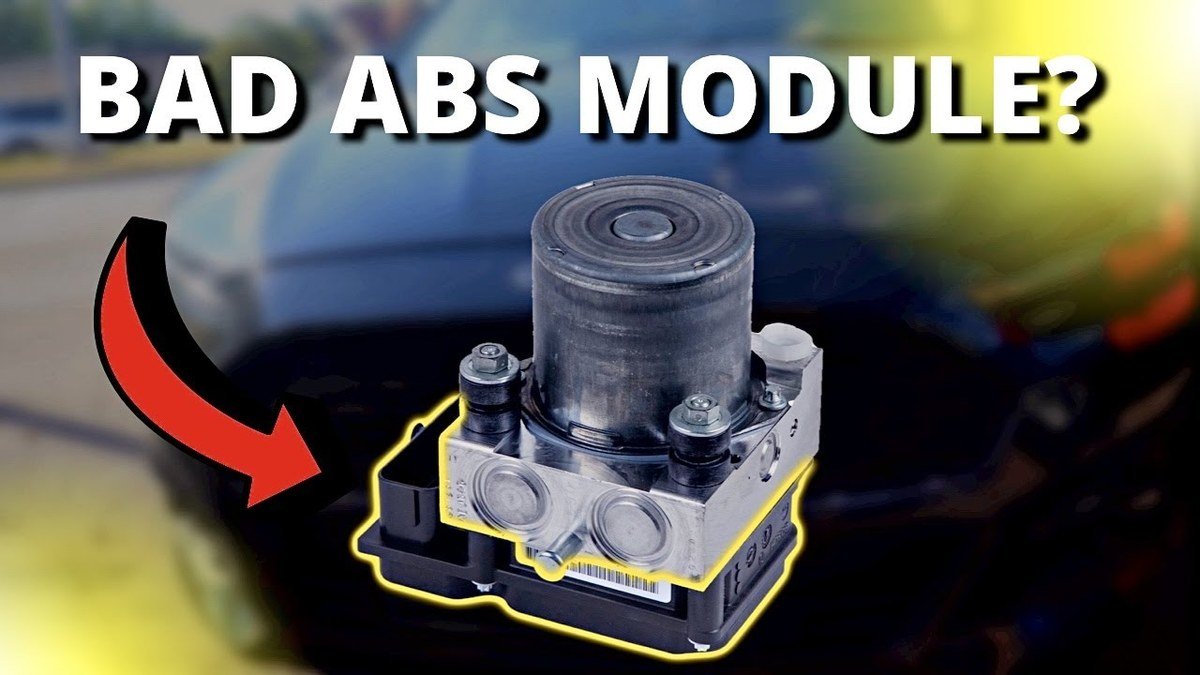
If fault codes return immediately after clearing and no sensor or wiring fault is found, the ABS module is the likely failed component.
What Fault Codes Indicate a Bad ABS Module?
Fault codes that indicate ABS module failure include:
- U0121: Lost communication with the ABS control module
- C0800: Control module power circuit fault
- C0110: ABS pump motor circuit fault
- C0031: Left front wheel speed sensor circuit fault
- C0034: Right front wheel speed sensor circuit fault
- C0040: Right rear wheel speed sensor circuit fault
Codes U0121 and C0800 directly indicate module-level failure. Codes C0031, C0034, and C0040 indicate sensor faults. Both categories are retrieved using an OBD-II scanner with ABS diagnostic access, not a standard engine-only reader.
—
How Much Does It Cost to Fix a Bad ABS Module?
Fixing a bad ABS module costs between $80 and $1,150 in total depending on the repair method chosen. The part alone costs $130 to $850. Labor runs $80 to $150 per hour, with the replacement taking 1 to 2 hours.
| Repair Option | Part Cost | Labor Cost | Total Estimate |
|---|---|---|---|
| OEM New Module | $400 – $850 | $80 – $300 | $480 – $1,150 |
| Aftermarket Module | $150 – $450 | $80 – $300 | $230 – $750 |
| Remanufactured Module | $130 – $400 | $80 – $300 | $210 – $700 |
| Module Repair Service | $80 – $200 | $0 | $80 – $200 |
A module repair service rebuilds the existing unit rather than replacing it. This option costs 70% to 85% less than a new OEM module and is available through specialized automotive electronics repair shops.
Can You Drive With a Bad ABS Module?
Driving with a bad ABS module is possible but increases braking risk. Standard hydraulic brakes remain functional. The anti-lock system, traction control, and electronic stability control are all disabled. NHTSA research indicates that vehicles with non-functional ABS have a 35% higher risk of wheel lockup during emergency braking on wet roads.
—
What Happens If You Ignore a Bad ABS Module?
Ignoring a bad ABS module produces 4 measurable consequences:
- Permanent loss of ABS, traction control, and stability control for the duration the fault remains unresolved
- Increased stopping distances during emergency braking on low-traction surfaces
- Risk of secondary brake component damage from unregulated brake pressure at individual wheels
- Failure of a vehicle safety inspection in states requiring functional ABS as a roadworthiness standard
The NHTSA estimates that functional ABS systems reduce fatal single-vehicle crashes by 8% on dry roads and by 30% on wet roads. A non-functional ABS module eliminates these safety margins entirely.

Jimmy O’Riley is a UK-based mobile mechanic and automotive diagnostic specialist operating out of Bedfordshire, England. He founded O’Rileys Autos in 2011 with a focus on bringing professional vehicle repairs directly to customers at their homes and workplaces.
With over a decade of hands-on experience, Jimmy specializes in ABS diagnostics, brake system repairs, diesel emissions faults, and DPF cleaning. He is recognized across the UK and Ireland as one of the leading specialists in vehicle braking and emissions systems, earning the title “The DPF King” from his growing online audience.
Jimmy documents real-world automotive repairs through his YouTube channel, which has accumulated over 97,000 subscribers and nearly 2,000 published repair videos. His content covers ABS fault diagnosis, wheel speed sensor testing, brake module replacement, and roadside repair procedures across a wide range of vehicle makes and models.
He is active on YouTube, Instagram, and Facebook under O’Rileys Autos.