
Gearbox Solenoid: 6 Signs of Failure and What Replacement Costs
What Is a Gearbox Solenoid?
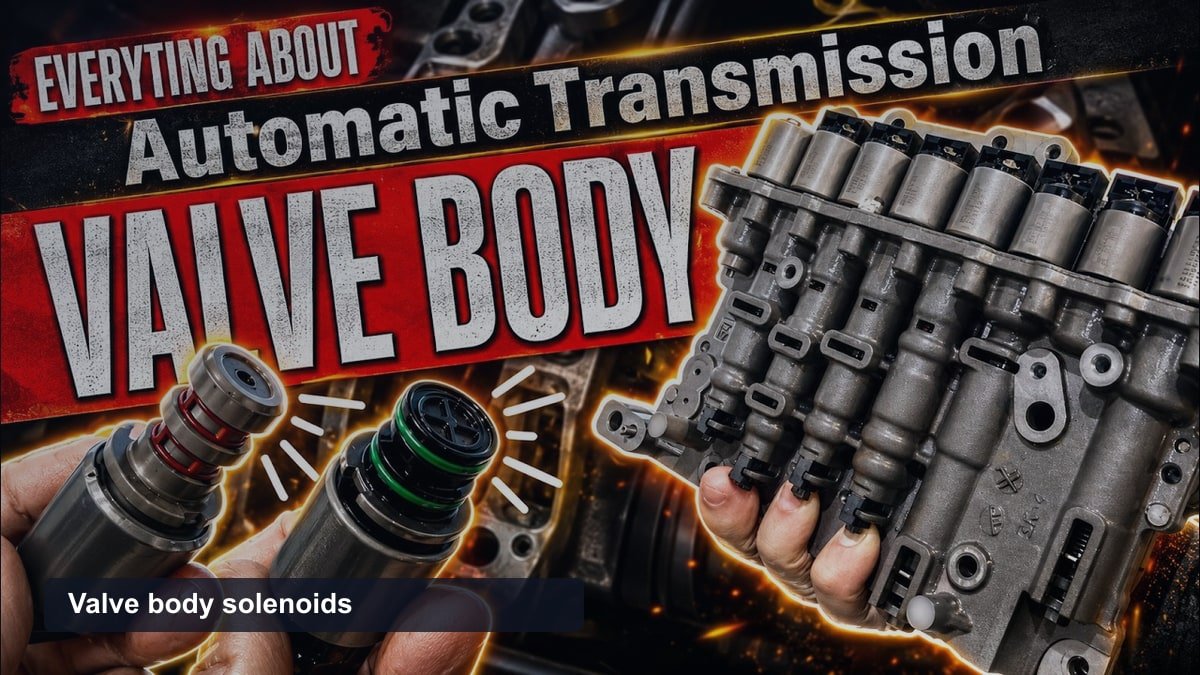
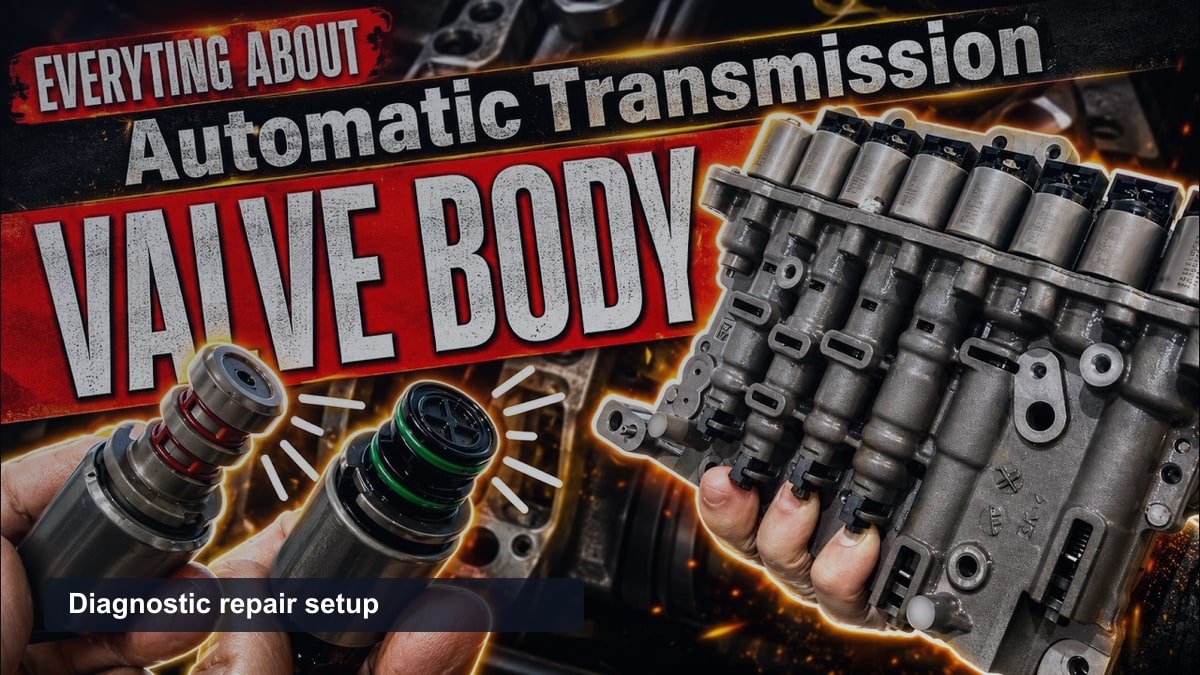
A gearbox solenoid is an electro-hydraulic valve that controls the flow of transmission fluid to change gears in an automatic transmission. It receives an electrical signal from the transmission control module (TCM) and opens or closes to direct fluid pressure to a specific clutch pack. Most vehicles use 2 to 8 solenoids, mounted on or inside the valve body. Common types include shift solenoids, which select the gear, pressure control solenoids, which regulate fluid pressure, and the torque converter clutch (TCC) solenoid, which locks the torque converter at cruising speed. The terms “gearbox solenoid” and “transmission solenoid” refer to the same part.
How Does a Gearbox Solenoid Work?
A gearbox solenoid works by using an electromagnetic coil to move a small valve, which opens or blocks a fluid passage inside the valve body. When the TCM sends voltage to the solenoid, the coil creates a magnetic field that pulls the valve open, letting transmission fluid flow to the correct clutch pack. Removing voltage closes the valve again. This on-off, or variable, control happens dozens of times during a normal drive, since each gear change needs a different combination of open and closed solenoids.
What Are the Different Types of Gearbox Solenoid?
Three main types of gearbox solenoid exist: shift solenoids, the pressure control solenoid, and the torque converter clutch solenoid, each controlling a different part of the shift process.
| Solenoid Type | Function | Example Failure Code |
|---|---|---|
| Shift solenoid | Selects which gear engages by directing fluid to the correct clutch pack | P0750 (Solenoid A) through P0770 (Solenoid E) |
| Pressure control solenoid | Regulates how much hydraulic pressure is applied during a shift, for smoothness | P0748 |
| Torque converter clutch (TCC) solenoid | Locks the torque converter at cruising speed to improve fuel economy | P0740 to P0744 |
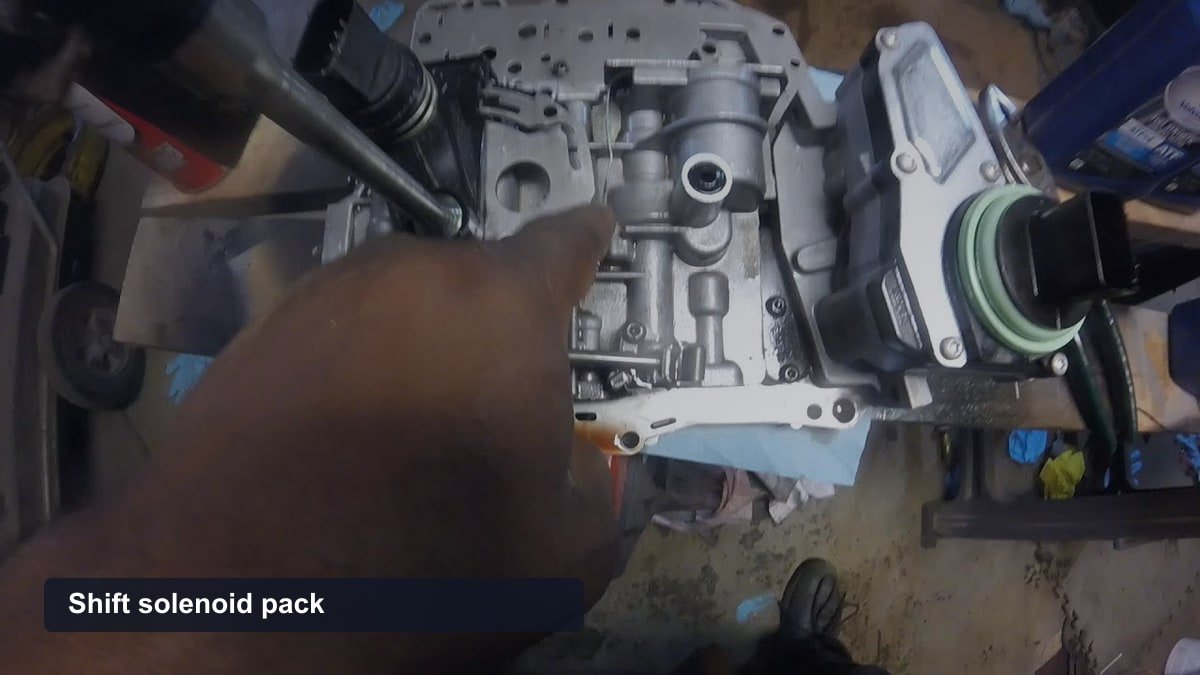
Most vehicles have 2 to 4 shift solenoids, one pressure control solenoid, and one TCC solenoid, though the exact count depends on how many forward gears the transmission has.
What Are the Signs of a Bad Gearbox Solenoid?
A bad gearbox solenoid causes shifting problems long before the transmission itself fails. The 6 most common signs are:
- Delayed or harsh engagement. The gearbox pauses before shifting, then engages with a hard jolt.
- Erratic shifting. The transmission upshifts or downshifts at the wrong time, or skips a gear entirely.
- Stuck in one gear. The TCM forces the transmission into limp mode, usually locking it in 2nd or 3rd gear, to prevent further damage.
- Failure to downshift. The transmission does not drop a gear when slowing down or braking.
- A Check Engine light with a solenoid code. Codes such as P0750 (Shift Solenoid A) or P0755 (Shift Solenoid B) point directly at a specific solenoid.
- Reduced fuel economy. Erratic gear changes keep the engine running outside its efficient RPM range.
Limp mode is a protective response, not a separate fault. It appears specifically because the TCM has already detected a solenoid-related problem.
Is It Safe to Drive With a Bad Gearbox Solenoid?
Driving with a bad gearbox solenoid is not safe long-term, since it accelerates wear on the clutch packs and can leave the transmission stuck in a single gear. A vehicle in limp mode is still drivable at reduced speed, which is usually enough to reach a repair shop without towing. Continuing to drive normally, rather than limiting speed and trip length once limp mode appears, increases the chance that a $150 solenoid replacement turns into a $1,500 to $4,500 gearbox rebuild. A same-day diagnostic scan confirms whether the fault is isolated to the solenoid before it spreads to the rest of the transmission.
What Causes a Gearbox Solenoid to Fail?
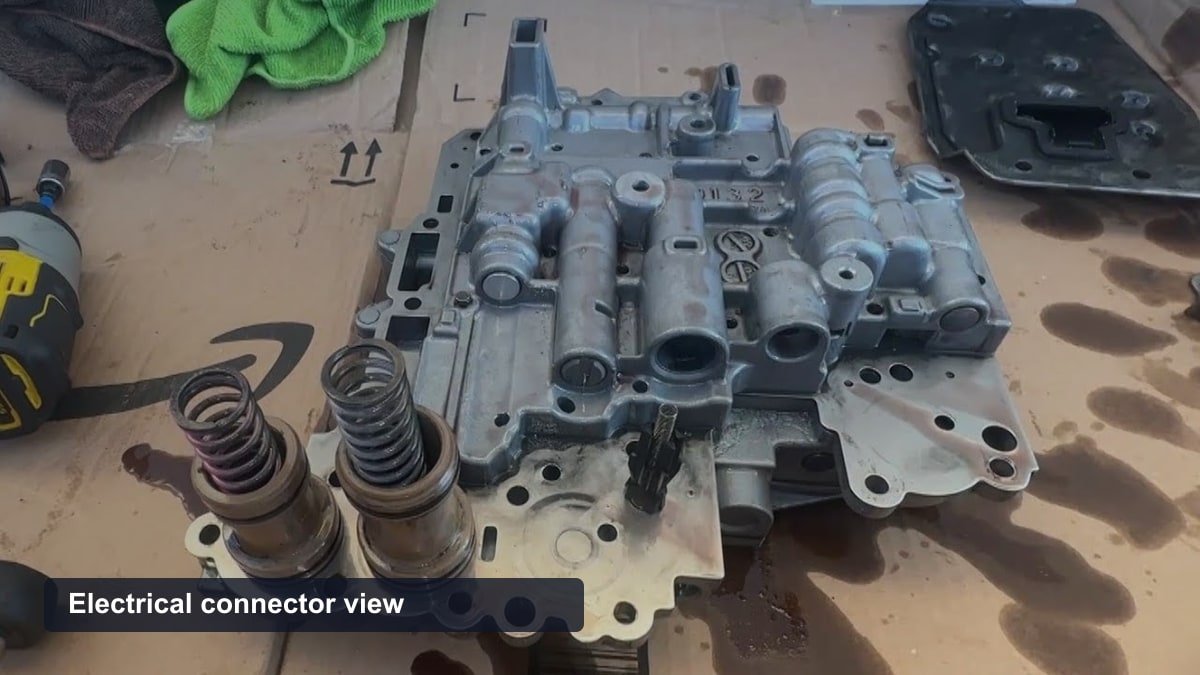
Gearbox solenoids fail from contaminated fluid, electrical faults, heat, and mechanical wear. The 4 most common causes are:
- Contaminated transmission fluid. Dirt, sludge, and metal shavings clog the solenoid’s small internal passages and jam the valve.
- Electrical faults. Corroded connectors, damaged wiring, or a blown fuse interrupt the signal from the TCM.
- Heat cycling. Solenoids sit inside the transmission and endure constant heating and cooling, which wears the internal coil and seals over time.
- Valve body wear. A worn or scored valve body bore causes the solenoid’s internal valve to stick, even when the solenoid itself is otherwise healthy.
The first cause on this list, contaminated fluid, is also the leading cause of automatic gearbox repair overall, which is why fluid condition is the starting point for diagnosing both problems.
How Do You Test a Gearbox Solenoid?
Testing a gearbox solenoid starts with a scan tool, then narrows to a multimeter resistance check once the code points to a specific solenoid.
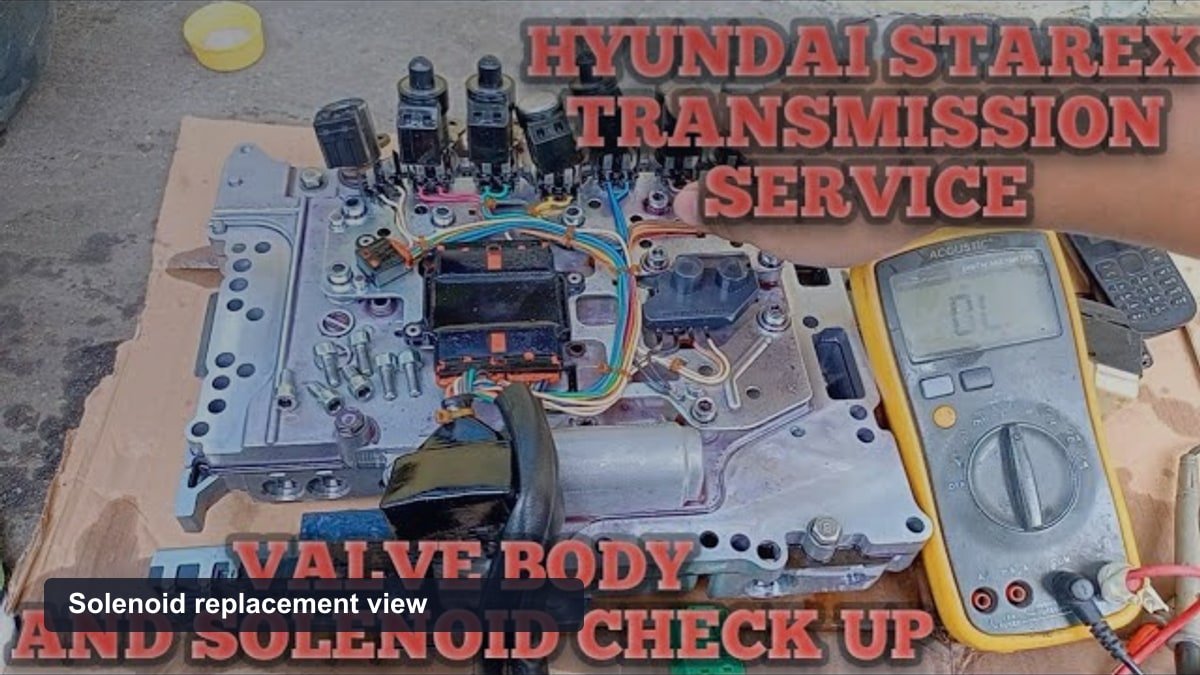
A scan tool reads the stored code, such as P0750 or P0755, and identifies which solenoid the TCM has flagged. With the solenoid removed, a multimeter measures its electrical resistance and compares the reading against the manufacturer’s specification. A reading outside that range indicates a bad coil. A live-data road test, watching solenoid commands and actual shift behavior on the scan tool at the same time, confirms whether the solenoid responds correctly to the TCM’s commands. This 3-step process, code, resistance test, and live data, rules out wiring or fluid problems before a solenoid gets replaced unnecessarily.
For technical background, see mechanical transmission overview.
How Much Does It Cost to Replace a Gearbox Solenoid?
Gearbox solenoid replacement costs $150 to $450 for a single solenoid and $400 to $1,500 for a full solenoid pack, including parts and labor.
| Repair Type | Parts Cost | Total Cost With Labor |
|---|---|---|
| Single solenoid | $15 to $150 | $150 to $450 |
| Full solenoid pack (3 to 8 units) | $50 to $600 | $400 to $1,500 |
Labor runs $50 to $100 per hour at independent shops and $75 to $150 per hour at dealerships, with the job typically taking 2 to 5 hours. Some transmissions use a sealed solenoid pack that cannot be serviced individually, which pushes even one bad solenoid into pack-replacement pricing. If contaminated fluid caused the failure, a full automatic gearbox repair may also need a fluid and filter service on top of the solenoid cost.
Can You Replace a Gearbox Solenoid Yourself?
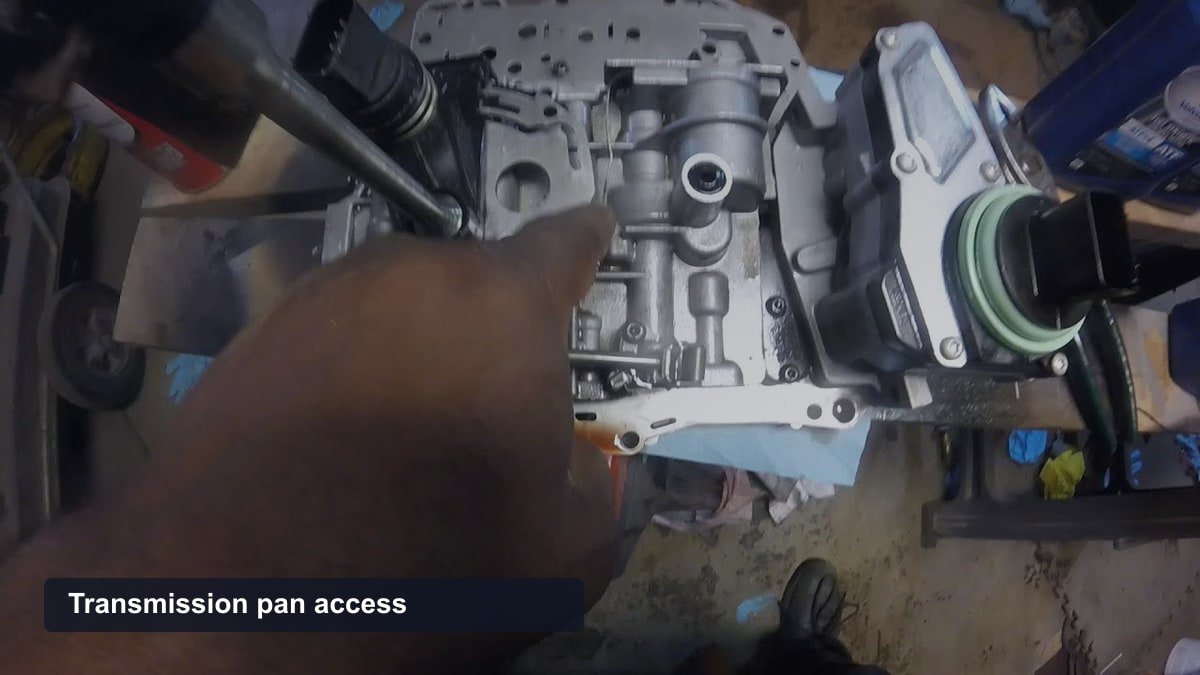
Replacing a gearbox solenoid yourself is possible on vehicles where the solenoids sit in the transmission pan, but not on vehicles where they are built into the valve body or transmission case.
Pan-accessible solenoids need the transmission pan removed, the old solenoid unbolted, and a new fluid and filter service afterward, a job that takes an experienced DIYer 2 to 4 hours with basic hand tools. Solenoids integrated into the valve body or mounted inside the transmission case require removing the valve body or dropping the transmission, a professional-level job on most vehicles. Some models also need a reprogramming or relearning step after replacement, which needs a dealer-level scan tool that most home mechanics do not own.
How Can You Prevent Gearbox Solenoid Failure?
Clean transmission fluid prevents most gearbox solenoid failures, since contamination is the leading cause of solenoid problems.
- Change the transmission fluid and filter on the manufacturer’s schedule, typically every 30,000 to 100,000 miles.
- Use the exact fluid specification listed in the owner’s manual, since the wrong ATF affects solenoid response time.
- Address a Check Engine light immediately rather than continuing to drive in limp mode.
- Inspect wiring and connectors during any transmission service, since corrosion causes many solenoid codes that are not actually solenoid failures.
These steps protect the same valve body and solenoids described at the start of this guide, and they overlap directly with the prevention steps for broader automatic gearbox repair.

Jimmy O’Riley is a UK-based mobile mechanic and automotive diagnostic specialist operating out of Bedfordshire, England. He founded O’Rileys Autos in 2011 with a focus on bringing professional vehicle repairs directly to customers at their homes and workplaces.
With over a decade of hands-on experience, Jimmy specializes in ABS diagnostics, brake system repairs, diesel emissions faults, and DPF cleaning. He is recognized across the UK and Ireland as one of the leading specialists in vehicle braking and emissions systems, earning the title “The DPF King” from his growing online audience.
Jimmy documents real-world automotive repairs through his YouTube channel, which has accumulated over 97,000 subscribers and nearly 2,000 published repair videos. His content covers ABS fault diagnosis, wheel speed sensor testing, brake module replacement, and roadside repair procedures across a wide range of vehicle makes and models.
He is active on YouTube, Instagram, and Facebook under O’Rileys Autos.