
Testing an ABS module involves 5 methods: reading fault codes with a bi-directional scan tool, checking power and ground circuits with a multimeter, reviewing live wheel speed data, performing actuator tests, and inspecting the circuit board for corrosion. The full diagnostic process takes 30 to 60 minutes.
What Is an ABS Module and What Does It Control?
NHTSA explains related safety context in NHTSA vehicle safety information.
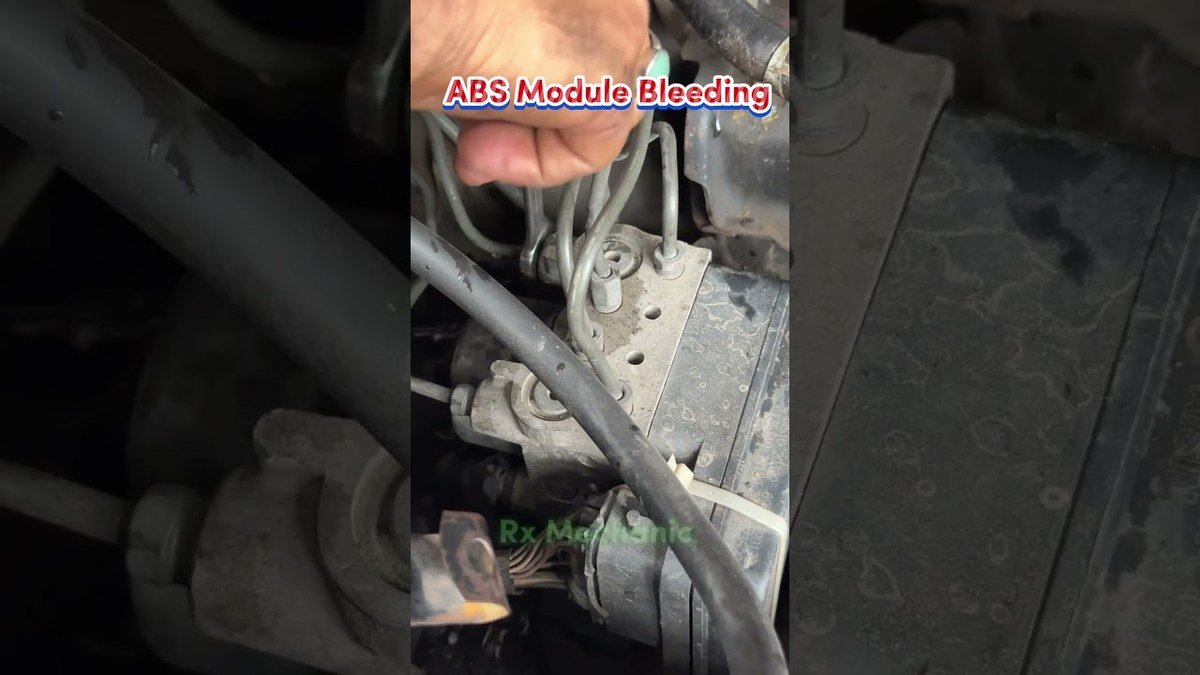
The ABS module, also called the Electronic Brake Control Module (EBCM), is the central processing unit of the anti-lock braking system. It receives wheel speed data from 4 sensors and controls hydraulic solenoid valves to prevent wheel lockup during braking.
Examples of ABS module functions include:
How to Clean an ABS Sensor: 7 Steps, Tools, and 3 Mistakes to Avoid
Jeep Wrangler ABS Module Repair: 3 Repair Options, Costs, and 7 Common Symptoms
- Monitoring all 4 wheel speed sensors simultaneously
- Activating the ABS pump motor during threshold braking events
- Communicating with traction control and stability control systems
- Storing diagnostic fault codes when a system failure is detected
What Are the 3 Main Components of an ABS Module?
The ABS module consists of 3 main components:
- The Electronic Brake Control Module (EBCM): the logic and processing unit
- The Hydraulic Control Unit (HCU): manages brake fluid pressure through solenoid valves
- The ABS pump motor: restores brake fluid pressure during ABS activation
On most vehicles, the EBCM bolts directly onto the HCU as a combined assembly.
What Tools Are Needed to Test an ABS Module?
5 tools are required to test an ABS module:
- Bi-directional OBD-II scan tool with ABS module access (examples include Autel MaxiCOM MK808 and Launch X431)
- Digital multimeter for voltage and resistance testing
- Back-probe pins or a breakout box to access circuit terminals without damaging wiring
- Vehicle-specific wiring diagram to identify correct connector pins
- Inspection light for visual circuit board examination
Can You Test an ABS Module with a Basic OBD-II Scanner?
A basic OBD-II scanner does not fully test an ABS module. Basic scanners read generic powertrain codes (P-codes) but do not access the ABS or EBCM system. A bi-directional scanner with ABS coverage is required to read ABS-specific fault codes, view live wheel speed data, and run actuator tests.
How Do You Test an ABS Module with a Scan Tool?
Follow these 6 steps to test an ABS module using a scan tool:
- Connect the bi-directional scan tool to the OBD-II port under the dashboard
- Select the ABS or EBCM system from the vehicle module list
- Read and record all active and stored fault codes
- Navigate to live data and monitor all 4 wheel speed sensor readings simultaneously
- Drive the vehicle above 15 mph and check for signal dropout on any wheel channel
- Access the actuator test menu and activate individual ABS solenoids and the pump motor
Normal live data shows all 4 wheel speed sensors reading within 2 to 3 mph of each other at a consistent speed.
What Fault Codes Indicate a Failing ABS Module?
Fault Code | Description | Likely Cause C0110 | ABS pump motor circuit fault | Failing pump motor or internal relay C0265 | EBCM relay circuit open | Internal module relay failure C0269 | Excessive dump or isolation time | Solenoid valve fault inside the HCU U0121 | Lost communication with ABS module | Module power loss or internal failure U0100 | Lost communication with ECM/PCM | CAN bus fault or module failure
How Do You Test an ABS Module with a Multimeter?
Testing the ABS module with a multimeter involves 3 checks: power supply voltage, ground circuit resistance, and reference voltage output.
Power Supply Voltage Test:
- Set the multimeter to DC voltage
- Locate the ABS module power supply pin using the vehicle wiring diagram
- Back-probe the connector at the power pin with the ignition on
- A reading of 12V to 14.5V confirms the module receives adequate power
Ground Circuit Test:
- Set the multimeter to resistance (ohms)
- Connect one probe to the module ground pin and the other to the vehicle chassis ground
- A reading below 0.5 ohms confirms a good ground connection
- A reading above 1.0 ohm indicates excessive resistance in the ground circuit
Reference Voltage Output Test:
- Set the multimeter to DC voltage
- Back-probe the reference voltage pin at the wheel speed sensor connector
- A reading of 4.8V to 5.2V confirms the module supplies correct reference voltage to Hall-effect sensors
- Passive magnetic sensors generate their own AC voltage; no reference voltage applies to these sensor types
What Voltage and Resistance Readings Indicate a Good ABS Module?
Test | Acceptable Reading | Fault Indication Power supply voltage | 12V to 14.5V | Below 10V or no voltage present Ground circuit resistance | Below 0.5 ohms | Above 1.0 ohm Sensor reference voltage | 4.8V to 5.2V | Below 4.5V or above 5.5V Solenoid valve resistance | 3 to 8 ohms per solenoid | Open or short circuit reading
How Do You Perform a Bi-Directional ABS Module Test?
A bi-directional ABS module test activates individual solenoids and the pump motor through the scan tool. Follow these 4 steps:
- Access the bi-directional or actuator test menu in the ABS system on the scan tool
- Select the ABS pump motor test and activate it; an audible hum from the HCU confirms motor operation
- Select individual solenoid tests for each wheel circuit; a click from the HCU confirms solenoid activation
- Monitor for fault codes during each test; any code generated confirms a module or solenoid fault
A module that does not respond to bi-directional commands, produces no solenoid clicks, or stores C0265 during the pump motor test has an internal failure requiring repair or replacement.
How Do You Know If the ABS Module Has Failed or Just a Sensor?
There are 3 ways to distinguish a module failure from a sensor failure:
- Fault code type: Sensor codes (C0035 to C0050) indicate individual sensor faults. Module codes (C0110, C0265, U0121) indicate internal module failure.
- Live data behavior: A failed sensor shows signal dropout on 1 wheel channel. A failed module shows erratic or absent data across multiple channels simultaneously.
- Voltage test results: A sensor fault shows incorrect resistance or signal at the sensor connector. A module fault shows incorrect voltage output or no communication at the module harness connector.
What Is the Difference Between an ABS Module Fault and a Sensor Fault?
An ABS module fault affects the central processor or hydraulic control components inside the EBCM or HCU. A sensor fault affects 1 of the 4 individual wheel speed sensors. Module faults produce codes such as C0265 and U0121. Sensor faults produce codes such as C0035 and resistance readings outside the 1,000 to 2,500 ohm range.
What Are the Next Steps After Testing the ABS Module?
3 outcomes follow ABS module testing:
- Sensor fault confirmed: Replace the affected wheel speed sensor. Total cost ranges from $80 to $220 including labor.
- Wiring fault confirmed: Repair or replace the damaged harness section. Total cost ranges from $90 to $250.
- Module fault confirmed: Rebuild, remanufacture, or replace the EBCM. Total cost ranges from $150 to $1,500 depending on the repair method and vehicle model.
Clear all stored fault codes after completing any repair and perform a test drive above 15 mph to confirm the ABS warning light does not return.

Jimmy O’Riley is a UK-based mobile mechanic and automotive diagnostic specialist operating out of Bedfordshire, England. He founded O’Rileys Autos in 2011 with a focus on bringing professional vehicle repairs directly to customers at their homes and workplaces.
With over a decade of hands-on experience, Jimmy specializes in ABS diagnostics, brake system repairs, diesel emissions faults, and DPF cleaning. He is recognized across the UK and Ireland as one of the leading specialists in vehicle braking and emissions systems, earning the title “The DPF King” from his growing online audience.
Jimmy documents real-world automotive repairs through his YouTube channel, which has accumulated over 97,000 subscribers and nearly 2,000 published repair videos. His content covers ABS fault diagnosis, wheel speed sensor testing, brake module replacement, and roadside repair procedures across a wide range of vehicle makes and models.
He is active on YouTube, Instagram, and Facebook under O’Rileys Autos.