
Trailer ABS blink codes are diagnostic signals transmitted through the yellow ABS warning lamp on a trailer. The lamp blinks in a 2-part numerical sequence to identify specific system faults. Each code consists of 2 digits separated by a short pause.
The Federal Motor Carrier Safety Administration (FMCSA) has required ABS on air-braked trailers manufactured after March 1, 1998. Reading blink codes is the primary method for diagnosing faults without a scan tool.
Federal brake-system rules are published in FMCSA brake systems guidance.
What Are Trailer ABS Blink Codes?
Trailer ABS blink codes are 2-part numerical sequences that identify faults in the Anti-lock Braking System. The yellow ABS warning lamp communicates fault data through a series of blinks.
Why Is My ABS and Brake Light On? 7 Common Causes and Fixes
How to Turn Off ABS Brakes: 3 Methods and What You Need to Know
Each code contains 2 digits. Examples include codes such as 2-1, 3-2, and 4-1. The first digit identifies the fault category. The second digit identifies the specific component within that category.
How Do You Read Trailer ABS Blink Codes?
Reading trailer ABS blink codes requires 4 steps:
- Turn the ignition on without starting the engine
- Locate the yellow ABS warning lamp on the trailer
- Count the first series of blinks (first digit)
- Count the second series of blinks after the pause (second digit)
The lamp blinks the first digit, pauses briefly, then blinks the second digit. The full sequence repeats 3 times before cycling to the next stored code. A code of 2-3 means 2 blinks, a pause, then 3 blinks.
Some systems require a diagnostic button or switch to trigger blink output. Consult the manufacturer's manual for the exact activation procedure.
What Are the 4 Main Trailer ABS Blink Code Categories?
Most trailer ABS systems organize faults into 4 main categories. These apply to systems by manufacturers such as Bendix, WABCO, Meritor, and Haldex.
What Do Category 1 Blink Codes Mean?
Category 1 codes identify ECU (Electronic Control Unit) and power supply faults. These affect the core controller of the ABS system.
Code | Fault 1-1 | ECU internal fault 1-2 | Low voltage or power supply fault 1-3 | J1939 or J1708 communication fault
An ECU fault typically requires component replacement. A power supply fault points to a blown fuse, corroded connectors, or faulty wiring at the trailer plug.
What Do Category 2 Blink Codes Mean?
Category 2 codes identify wheel speed sensor faults. These are the most frequently reported trailer ABS codes.
Code | Fault 2-1 | Axle 1, left wheel speed sensor fault 2-2 | Axle 1, right wheel speed sensor fault 2-3 | Axle 2, left wheel speed sensor fault 2-4 | Axle 2, right wheel speed sensor fault
Common causes of wheel speed sensor faults include:
- Sensor air gaps outside the standard range of 0.010 to 0.040 inches
- Damaged or corroded tone rings (exciter rings)
- Broken or pinched sensor wiring
- Corroded harness connectors
A study published in the SAE International Journal found that sensor and tone ring faults account for over 55% of all trailer ABS diagnostic codes.
What Do Category 3 Blink Codes Mean?
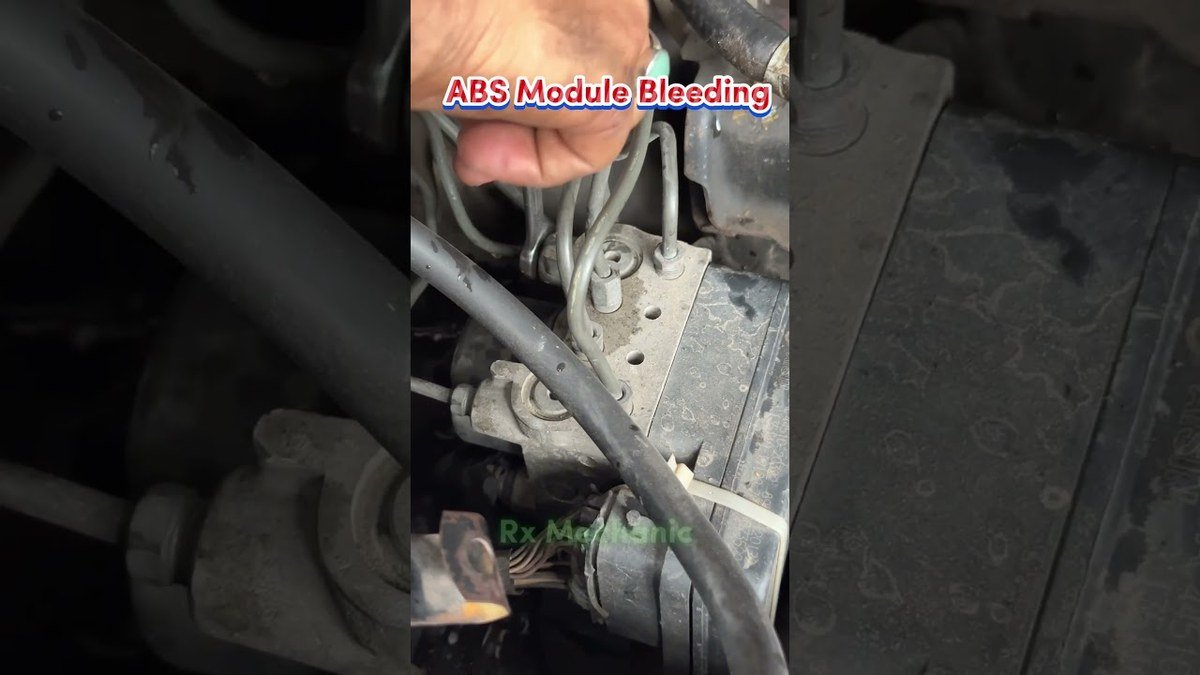
Category 3 codes identify modulator valve faults. The modulator valve controls brake pressure during an ABS event.
Code | Fault 3-1 | Axle 1, left modulator valve fault 3-2 | Axle 1, right modulator valve fault 3-3 | Axle 2, left modulator valve fault 3-4 | Axle 2, right modulator valve fault
Modulator valve faults result from:
- Valve coil failure
- Air or moisture contamination inside the valve
- Wiring shorts or open circuits in the valve harness
What Do Category 4 Blink Codes Mean?
Category 4 codes identify brake adjustment and configuration faults. These are common on trailers with automatic slack adjusters.
Code | Fault 4-1 | Brake out of adjustment warning 4-2 | Missing axle configuration or unprogrammed ECU
A 4-1 code does not disable the ABS system. It alerts the driver that a brake is out of adjustment, reducing overall braking efficiency. The FMCSA requires all commercial trailers to maintain brake adjustment within Federal Brake Adjustment Limits (FBAL).
How Do Trailer ABS Blink Codes Differ Between Manufacturers?
Blink code formats vary between the 4 primary trailer ABS manufacturers: Bendix, WABCO (now ZF), Meritor, and Haldex.
Manufacturer | Code Format | Activation Method Bendix | 2-digit blink sequence | Diagnostic switch or ignition cycle WABCO / ZF | 2-digit blink sequence | Diagnostic button on ECU Meritor | 2-digit blink sequence | Ignition on; lamp self-activates Haldex | LED indicator on ECU | Diagnostic port on unit
Always cross-reference blink codes with the manufacturer's specific blink code chart. The same code number can carry different meanings across systems.
How Do You Fix Trailer ABS Blink Code Faults?
Fixing the fault depends on the code retrieved. There are 5 main repair procedures:
- Clear the code by cycling the ignition 3 times, then recheck if the fault returns
- Inspect all wiring harnesses and connectors for corrosion or physical damage
- Check wheel speed sensor air gaps using a feeler gauge (target range: 0.010 to 0.040 inches)
- Inspect tone rings for missing, chipped, or corroded teeth
- Test modulator valve coil resistance (standard range: 3.5 to 9.0 ohms depending on manufacturer)
If the code returns after clearing, the underlying fault requires physical repair or component replacement.
When Should You Inspect the Trailer ABS System?
Inspect the trailer ABS system in 4 situations:
- The yellow ABS warning lamp stays on after the initial bulb check (first 5 seconds of ignition)
- The tractor's ABS or malfunction indicator lamp activates due to a trailer fault
- Blink codes appear during a pre-trip inspection
- Braking behavior is inconsistent or uneven during hard stops
FMCSA regulations under 49 CFR Part 393 require that the ABS warning lamp function correctly on all air-braked trailers. A non-functional or permanently lit ABS lamp is a reportable defect under CSA (Compliance, Safety, Accountability) guidelines.
Summary
Trailer ABS blink codes are 2-digit sequences transmitted through the yellow ABS warning lamp to identify system faults. There are 4 main fault categories: ECU and power supply (category 1), wheel speed sensors (category 2), modulator valves (category 3), and brake adjustment (category 4). Blink code formats vary across manufacturers including Bendix, WABCO, Meritor, and Haldex. Always reference the manufacturer's blink code chart for accurate diagnosis.

Jimmy O’Riley is a UK-based mobile mechanic and automotive diagnostic specialist operating out of Bedfordshire, England. He founded O’Rileys Autos in 2011 with a focus on bringing professional vehicle repairs directly to customers at their homes and workplaces.
With over a decade of hands-on experience, Jimmy specializes in ABS diagnostics, brake system repairs, diesel emissions faults, and DPF cleaning. He is recognized across the UK and Ireland as one of the leading specialists in vehicle braking and emissions systems, earning the title “The DPF King” from his growing online audience.
Jimmy documents real-world automotive repairs through his YouTube channel, which has accumulated over 97,000 subscribers and nearly 2,000 published repair videos. His content covers ABS fault diagnosis, wheel speed sensor testing, brake module replacement, and roadside repair procedures across a wide range of vehicle makes and models.
He is active on YouTube, Instagram, and Facebook under O’Rileys Autos.