When Steering Wheel Shakes While Driving: 7 Causes, Diagnosis, and Fixes
What Does It Mean When the Steering Wheel Shakes While Driving?
When the steering wheel shakes while driving, a rotating, braking, or steering component sends a vibration through the steering gear to the steering wheel. Drivers also describe the fault as a shimmy, vibration, shudder, or judder.
Sources of the shake include unbalanced tires, bent wheels, brake discs, wheel bearings, and tie rod ends. A brake disc is also called a brake rotor.
SAE Technical Paper 2005-01-3916 by Meyer shows that brake judder excites the steering column during braking.
The shake falls into 3 groups: a speed-related shake, a braking-related shake, and a shake with looseness in the steering. A tire-related shake occurs within a speed band, while a brake-related shake occurs only during braking.
How Does Speed Help Identify the Cause?
The speed range and braking condition identify the likely cause of a steering wheel shake. The table below defines 5 patterns, their typical signs, and the likely cause.
| Pattern | Typical Sign | Likely Cause |
|---|---|---|
| Shake within a speed band | Vibration in the steering wheel or seat between 58 and 72 mph at 10 to 14 Hz | First-order tire or wheel fault, such as imbalance or runout (GM tech tip) |
| Shake only while braking | Pulsing in the steering wheel and brake pedal | Brake disc thickness variation (Delphi) |
| Shake with wheel play | Looseness when the wheel is rocked by hand | Worn wheel bearing, ball joint, or tie rod end (Go-Parts) |
| Shake with noise | Humming or grinding that rises with vehicle speed | Worn wheel bearing (Go-Parts) |
| Shake after tire or brake service | Vibration that begins after wheel removal | Improper wheel torque or wheel mounting offset (GM tech tip) |
What Are the 7 Causes of a Steering Wheel Shaking While Driving?
7 main causes make a steering wheel shake while driving: unbalanced tires, damaged tires or wheels, improper wheel torque, brake disc thickness variation, worn wheel bearings, worn ball joints and tie rod ends, and a bent steering knuckle.
Can Unbalanced Tires Make the Steering Wheel Shake?
Yes, an unbalanced tire and wheel assembly shakes the steering wheel within a speed band.
For related reading, see Steering Assist Is Reduced Drive With Care: Meaning, 6 Causes, and Fixes. The same maintenance context also connects with Steering Assist Is Reduced Drive With Care.
A GM tech tip reports steering wheel or seat vibration at 10 to 14 Hz between 58 and 72 mph. RepairPal states that balancing requires a computerized balancing machine. The machine locates where the weights go. Jerry’s tire balance guide lists $10 to $25 per tire for a standard spin balance.
Can Damaged or Out-of-Round Tires Cause the Shake?
Yes, a bent wheel, an out-of-round tire, or a separated tire belt shakes the steering wheel.
Balancing does not correct these faults, according to Jerry. GM diagnostic bulletins list wheel runout and radial force variation (RFV) checks for tire and wheel vibration.
Can Loose or Over-Tightened Lug Nuts Cause the Shake?
Yes, improper wheel torque offsets the wheel on the hub and creates vibration similar to imbalance.
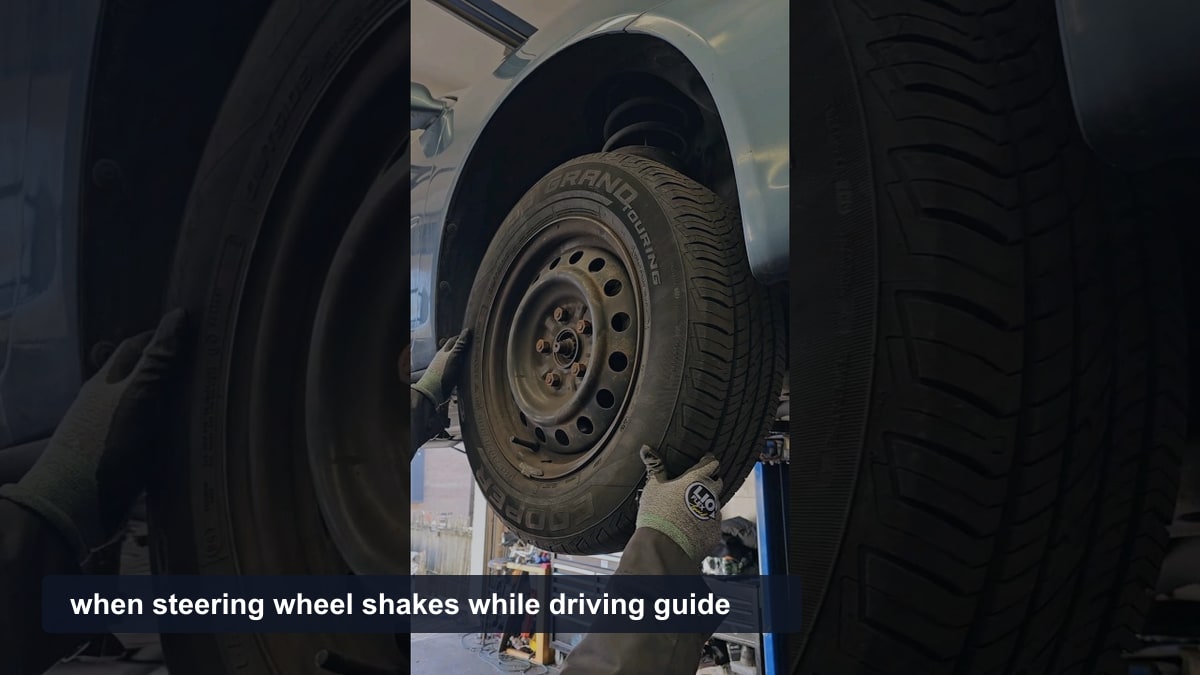
The GM tech tip states that improper torque can distort the brake disc. The tip instructs technicians not to use torque sticks or impact drivers to tighten lug nuts. Delphi adds that excessive torque on wheel fasteners can warp the disc hat.
Can Brake Discs Cause the Steering Wheel to Shake When Braking?
Yes, disc thickness variation (DTV) is the main cause of brake judder, according to Delphi.
DTV means the two friction faces of the disc are no longer parallel. The pad bounces and sends pulses to the brake pedal or the steering wheel.
Delphi lists around 0.015 mm as the maximum allowable variation. Apec Braking reports that a variation above 0.03 mm produces judder symptoms. SAE Technical Paper 2007-01-3966 by Zhang, Ning, and Yu tested steering wheel vibration caused by brake judder on a brake dynamometer. Apec Braking also reports that most cases blamed on warped discs relate to fitment or driver behavior, not manufacturing quality.
Can Worn Wheel Bearings Cause the Shake?
Yes, a worn wheel bearing can cause steering wheel vibration that changes with speed, according to Go-Parts repair guides.
Go-Parts describes the bearing as housed in the steering knuckle. A humming or grinding noise that rises with vehicle speed indicates a bad wheel bearing. Delphi states that a worn bearing with excessive play can make the brake disc wobble.
Can Worn Ball Joints and Tie Rod Ends Cause the Shake?
Yes, worn ball joints and tie rod ends add play to the steering and suspension.
Apec Braking lists worn or loose steering and suspension parts, such as ball joints, among the causes of judder. Go-Parts states that any wheel play suggests a bad wheel bearing or ball joint. Wiggling the wheel at the 3 and 9 o’clock positions can indicate a bad tie rod end, according to Go-Parts.
For a reliable reference point, see NHTSA vehicle safety information.
Can a Bent Steering Knuckle Cause the Shake?
Yes, a bent steering knuckle sends vibration into the steering wheel, according to Go-Parts repair guides.
The bent knuckle also adds stress to the ball joints and wheel bearings. The article Steering Knuckle Explained: 5 Parts, 7 Symptoms, and Replacement Cost covers the symptoms, diagnosis, and replacement cost of this part.
Is It Safe to Drive When the Steering Wheel Shakes?
Driving is unsafe when the shake comes with clunking, looseness, or grinding, because these signs point to a damaged steering or suspension part.
A shake within one speed band points to a tire or wheel fault. Go-Parts states that a damaged steering knuckle compromises steering control.
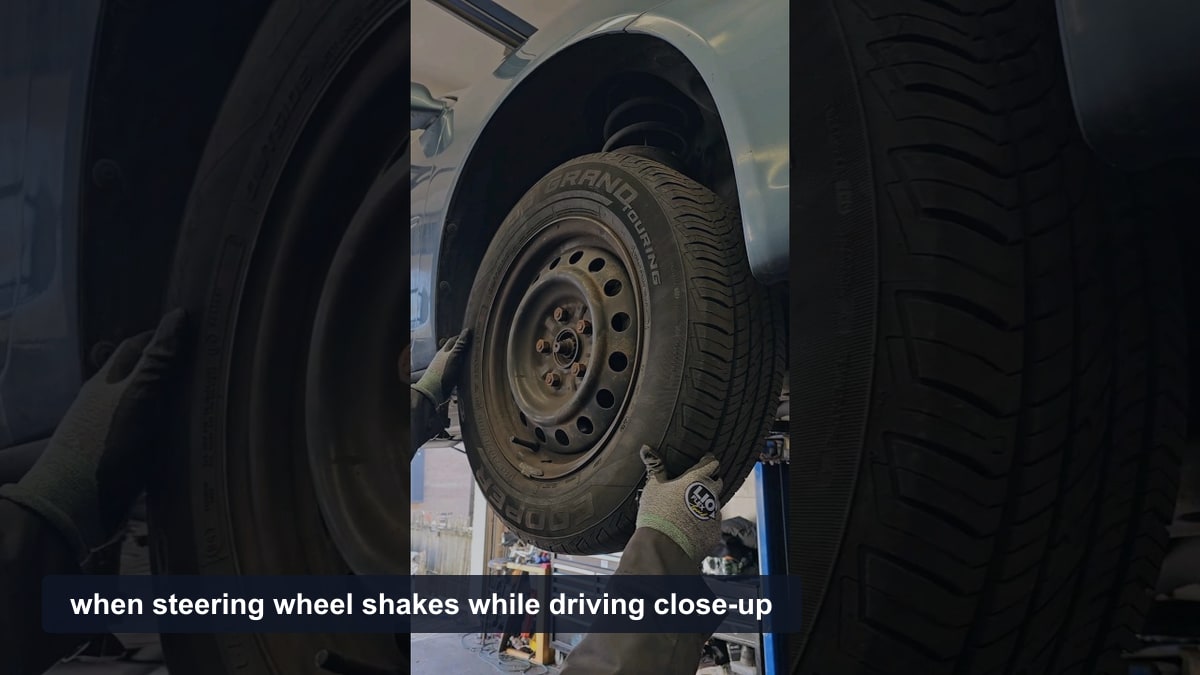
4 signs call for inspection:
- Clunking noises from the front suspension
- A loose feeling in the steering wheel
- Grinding or humming noises that rise with speed
- A shake that worsens over time
Tow the vehicle to a repair shop, if these signs appear.
How Do You Diagnose a Shaking Steering Wheel?
Diagnose a shaking steering wheel by recording when the shake occurs, then checking the tires, wheels, brakes, and steering parts in that order. The process has 8 steps:
- Record the speed range, braking condition, and turning condition of the shake.
- Inspect the tires for bulges, cupping, and uneven wear.
- Check the lug nut torque with a torque wrench.
- Balance the wheels on a computerized balancer and measure the wheel runout.
- Rock each wheel by hand at the 12 and 6 o’clock positions and the 3 and 9 o’clock positions to check for play.
- Measure the brake disc thickness at 8 points with a micrometer.
- Check the brake disc runout with a dial indicator.
- Inspect the steering knuckle for bends and cracks.
The GM diagnostic bulletin lists a test drive with vibration-measuring equipment as the first step. The bulletin focuses on the wheel and tire assemblies, if the vibration disappears with them removed.
How Do You Fix a Shaking Steering Wheel?
Fix a shaking steering wheel by repairing the diagnosed cause: balance the wheels, replace damaged tires, correct the wheel torque, replace the brake discs, or replace the worn steering part. The table below lists each cause, its fix, and a cost or detail.
| Cause | Fix | Cost or Detail |
|---|---|---|
| Unbalanced tires | Balance the wheels with weights | $10 to $25 per tire for a standard spin balance (Jerry) |
| Damaged or out-of-round tire or wheel | Replace the tire or wheel | Balancing does not correct these faults (Jerry) |
| Improper wheel torque | Reinstall the wheels with a torque wrench | GM instructs technicians not to use torque sticks or impact drivers |
| Brake disc thickness variation | Replace the disc | $150 to $500 per axle (Mechanic Base), and Apec Braking states that discs outside tolerance are not serviceable |
| Worn wheel bearing, ball joint, or tie rod end | Replace the worn part | Play at the wheel confirms the fault (Go-Parts) |
| Bent steering knuckle | Replace the knuckle | $450 to $1,080+ installed, followed by a four-wheel alignment (Go-Parts) |
What Else Do People Ask About a Shaking Steering Wheel?
Why does my steering wheel shake at 60 mph?
A GM tech tip reports steering wheel vibration between 58 and 72 mph at 10 to 14 Hz, with causes including wheel imbalance, radial force variation, and improper wheel mounting.
Why does my steering wheel shake only when braking?
Brake disc thickness variation causes pulses that travel through the caliper and suspension to the steering wheel, according to Delphi.
Can an alignment fix a shaking steering wheel?
No, Jerry states that alignments do not cure balance-related shakes.
Can new tires cause a steering wheel shake?
Yes, wheel mounting offset after tire installation creates vibration similar to imbalance, according to the GM tech tip.
How much does tire balancing cost?
Jerry lists $10 to $25 per tire for a standard spin balance, and RepairPal estimates $110 to $161 for a tire and wheel rotation and balance.
Why Does It Matter When the Steering Wheel Shakes While Driving?
A steering wheel that shakes while driving matters because the vibration signals a tire, wheel, brake, or steering fault. The 7 causes range from unbalanced tires to a bent steering knuckle.
Delphi reports that brake judder worsens over time and can cause irreparable damage to the discs. The speed range, braking condition, and wheel play identify the cause among the 3 groups described above.
1 thought on “When Steering Wheel Shakes While Driving: 7 Causes, Diagnosis, and Fixes”