What Is a Steering Column, and What Are Its 6 Parts, 3 Types, and Safety Functions?
A steering column is the housing and shaft assembly that connects the steering wheel to the steering gear. It has 6 parts, 3 adjustment types, and an energy-absorbing design that NHTSA credits with 79,989 lives saved from 1960 to 2012.
What Is a Steering Column?
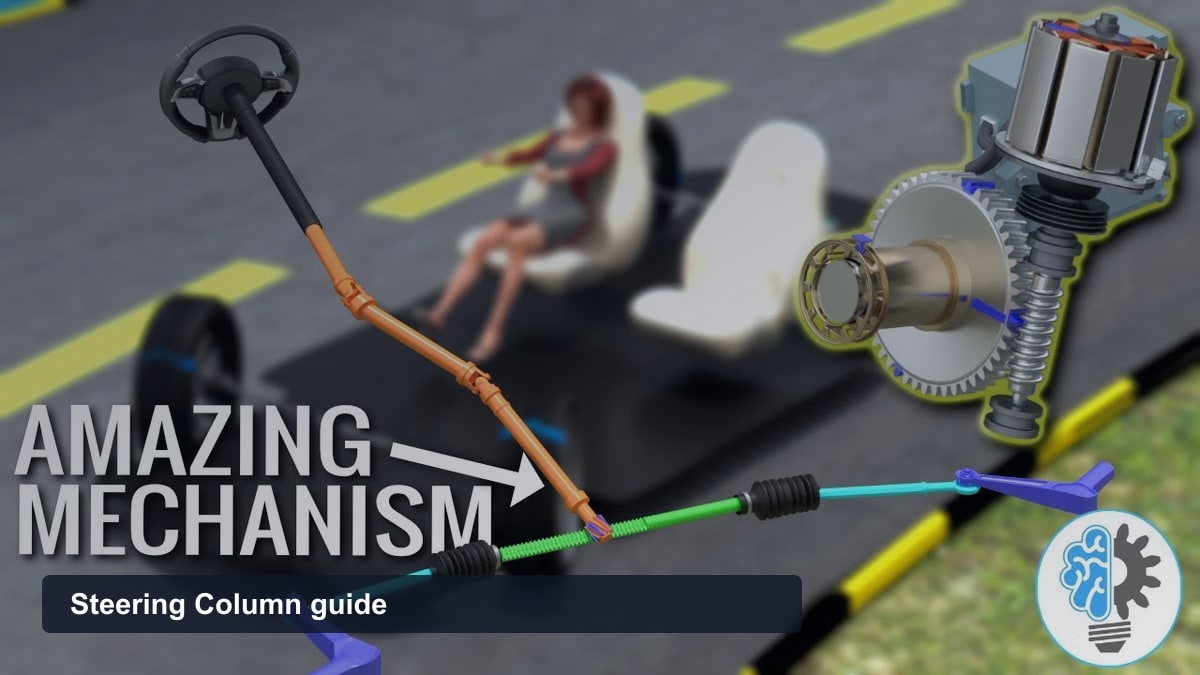
A steering column is the structural housing that surrounds the steering shaft. The steering shaft transmits steering torque from the steering wheel to the steering gear.
Steering columns also carry secondary components. Examples include the multi-function switch, column lock, wiring, shrouds, and gear selector. Columns in electric power steering systems also hold sensors. Examples include the steering angle sensor and the torque sensor.
What Are the 6 Parts of a Steering Column?
A steering column has 6 main parts: the steering shaft, column jacket, mounting bracket, adjustment mechanism, energy absorber, and switch and lock assembly.
Table 1 lists each part of a steering column with its function and a documented example.
| Part | Function | Example |
|---|---|---|
| Steering shaft | Transmits steering torque from the steering wheel to the steering gear | Telescoping shaft with upper and lower sections joined by plastic shear pins (1967 Dodge) |
| Column jacket | Houses the shaft and moves between full-out and full-in positions during collapse | Upper jacket and lower jacket |
| Mounting bracket | Mounts the column in the vehicle and accommodates tilt | Dash support bracket with a cylindrical clamping bore |
| Adjustment mechanism | Sets steering wheel angle (tilt) and column length (telescopic) | Motor-driven tilt and telescope actuators |
| Energy absorber | Absorbs impact energy as the column collapses | Tolerance ring between the inner shaft and the outer housing |
| Switch and lock assembly | Mounts the multi-function switch, column lock, wiring, shroud, and gear selector | Multi-function switch |
What Are the 4 Functions of a Steering Column?
A steering column performs 4 functions: it transmits steering torque, adjusts wheel position, mounts driver controls, and absorbs crash energy. The details are listed below.
For related reading, see Logitech G923 PS5 Steering Wheel: 8 Specs, 8 Games, and Alternatives. The same maintenance context also connects with Logitech G923 PS5 Steering Wheel.
- Transmits steering torque from the steering wheel to the steering gear. The steering shaft carries this torque.
- Adjusts the steering wheel position through tilt and telescopic motion. Tilt sets the angle of the wheel, and telescopic motion sets the length of the column.
- Mounts switches, the column lock, wiring, and the gear selector. These secondary functions are documented for modern columns.
- Absorbs impact energy in a frontal collision. Energy-absorbing collapse reduces the likelihood of driver injury in a crash.
What Are the 3 Types of Steering Columns by Adjustment?
The 3 types are fixed, tilt, and telescopic steering columns. Here are the types:
- Fixed columns hold the steering wheel in one position.
- Tilt columns adjust the angular position of the steering wheel.
- Telescopic columns adjust the longitudinal position of the column.
Tilt regulates the angular position of the wheel, and telescopic motion regulates the longitudinal position of the column. Many columns combine both functions. Examples include power-adjustable columns with one motor for tilt and another motor for fore and aft movement.
How Does a Collapsible Steering Column Work?
A collapsible steering column shortens during a crash as the inner jacket slides into the outer jacket, which absorbs impact energy.
Which Mechanisms Absorb Crash Energy in a Steering Column?
Steering columns use 5 documented energy-absorbing mechanisms: tolerance rings, mesh jackets, bellows, collapsible plates, and shear pins. Table 2 compares the mechanisms.
| Mechanism | Action on impact | Documented use |
|---|---|---|
| Tolerance ring | Lets the inner shaft slip inside the housing at a set force | Ring fitted between the inner shaft and the outer housing |
| Mesh jacket | Crushes the lattice-mesh outer tube while the inner shaft telescopes | General Motors columns from 1967 |
| Bellows | Collapses metal convolutes in sequence | Energy absorber for safety-type collapsible columns |
| Collapsible plate | Drives the column and press plate into a plate that collapses gradually | Patented collapsible steering column system |
| Shear pins | Join the upper and lower shaft sections, which then telescope at a controlled rate | 1967 Dodge steering column |
When Did Collapsible Steering Columns Become Standard Equipment?
General Motors introduced its energy-absorbing steering column in 1967, first on Chevrolet vehicles, then across all GM divisions. A GM paper presented at the 10th Stapp Car Crash Conference describes the column as standard equipment on all 1967 GM cars and several competitor cars. NHTSA states that passenger cars received energy-absorbing columns in response to FMVSS 203.
Which Safety Standards Regulate Steering Columns?
FMVSS 203 and FMVSS 204 regulate steering columns in the United States.
What Does FMVSS 203 Require?
FMVSS 203 sets requirements for steering control systems that minimize chest, neck, and facial injuries to the driver on impact.
What Does FMVSS 204 Require?
FMVSS 204 limits horizontal rearward displacement of the steering column and shaft to 5 inches (127 mm) in a 30 mph frontal barrier crash.
What Do NHTSA Studies Show About Steering Column Safety?
An NHTSA evaluation found that FMVSS 203 and 204 significantly reduced driver fatalities and injuries in frontal crashes. The standards added $10 to the lifetime cost of owning and operating a car. NHTSA estimates that energy-absorbing steering columns reduce driver fatalities in frontal crashes by 12.1 percent.
For a reliable reference point, see NHTSA vehicle safety information.
An NHTSA report estimates that vehicle safety technologies saved 613,501 lives from 1960 to 2012. Table 3 shows the figures for selected technologies.
| Technology | Applicable FMVSS | Lives saved, 1960 to 2012 |
|---|---|---|
| Seat belts | 208, 209, 210 | 329,715 |
| Energy-absorbing steering assemblies | 203, 204 | 79,989 |
| All vehicle safety technologies | Multiple | 613,501 |
How Does a Column-Assist Electric Power Steering System Use the Steering Column?
In column-assist electric power steering, an electric motor applies assist torque to the column shaft through a speed reduction mechanism. A control unit calculates the target assist torque from steering torque and vehicle speed. Electric power steering systems are classified by assist location, such as column type and pinion type.
What Are 5 Symptoms of a Failing Steering Column?
The 5 main symptoms are noises when turning, looseness in the column, steering wheel control failures, dashboard warning lights, and ignition faults.
- Noises: clicking, grinding, or popping sounds when turning, often from a worn bearing or internal component.
- Looseness: a loose-feeling steering wheel or a wobbly tilt mechanism.
- Control failures: dead horn, cruise control, or radio buttons, usually from a bad clockspring.
- Warning lights: airbag or ESC lights on the dashboard.
- Ignition faults: intermittent loss of ignition power or a sticky key.
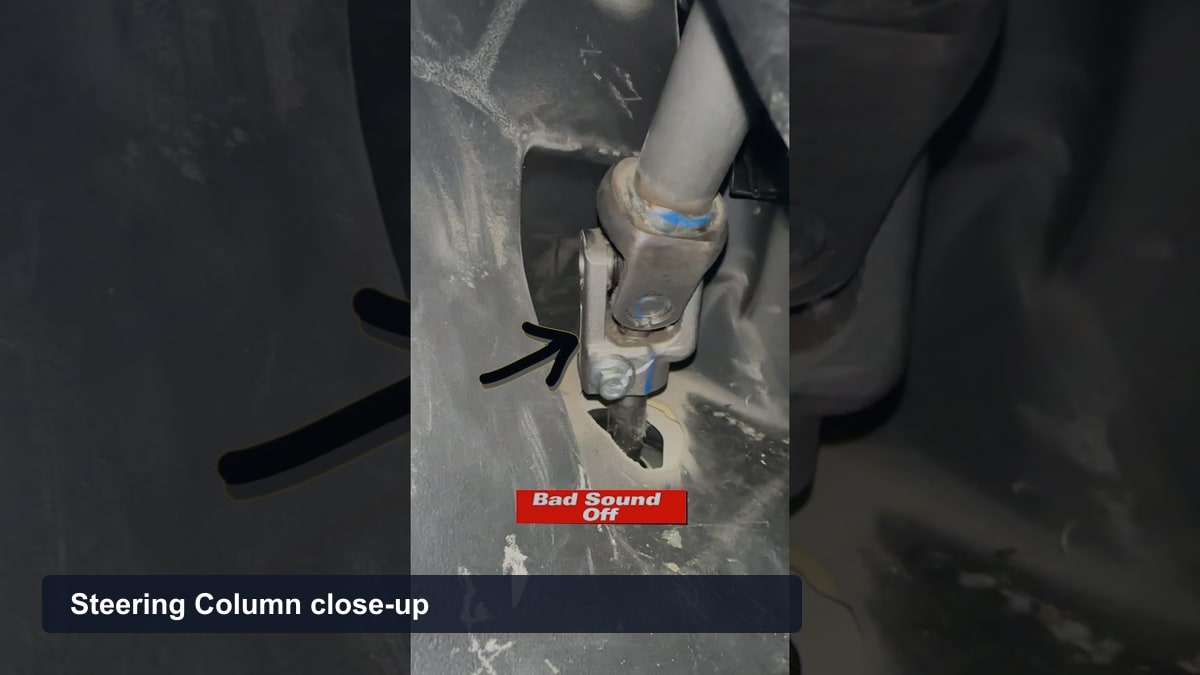
A clunking noise often comes from a worn intermediate shaft joint, not from the column.
How Much Does Steering Column Replacement Cost?
One repair provider lists steering column replacement at $300 to $900 and steering column repair at $100 to $400. Cost varies by vehicle make, model, age, column design, and other damaged components. A new OEM column for the Subaru BRZ and Toyota GR86 costs over $1,500 in some cases. Some vehicles require steering angle sensor calibration with a scan tool after replacement. Examples include the Subaru BRZ and Chevrolet Equinox.
People Also Ask
What is the difference between a steering column and a steering rack?
The steering column carries wheel rotation inside the cabin, and the steering rack converts that rotation into lateral movement.
What connects the steering column to the steering rack?
The intermediate shaft connects the bottom of the steering column to the steering rack.
Is a steering column the same as a steering shaft?
No, the steering column is the housing, and the steering shaft is the component inside it that transmits steering torque.
Does a collapsed steering column need replacement?
Yes, a collapsed steering column requires replacement.
Can you drive with a broken steering column?
Repair providers advise against driving with a broken steering column.
What Is the Role of a Steering Column in Steering Control and Driver Safety?
A steering column transmits steering input from the wheel to the steering gear and limits driver injury in frontal crashes through controlled collapse. FMVSS 204 caps rearward column displacement at 5 inches (127 mm) in a 30 mph frontal barrier crash. NHTSA credits energy-absorbing steering assemblies with 79,989 lives saved from 1960 to 2012.