Rack and Pinion Steering Converts Steering Wheel Rotation Into Linear Wheel Motion Through 4 Main Parts
What Is Rack and Pinion Steering?
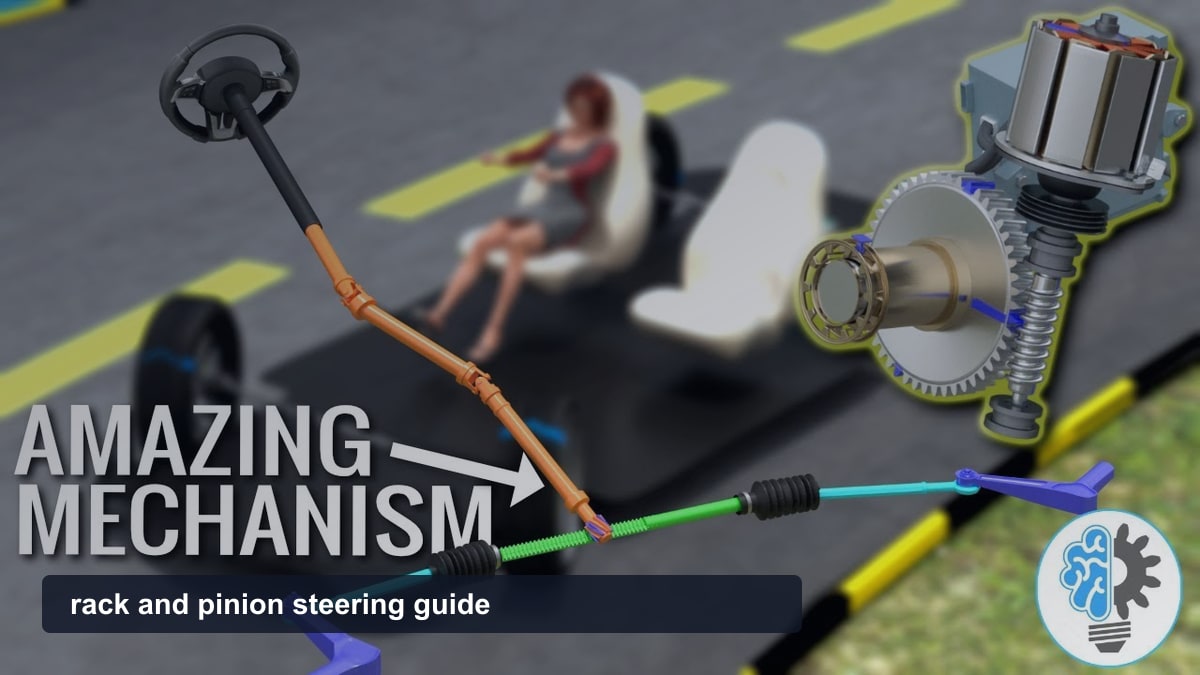
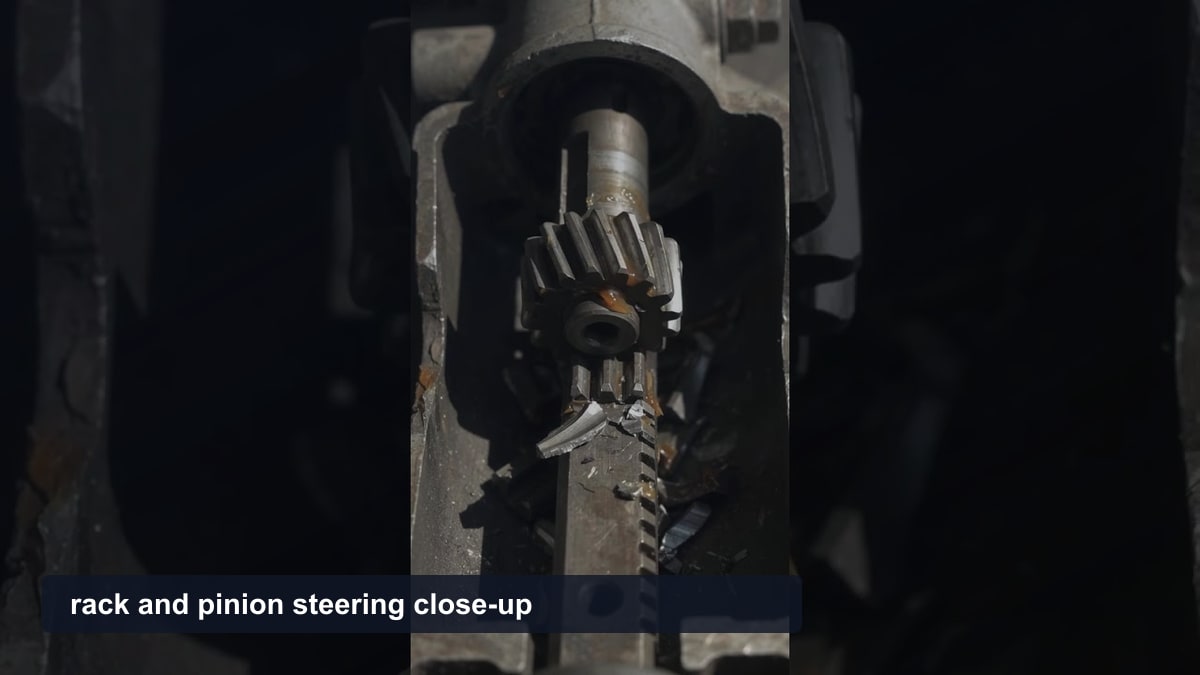
Rack and pinion steering is a steering system that converts steering wheel rotation into the linear motion that turns the wheels. A pinion gear attaches to the steering shaft, and a tie rod connects to each end of the toothed rack. The assembly is also called a steering rack or steering gear.
The design appears in both power-steering setups and non-power-steering systems. Nearly every car, truck, and SUV built in the last 40 to 50 years uses it. Examples include the Toyota Avalon, Toyota Tacoma, and Porsche 911.
How Does Rack and Pinion Steering Work?
A rotating pinion gear moves the rack left or right, and the rack turns the front wheels through the tie rods. The movement follows 5 steps:
- The driver turns the steering wheel.
- The steering shaft rotates the pinion gear.
- The pinion gear moves the rack left or right.
- The rack pushes or pulls the tie rods.
- The tie rods turn the steering knuckles and the front wheels.
A universal joint in the steering column links the column to the rack without tilting the steering wheel sideways.
What Are the 4 Main Parts of Rack and Pinion Steering?
The 4 main parts are the steering shaft, pinion gear, steering rack, and tie rods. Table 1 defines the function of each part.
For related reading, see Can You Use Transmission Fluid for Power Steering Fluid? Answer, 6 ATF Specifications, and 5 Risks. The same maintenance context also connects with Can You Use Transmission Fluid for Power Steering Fluid? Answer, 6 ATF Specifications, and 5 Risks.
| Part | Function |
|---|---|
| Steering shaft | Connects the steering wheel to the pinion gear |
| Pinion gear | Meshes with the rack teeth and moves the rack as it rotates |
| Steering rack | Slides left and right as a long toothed bar |
| Tie rods | Link each end of the rack to a front wheel |
What Are the Types of Rack and Pinion Steering?
The 3 main types are manual, hydraulic power, and electric power rack and pinion steering.
- Manual rack and pinion: relies on driver effort without power assist.
- Hydraulic power rack and pinion: uses a pump that sends pressurized fluid to a piston, which moves the rack.
- Electric power rack and pinion: uses an electric motor in place of the hydraulic system.
Hybrid electro-hydraulic systems use an electric motor to drive the hydraulic pump instead of the engine.
How Does Electric Power Steering Compare With Hydraulic Power Steering in Fuel Economy?
Full electric power steering improves vehicle fuel economy by 1.7% in an FTP-75 driving cycle, according to a Springer-published study. Table 2 lists reported fuel economy improvements for 3 electrically assisted steering systems.
| Steering system | Reported fuel economy improvement | Source and test condition |
|---|---|---|
| Electro-hydraulic power steering | 1% | Springer-published study, FTP-75 cycle |
| Full electric power steering | 1.7% | Springer-published study, FTP-75 cycle |
| Electric power steering prototype | 5.5% | SAE Technical Paper 910014 (Shimizu and Kawai, 1991), front-wheel-drive test vehicle |
Reported values range from 1% to 5.5% across the 2 studies. TRW Automotive, a steering manufacturer, reports a 75% to 85% energy consumption reduction for electrically assisted steering, equal to a 3% to 4% fuel economy improvement. A 2023 modeling study in the journal Evergreen reported a 59.95% energy efficiency increase for electro-hydraulic steering.
What Are the Advantages of Rack and Pinion Steering?
Rack and pinion steering offers 3 main advantages over recirculating ball steering: lighter weight, less wear and tear, and better steering feel. The design has few moving parts. Recirculating ball steering is less precise and responsive.
Rack and pinion steering appears in smaller vehicles such as sedans. Recirculating ball steering appears in larger vehicles such as trucks and 4WDs.
What Are the Signs of Rack and Pinion Failure?
The 5 common signs are a tight steering wheel, grinding noise, clunking sound, fluid leaks, and loose steering.
- Tight steering wheel: heat build-up in the rack or pressure loss from a fluid leak makes turning harder.
- Grinding noise: insufficient lubrication and servicing produces grinding during steering.
- Clunking sound: a failing rack clunks when turning or crossing bumps.
- Fluid leaks: leaks rank among the common problems, alongside pump whine and power assist cutting out.
- Loose steering: internal gear wear or hydraulic seal failure makes steering loose and unsafe.
Replacement is necessary when internal gear wear, major hydraulic seal failure, or loose steering occurs.
For a reliable reference point, see NHTSA recalls and vehicle safety.
How Long Does a Rack and Pinion Last, and What Does Replacement Cost?
A rack and pinion lasts 100,000 to 150,000 miles on a well-maintained vehicle. Replacement cost breaks down into 3 amounts, according to AutoParts.com:
- Parts: $200 to $800
- Labor: $300 to $1,200
- Total: $500 to $2,000
Some European models cost more. Examples include the BMW X1 at $3,983 to $4,581 and the Porsche Panamera at $6,274 to $6,577, according to RepairPal.
People Also Ask
What does a rack and pinion do?
A rack and pinion converts steering wheel movement into the motion that turns the vehicle’s wheels.
Is a rack and pinion the same as a steering rack?
The steering rack is the toothed bar, while the rack and pinion is the full assembly with the pinion gear, tie rods, and power assist components.
Does rack and pinion steering use power assist?
Rack and pinion steering exists in both power-assisted and non-power-assisted systems.
Can a car be driven with a bad rack and pinion?
Detroit Axle states that driving with a bad rack and pinion is possible only for a short period and is not recommended.
Which vehicles use recirculating ball steering instead?
Larger vehicles such as trucks and 4WDs use recirculating ball steering more often.
Why Is Rack and Pinion Steering the Standard Steering System in Modern Vehicles?
Rack and pinion steering is standard because 4 parts convert steering wheel rotation into precise wheel movement with low weight and low wear. The design delivers precise control through a straightforward mechanical construction. Electric power assist changes how the system is powered and keeps the same steering design. The steering shaft, pinion gear, rack, and tie rods remain the 4 main parts across manual, hydraulic, and electric versions.