What Is a Power Steering Fluid Reservoir, and What Are Its Location, 5 Check Steps, 3 Fluid Types, and 5 Symptoms?
A power steering fluid reservoir is the tank that stores hydraulic fluid for the power steering pump in hydraulic and electro-hydraulic systems. Electric power steering has no reservoir. Checking the level takes 5 steps.
What Is a Power Steering Fluid Reservoir?
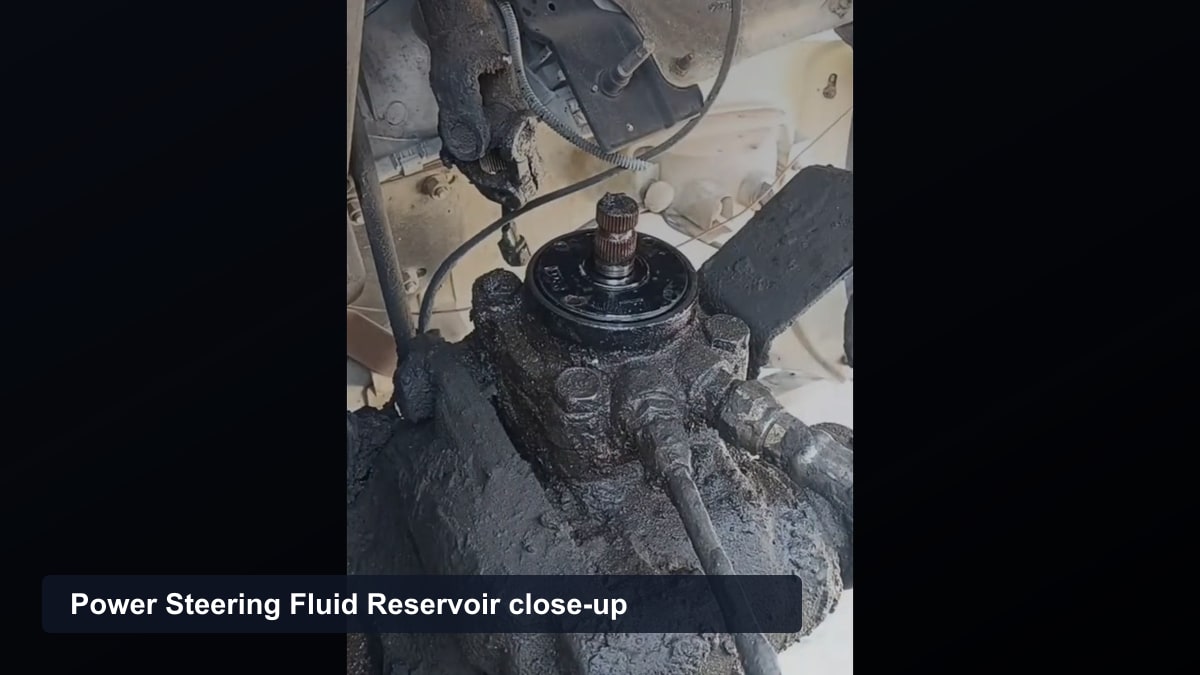
A power steering fluid reservoir is the supply and storage tank that holds hydraulic fluid for the power steering pump. When the steering wheel turns, the pump pulls fluid from the reservoir and sends it to the rack and pinion steering gear. The fluid then returns to the reservoir through a low-pressure return line.
Reservoir designs include a translucent plastic tank with MIN and MAX marks and a pump-mounted tank with a dipstick cap.
Where Is the Power Steering Fluid Reservoir Located?
The reservoir sits in the engine bay, either as part of the pump or as a separate tank. The tank is a small clear plastic vessel with a black cap. A steering wheel icon often marks the cap.
Does Every Car Have a Power Steering Fluid Reservoir?
No, electric power steering (EPS) systems use an electric motor and sensors instead of fluid, so they have no reservoir. A vehicle uses hydraulic power steering if an engine-mounted pump exists or the owner’s manual calls for power steering fluid. A Toyota Highlander with electric power steering, for example, has no fluid and no pump.
For related reading, see What Is Steered Molecular Dynamics, and How Do Its 2 Pulling Modes, 4 Settings, and 4 Applications Work?. The same maintenance context also connects with What Is Steered Molecular Dynamics, and How Do Its 2 Pulling Modes, 4 Settings, and 4 Applications Work?.
Table 1 compares the 3 power steering system types by fluid use and reservoir.
| System type | Uses fluid | Reservoir | Main components |
|---|---|---|---|
| Hydraulic | Yes | Yes | Belt-driven pump, hoses, and a labeled reservoir in the engine bay |
| Electro-hydraulic | Yes | Yes | Electric pump unit and a fluid reservoir |
| Electric (EPS) | No | No | Motor on the column or rack |
How Do You Check the Power Steering Fluid Level in 5 Steps?
Checking the level takes 5 steps: park on level ground, wipe the cap, read the level, compare it with the correct marks, and add fluid up to the upper mark if low.
- Park on a level surface and locate the reservoir.
- Wipe the cap clean before removal. This keeps dirt out of the reservoir.
- Read the level. Pull the dipstick, wipe it, reinsert it, and pull it again. On a transparent reservoir, read the marks on the outside of the tank.
- Compare the reading with the correct marks. Use the hot marks after the engine runs and the cold marks when the engine is off. For a hot check, start the engine and turn the steering wheel to full lock in both directions.
- Add fluid up to the upper mark if the level is low, then close the cap. Overfilled fluid expands when hot.
Hot fluid can cause burns when the cap opens on a hot engine.
What Is the Difference Between Hot and Cold Marks?
Hot marks apply after the engine runs, and cold marks apply when the engine is off, because fluid expands as it heats. Some reservoirs use MIN and MAX marks instead. The owner’s manual confirms whether a hot or cold check applies.
Which Fluid Does a Power Steering Fluid Reservoir Take?
The owner’s manual specifies the fluid, and the 3 common types are ATF-based, mineral-based, and synthetic power steering fluid. OEM specifications include Pentosin CHF 11S, Honda PSF, Mopar ATF+4, and Dexron VI. Power steering fluid is not universal. The wrong fluid can damage the pump and hoses.
What Does Power Steering Fluid Color Indicate?
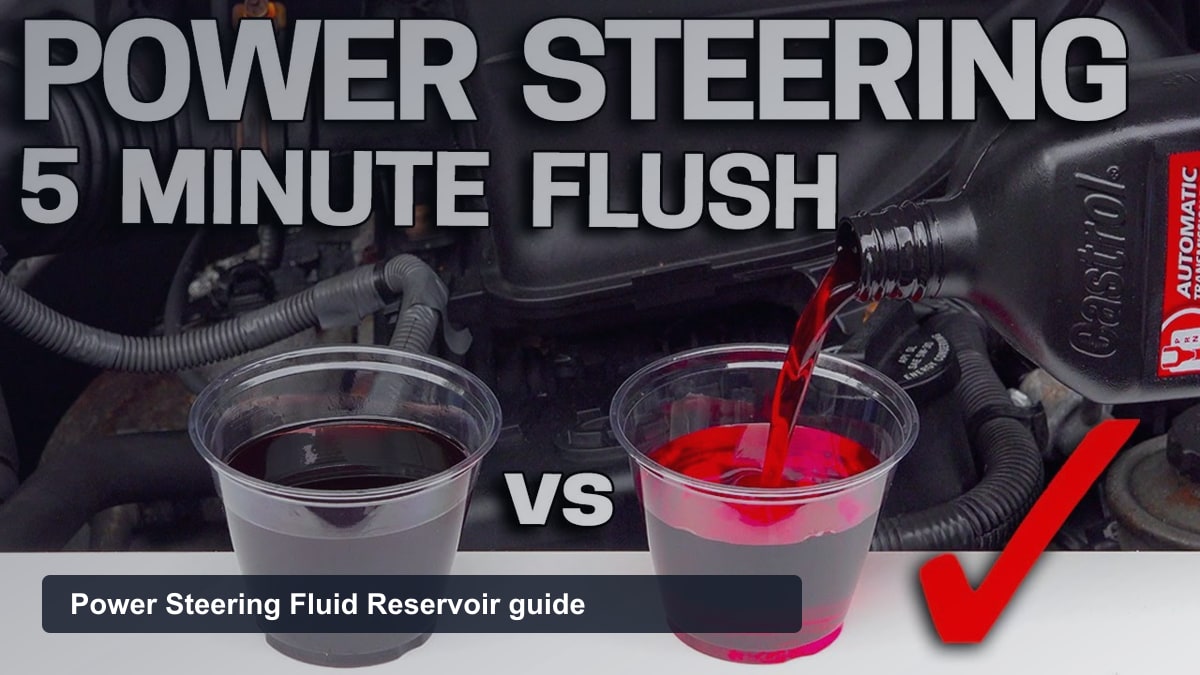
New power steering fluid is red, pink, or amber, and brown or black fluid indicates contamination. Table 2 lists fluid appearance and the indicated condition.
| Fluid appearance | Indicated condition |
|---|---|
| Red, pink, or amber | New fluid in good condition |
| Dark brown | Oxidation and heat stress |
| Black | Severe contamination, often with a burnt smell |
| Milky or foamy | Contamination or air in the system, which needs service |
What Are the 5 Symptoms of Low Power Steering Fluid or a Failing Reservoir?
The 5 symptoms are whining noise, stiff steering, foamy fluid, fluid leaks, and discolored fluid.
- Whining noise: low fluid is the most common cause of pump whining.
- Stiff steering: steering becomes harder to turn when the fluid level is low.
- Foamy fluid: foam means air enters through a bad O-ring, cracked hose, or worn pump shaft seal.
- Fluid leaks: fluid appears under the vehicle or around a cracked reservoir.
- Discolored fluid: dark brown or black fluid indicates degraded fluid.
These symptoms also point to other faults. Examples include a bad pump, a worn accessory pulley, and a faulty serpentine belt.
What Causes a Low Power Steering Fluid Level?
A low power steering fluid level indicates a leak in the system. Leak sources include hoses, the pump, the steering gear, and a cracked reservoir.
A clogged reservoir mesh filter starves the pump of fluid even when the reservoir appears full. The 2011 to 2017 Honda Odyssey reservoir contains a non-serviceable mesh filter that clogs over time.
For a reliable reference point, see NHTSA recalls and vehicle safety.
What Happens When the Reservoir Is Overfilled?
An overfilled reservoir expands when hot and can rupture seals or vent through the cap. A syringe or extractor removes the excess until the level sits between the MIN and MAX marks.
How Much Does Power Steering Reservoir Replacement Cost?
Power steering reservoir replacement costs $238 for a Kia Sedona and $246 for a BMW 328Ci, based on YourMechanic estimates that include parts and labor. Table 3 lists the cost by vehicle.
| Vehicle | Parts | Labor | Total | Source |
|---|---|---|---|---|
| Kia Sedona | $143 | $95 | $238 | YourMechanic |
| BMW 328Ci | $151 | $95 | $246 | YourMechanic |
| BMW X3 (2004 to 2010) | Not listed | Not listed | $127 to $293 | Go-Parts |
The BMW X3 total excludes the cost of new fluid. The reservoir has no fixed replacement interval, and replacement requires mid-level automotive repair skills and basic tools.
People Also Ask
Can you drive with low power steering fluid?
Steering remains possible without power assist but requires more effort at low speeds, and running the pump low on fluid causes cavitation and rapid wear.
Is power steering fluid checked hot or cold?
Both checks exist, and the owner’s manual specifies which one applies to the vehicle.
Is power steering fluid universal?
No, power steering fluid is not universal, and the owner’s manual lists the type the vehicle takes.
What color is power steering fluid?
New power steering fluid is red, pink, or amber, and brown or black fluid is contaminated.
How often is power steering fluid replaced?
Most manufacturers recommend 50,000 to 100,000 miles, and the owner’s manual gives the exact interval.
What Is the Role of a Power Steering Fluid Reservoir in Steering Assist and Maintenance?
A power steering fluid reservoir stores and supplies the hydraulic fluid that the pump sends to the steering gear. Checking its level, color, and condition detects leaks and contamination that cause pump wear.