What Causes Noise While Turning the Steering Wheel?
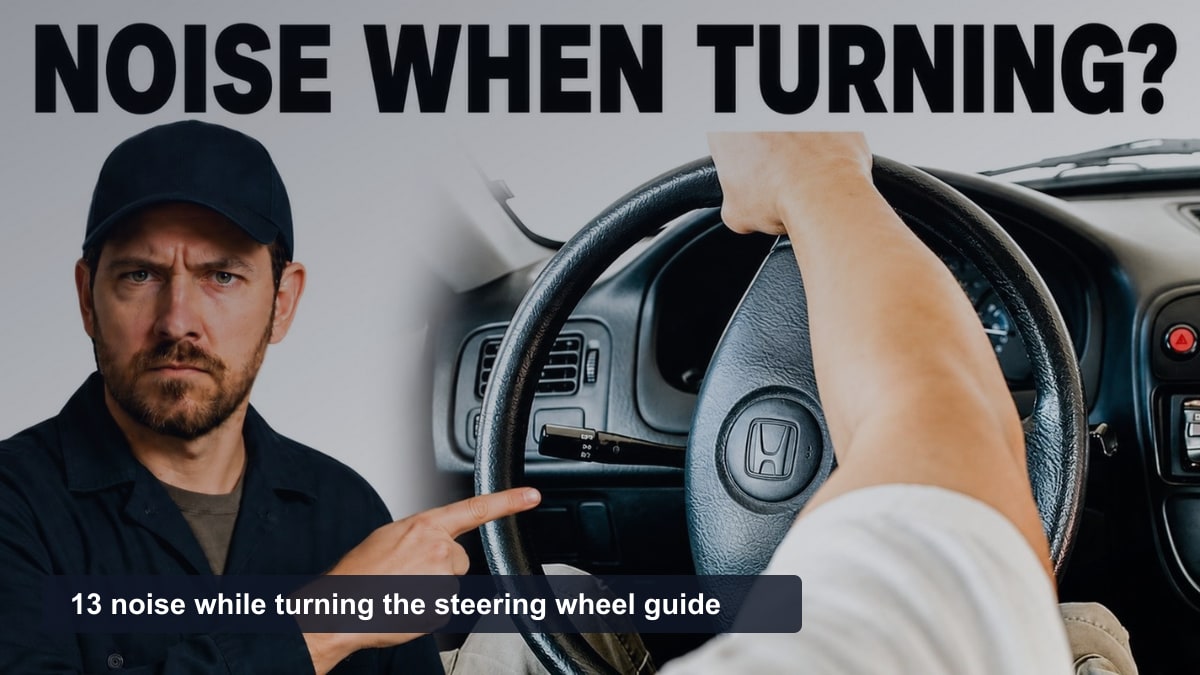
Noise while turning the steering wheel indicates wear or a fault in the power steering, suspension, or drivetrain components. A high-pitched squeal points to a slipping power steering belt, and a clicking sound points to a failing CV joint. The noise type identifies the likely cause.
What Does Noise While Turning the Steering Wheel Indicate?
Noise during turning that relates to the steering system frequently indicates a malfunction or wear in its parts. Sources include the power steering pump, tie rod ends, ball joints, CV joints, and wheel bearings.
What Do Different Steering Wheel Noises Mean?
The table below lists 8 noise types with the likely cause of each.
| Noise Type | Likely Cause |
|---|---|
| Whining or groaning | Low power steering fluid or a failing power steering pump |
| Squealing | Slipping power steering belt or dry sway bar bushings |
| Clicking or popping | Failing CV joint or failing strut mount |
| Grinding | Advanced CV joint wear or a steering rack fault |
| Clunking or knocking | Worn ball joints, tie rod ends, or strut mounts |
| Creaking | Dry or worn ball joints, bushings, or strut bearings |
| Growling or rumbling | Failing wheel bearing or poorly lubricated CV joint |
| Roaring | Damaged upper steering column bearing |
What Causes Each Type of Steering Wheel Noise?
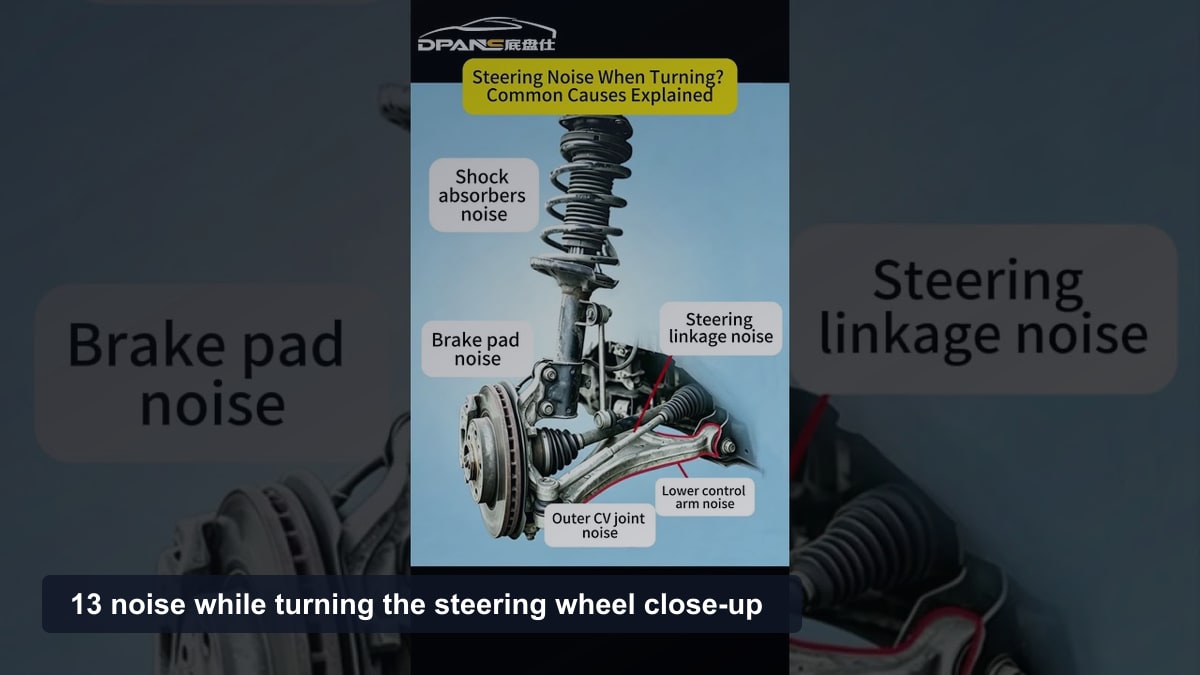
Steering wheel noises have 5 main cause groups: the power steering system, CV joints, steering and suspension joints, bushings and bearings, and wheel bearings.
For related reading, see Color of Power Steering Fluid: 4 Condition Stages, 2 Color Tests, and 3 Flush Triggers.
Whining, Groaning, and Squealing
Whining and groaning indicate low power steering fluid or a failing pump, and squealing indicates a slipping power steering belt. Low fluid lets the pump ingest air, which causes cavitation and a whining sound at low speeds or near the limits of steering travel. Worn fluid seals and a worn power steering rack also produce whining. Check for leaks and top up the fluid, if the fluid is low.
Clicking, Popping, and Grinding
Clicking and popping indicate a failing CV joint, particularly during low-speed turns. The clicking or popping is the most characteristic symptom of CV joint failure. Advanced CV joint wear turns the clicking into grinding, and vibration through the steering wheel can accompany the noise at higher speeds. Grinding can also come from the steering gearbox or the rack and pinion unit.
Clunking and Knocking
Clunking and knocking indicate worn ball joints, worn tie rod ends, or failing strut mounts. Play in tie rod ends shows when the wheel is moved by hand with the vehicle stationary. A bad tie rod produces knocking at lower speeds or on uneven roads.
Creaking
Creaking indicates dry or worn ball joints, tie rod ends, strut bearings, or bushings. Cold weather increases the noise, because the lubricant thickens. Lubricating the ball joints addresses creaking during slow turns.
For a reliable reference point, see NHTSA vehicle safety information.
Growling, Rumbling, and Roaring
Growling and rumbling indicate a failing wheel bearing, and roaring indicates a damaged upper steering column bearing. A failing wheel bearing sounds louder on the side that carries more load, so noise when turning left points to the right wheel bearing. Intermediate shaft and transaxle shaft bearings also cause growling.
How Do You Diagnose Noise While Turning the Steering Wheel?
Follow these 5 diagnostic steps:
- Note when the noise occurs, such as turning left, turning right, or at a certain speed.
- Identify the pitch as high, like a squeak, or low, like a groan.
- Check the power steering fluid level and look for leaks, if the noise is a whine.
- Move each front wheel by hand with the vehicle stationary to check for play in the tie rod ends.
- Perform a turning test, where a noise that increases points to a CV joint.
Is It Safe to Drive With Noise While Turning the Steering Wheel?
Driving with turning noise carries risk, because worn components can fail. Failure takes 3 forms:
- CV joint failure, which causes loss of drive power to the affected wheel
- Wheel bearing failure, which can seize and lock up the wheel
- Ball joint failure, which can cause separation of the wheel from the suspension in extreme cases
People Also Ask
Why Does the Steering Wheel Make a Noise When Turning at Low Speed?
Low-speed noise indicates low power steering fluid, a failing pump, or CV joint wear.
Why Does the Steering Wheel Click When Turning?
Clicking when turning indicates a failing CV joint.
Why Does the Steering Wheel Groan When Turning?
Groaning indicates low power steering fluid that causes pump cavitation.
Can Low Power Steering Fluid Cause Noise While Turning?
Yes, low fluid causes a whining or groaning sound.
Is Noise While Turning the Steering Wheel Dangerous?
Yes, an unaddressed noise source can lead to joint or component failure.
What Causes Noise While Turning the Steering Wheel?
Noise while turning the steering wheel results from low power steering fluid, worn joints, or failing bearings.